I bet you didn’t expect this to be my first post in so long. Japan has along history of public bathhouses, dating back at least a thousand years. Recently, I took a trip to Aichi prefecture, about 300 miles from Niigata. Instead of paying for the bullet train or a flight, I decided to travel cheaply by taking the overnight bus. Of course, what I saved in money I had to make up in time. When I arrived in Aichi from Sado, I had amassed about 19 hours in travel time. My hotel check in was still hours off and, having been wearing the same clothes for the whole trip, I was feeling pretty dirty. Luckily, I was able to find a local bathhouse, so I walked over, paid about $3 and took a bath.
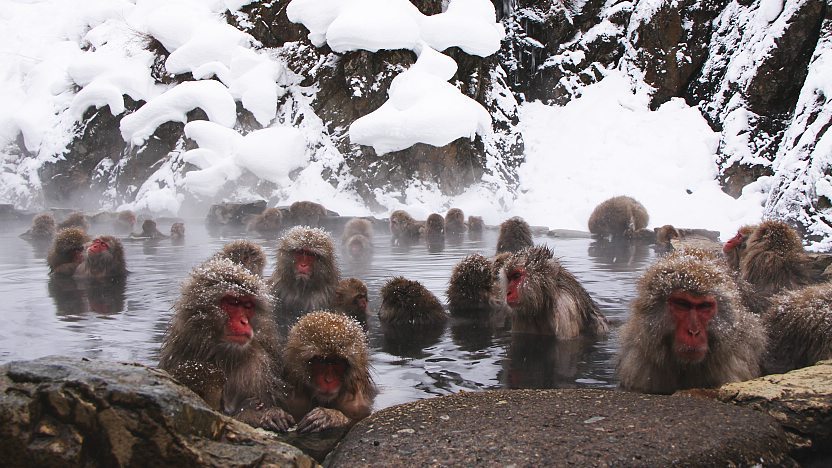
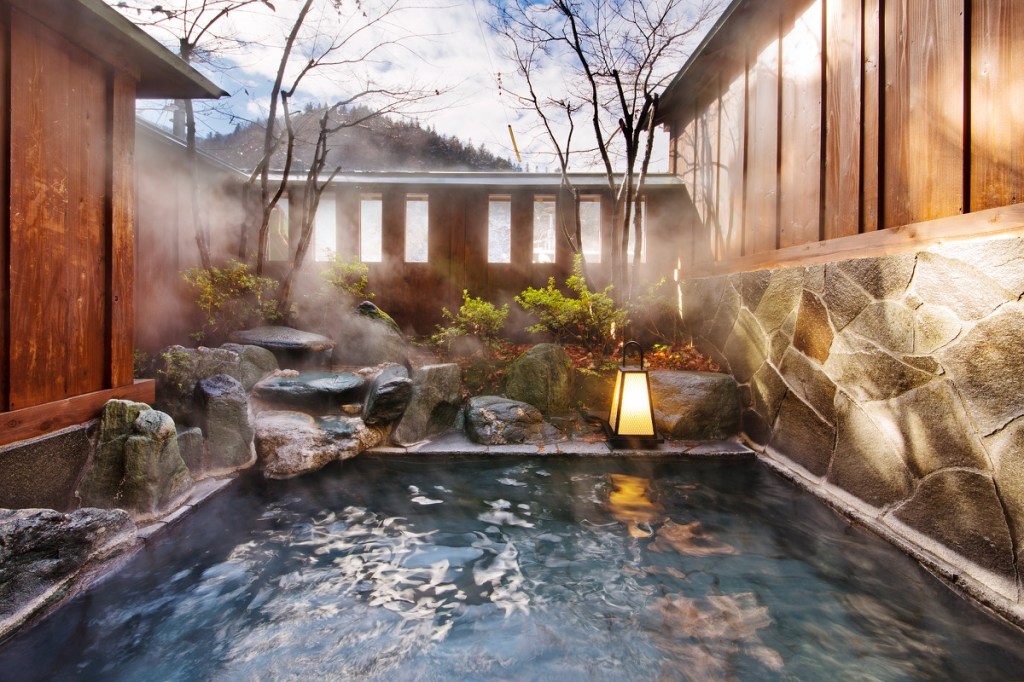
Public baths in Japan can be divided into two groups. There are sento, which are public baths, usually in urban areas. Then there are onsen, which use naturally heated spring water for their baths. Japan, being a very seismically active place, is littered with natural springs. You may have seen the popular pictures of Japanese macaques enjoying a dip in the hot springs during snowy winters. These days the line between the two has become blurred, with many ordinary sento calling themselves onsen in an attempt to attract customers who don’t know the difference, even though they are simply using piped in tapwater. While I said earlier the history of public baths in Japan goes back centuries, the beginning of their mass proliferation across the country began due to two separate incidents. First, the Great Kanto earthquake of 1923 destroyed much of the Tokyo region. Second, the allied bombing campaigns of Japan during World War II destroyed many Japanese cities. In the rebuilding efforts following both of these events, many housing developers built houses and apartment complexes without bathing facilities in an attempt to keep costs low. These houses would have built in communal baths, or a public bath would be in the vicinity to service the demand. Think of it like how many apartments in the US lack laundry facilities, leading to the use of laundromats, except instead of cleaning clothes, you’re cleaning yourself.
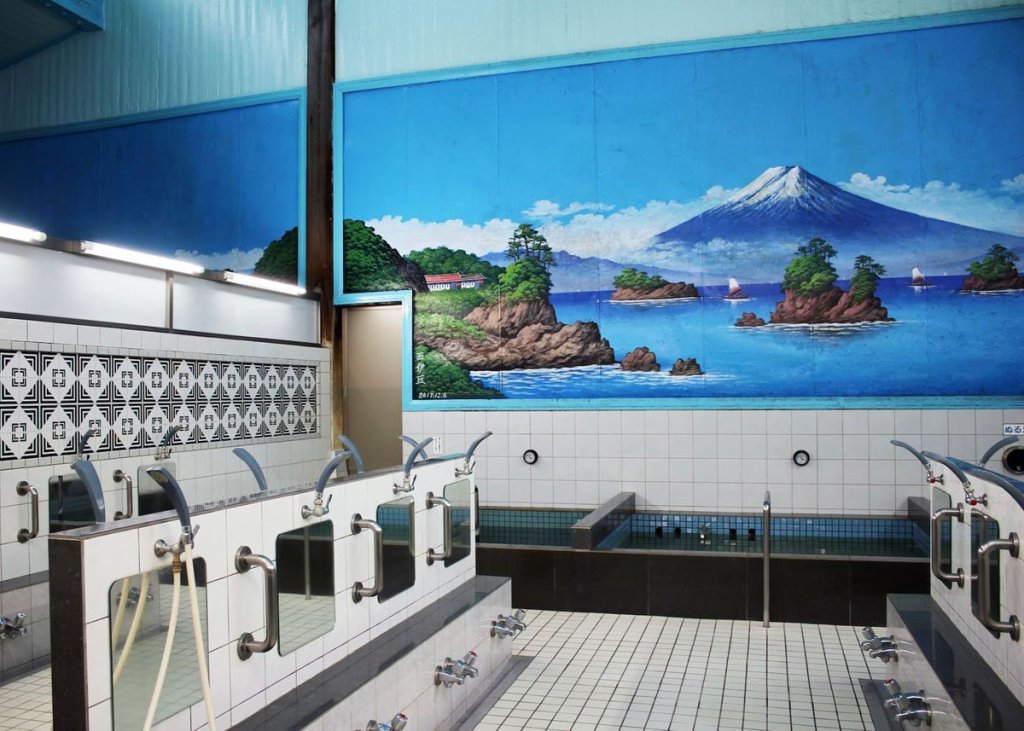
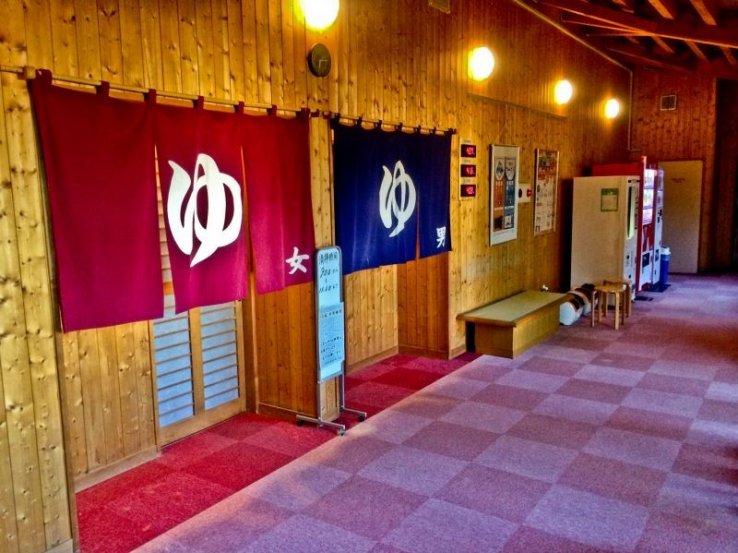
Whether they are sento or onsen, most public baths in Japan are constructed in a similar style. Generally, there will be two bathing areas separated by sex. Upon entering the designated area, you arrive to a locker room, where you remove your shoes and all your clothes. Public bathing is done completely nude and wearing swimwear would be considered a faux pas. In the next room, and usually adjacent the baths there will be several sit-down shower stalls. Many baths also offer saunas, steam rooms, and many different kinds of baths such as cold baths, baths with jets, baths for one person use, and outdoor baths.
There is a proper etiquette to bathing in public in Japan. First, at many bathhouses (as well as public pools) there is a ban on tattooed individuals. This is because in Japan tattoos are associated with the Yakuza, the Japanese mafia families. Slowly, this taboo is eroding though, both because of the decline of influence and membership of the Yakuza, and because of the growing acceptance of tattoos in Japan. As some of you may know, I have a few tattoos, so bathing in public is always a bit of a crap-shoot. However, at this bathhouse, I looked over and saw an old man with ornate, Yakuza-style tattoos covering his shoulder and back drying himself with a towel. I realized that meant my small tattoos wouldn’t be an issue. These days, a number of establishments also allow entry as long as one covers up their tattoos.
Next, before entering the bath, you must be completely clean. This is done by using the shower stalls. I’m not quite sure how long it takes someone to be seen as “clean enough” to enter the bath, but it seems to be somewhere around 20 minutes of showering. I usually just wait until everyone who was there before me is finished using the showers, and then I get in the baths after about 5 more minutes. Many places offer soap and shampoo for free or for a small price, as well as towels for rent. You must make sure you have completely cleaned the soap and shampoo off of yourself, as bringing any of it into the baths would also be considered a faux pas, and may result in being asked to leave. Also, things like talking loudly, splashing, drinking or eating, and generally making a lot of noise will reflect poorly on you, and you are expected to remain relatively quiet, although you can have a quiet conversation with someone nearby if you want. In general, time in the bath is considered a time of quiet reflection. Finally, once you are clean, you may enter the bath. I find the baths are quite hot compared to hot tubs at pools in the US. I can only stand to stay in for a few minutes at a time.
Now, there are a lot of claims about the potential health benefits of spring water, but I can tell you one thing for certain: visiting a sento or onsen in Japan will leave you feeling relaxed, recharged, and refreshed. These days, as more and more houses and apartments have built in shower and bath facilities, sentos are on the decline. There isn’t much of a demand for ordinary bathhouses. That said, I think there will always be a place for the higher end onsen. I would recommend visiting one if you ever are in Japan, if only because it is something unique to Japan and Japanese culture, even if it may be a bit out of your comfort zone. After about 30 minutes at the bathhouse in Aichi, I was able to clean myself, put on clean clothing, and leave feeling refreshed. I purchased an ice cold ginger ale from the vending machine in the lobby and left to explore the rest of the city.

 Sam in Japan
Hi Buddy, it is after a while we got to read your writing and as usual made me feel like I was the in one of Onsen or Sento, I hope you feel much relaxed and rejuvenated after and by any chance if I do visit I will try it for sure.Thanks again and keep writing.
Love
Dad.
LikeLike
Would love to experience this! I actually have never even been to a hot spring right here on this side of the Pacific rim!
Great to hear your adventures!
LikeLike