I have been asked by some of my friends and family back home questions about the nature of Christmas in Japan. People are wondering if they celebrate it, and if so, what kind of things do they do. Well, they actually do celebrate Christmas here, in a way. Christmas is not a traditional holiday in Japan, as Christianity was never that widespread or influential enough to impact the culture much. I would say Japanese Christmas is mostly derived from pop culture depictions of Christmas in Western media.
Frankly, Japanese Christmas is very superficial. I would say most exposure the average Japanese person has to Christmas is from Western, mostly American, films. As such, many Japanese people are familiar with the aesthetics of Christmas. Holly, wreaths, and artificial Christmas trees are all displayed at businesses and homes. Many of my schools have placed Christmas trees in our lobbies, which makes it feel a bit festive. Some people decorate their homes with lights. Given that there’s no Thanksgiving and Halloween is a minor holiday people were putting up Christmas decorations in October.
Christmas music is very popular as well. Standards like “Jingle Bells” and “Silent Night”, as well as popular music like “Last Christmas” are very familiar to Japanese people. One of my Japanese English teachers told me that most Japanese people actually think “Last Christmas” is a happy song because they can’t understand the lyrics. Unfortunately, the John Lennon Christmas song is very popular here. I’ve gotten quite tired of hearing it. There is also a lot of native Japanese Christmas music that gets played a lot. This music is usually romantic with young couples being the subject matter.
Christmas is also seen as a romantic holiday in Japan. Many couples go on dates on Christmas, and buying a gift for your partner is expected. Additionally, it is kind of seen as a “party” holiday, like Halloween. For instance, my local bar hosts an annual Christmas party with DJs and they let girls wearing a Santa dress come in without paying a cover. I think this sums up the Japanese Christmas spirit. The winter holidays are kind of the opposite of how they are celebrated in the US. In America, Christmas is the family holiday while New Years is more associated with partying. In Japan, New Years is the time when people return home to visit their families, and have a quiet celebration and meal together, while Christmas is the holiday to party and celebrate the winter season.
As far as actually understanding the meaning and reasoning behind Christmas, I would say most Japanese people are unfamiliar. While most people here know who Jesus Christ is, most don’t know we are supposedly celebrating Jesus’ birthday. People get it when you point out the “Christ” in Christmas usually. There are, of course, some Christians in Japan, and I’m sure they celebrate similarly to Christians around the world by attending mass. Santa Claus is much more recognized and associated with the season. Many of my students even receive presents from Santa. When it comes to more arcane icons of Christmas like Saint Nicholas, there is little knowledge. Even Charles Dickens is obscure here.
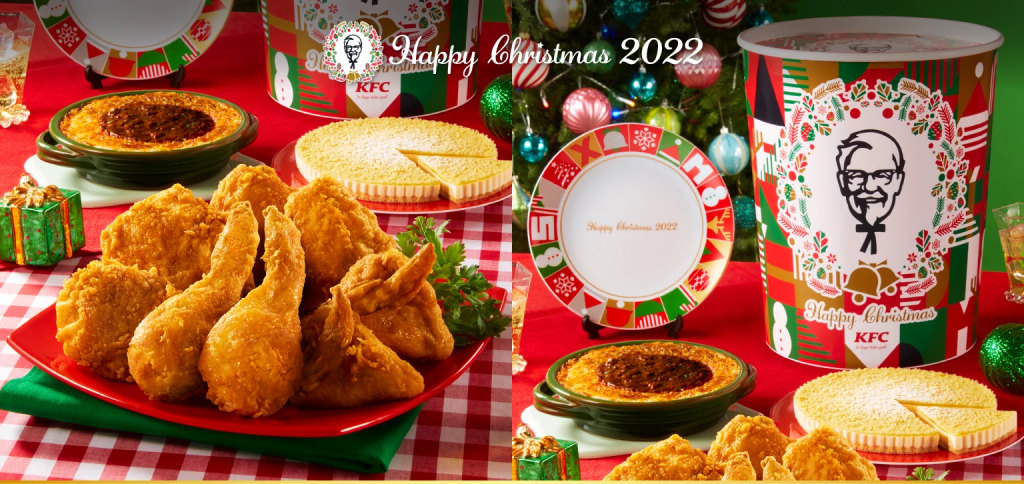
Perhaps the most infamous traditions of Japanese Christmas is a KFC dinner. This amusing tradition actually stems from a marketing stunt by a KFC franchise owner in the 70’s. He ran a promotion depicting KFC as the “American way” to have your Christmas dinner. Today, many people across Japan eat fried chicken on Christmas. People even reserve their orders months in advance so they will be spared from waiting in the long lines that these restaurants bring every Christmas. As a result of this marketing lie, many Japanese people think it’s common to eat KFC and fried chicken on Christmas. I can’t help but find the notion that we eat fast food on our most sacred holiday a bit insulting, but I suppose part of the reason I’m here is to set the record straight on things like this. I have been incorporating Christmas lessons into my classes lately, and I have been teaching my students about the ham we traditionally eat instead of fried chicken.
As you can see, Christmas in Japan is quite different from Christmas in America. I don’t think any of this cultural adaptation is necessarily bad, I think it just reflects the globalized world we live in and the cultural influence of the United States and other Western countries. The decorations and the music definitely help me feel merrier this time of year. In order to combat homesickness, the other foreign English teachers who haven’t left for the holidays and I will be hosting a small Christmas party tomorrow. It will be nice to have this semblance of the holidays and I am looking forward to it greatly.



 Sam in Japan
Looks festive and Merry Christmas!
LikeLike
I enjoyed your commentary on Christmas and of course related to your impression that the celebration in Japan does not reflect its religious origins. Similarly and personally Gus, I, and his two housemates adhered to the traditional “Going Chinese” on SE 82nd and SE Duke and gifted ourselves with 4 hefty entrees, left the appropriate to the penny 20% gratuity ( $15.60), and went our stuffed and merry way…
LikeLike
Hi Buddy, Merry Christmas & Happy New Year in advance hopefully it will work better that way, I am glad and happy to know that you are trying to explain or change the way how the Japanese celebrate Christmas and I am sure that you will help them with it and you will do a wonderful job buddy.Hope u have a good Christmas celebration with your friends and like I said everything thing in moderation helps.
Love.
Dad:)
LikeLike
It’s amazing how one gains a sense of their own culture by being immersed in another! What a meaningful experience for you. We all miss you here, for birthday, Christmas, and New Year’s merry making. We will have to have a family gathering upon your return!
LikeLike