I am getting tired of prefacing each of these posts with apologies for not writing more frequently. I am sorry, but finding motivation to make these posts can be difficult at times. Still, I am very happy to write to everyone who is interested in my life at the moment. August was a busy month, encompassing summer break, so let me get right to it.
Tokyo Trip
In late July, one of the departing teachers left me their old car. I have decided to park it on the mainland in Niigata. You know how everyone says Japan has advanced public transit and everyone uses it and its great? You can throw that notion out the window when it comes to Niigata. Both the city and the prefecture are lacking in public transit options, and with the exception of the bullet train to Tokyo, the rest of the trains and buses are slow and don’t reach many places. I think I remarked in my first post about Niigata city on being surprised at how much of a “car city” it was. I’m hoping to use the car to access more remote places of Niigata, and northwestern Japan in general.
Another one of my good friends and colleagues was leaving in August, and I thought it would be the perfect time for a road trip with my new car. Three of us piled into my new car and set off for Tokyo. Our first step was taking the car ferry. The fare was about $200 for the car. You can understand why it is common for Sado residents to own two cars: one for Sado driving and one for mainland driving. We boarded the ferry in an efficient manner. We had a two hour ride to Niigata city, where my friend expressed her sadness at leaving Sado for a final time, comparing it to seeing Sado from the ferry for the first time on her arrival. Truthfully, I was also upset as we had grown quite close in the last year.
After we disembarked, we headed for the highway. Something you may not know about Japan is all the highways are private, toll roads. Paying the toll was simple. You drove up to a machine that gave you a ticket, then when you left you would pay an attendant for the required amount. In any case, the roads were in excellent condition and people seemed to drive very safely, giving plenty of distance. There were also no giant trucks to contend with like driving on the American interstate. The drive was picturesque. Weaving through the mountains of Niigata we went through many offseason ski and hot spring resort towns. We took our only stop of the trip in Gunma prefecture. This is the neighboring prefecture to Niigata, and it’s where the mountains start to give way to the Kanto plain, the most populated part of Japan.
We grabbed ramen and head to Mt. Haruna. This is the setting of Initial D, one of my favorite anime series. This is a famous 1990’s Japanese cartoon about downhill street racing and Mt. Haruna is the “home course” for the protagonists in the series. Unfortunately, I made a wrong turn and we went up a smaller road to the peak and start of the famous road course. As we approached the top, we found the road was closed due to fallen trees. We found a detour, but by this point, we were dangerously low on gas. Our final, steep climb to the top was anxiety ridden, as we were out of cell service on a narrow road. As we curved around switchbacks through the dense Japanese mountain forest, we eventually made it to the peak, where we found a remote gas station. The parking lots at the top of the road were swarming with modified cars. It seems I wasn’t the only one inspired to make a pilgrimage.
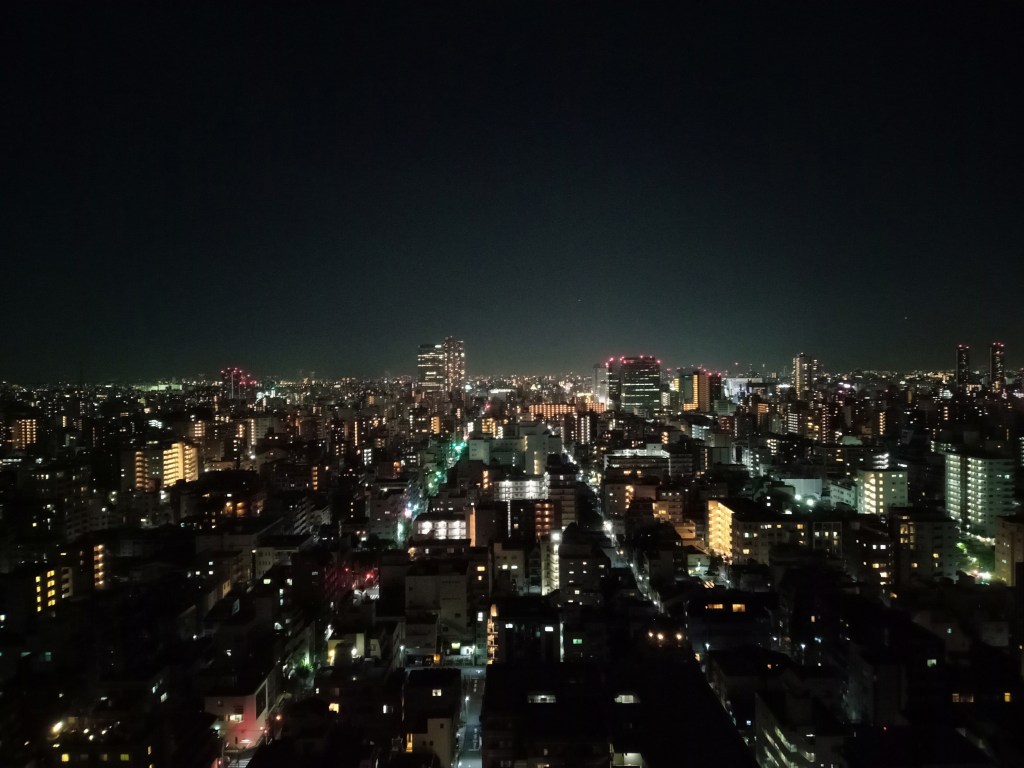
I was absolutely overjoyed to be driving down this hill. It was something I had wanted to do since I arrived Japan. I was excited to be sharing the same road as “The White Ghost of Akina” Takumi Fujiwara and his legendary 1985 Toyota AE86 and recognizing some of the iconic curves of the series’ intense races. Although it took us nearly an hour to climb the hill, we reached the end of the course in a few minutes. After this nonsense, we promptly resumed our travel to Tokyo with no further detours. We traveled through Saitama prefecture, and the road continually widened from two all the way up to five lanes as we approached Tokyo around dusk. Driving on the Tokyo Expressways at night just felt cool. The roads are all elevated and wind through the tall Tokyo buildings. It feels like you are flying through a futuristic neon city. Although, I must add the courtesy and safe driving seemed to subside within Tokyo, where people seem much more cutthroat. As expected of a city, I suppose. The final toll came out to be around $100. Between that and gas, split three ways, it was significantly less than a bullet train ticket, which are around $120.
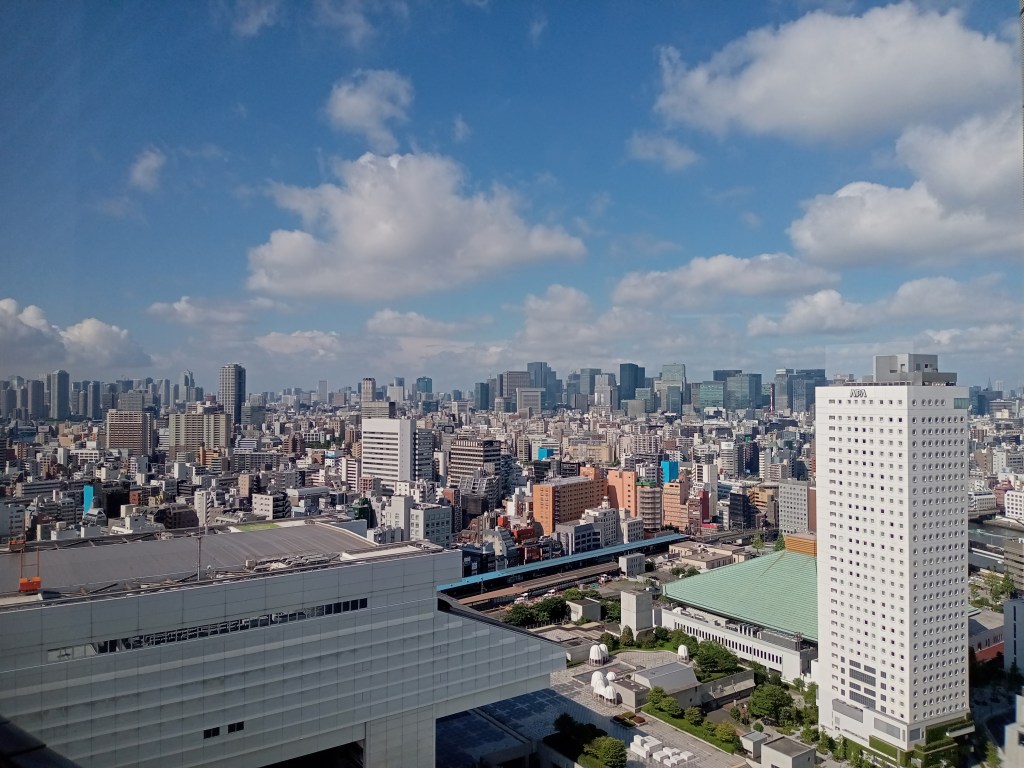
We reached our hotel at night. We were staying in the Ryogoku area of Tokyo. We were all quite tired after travel, so after pizza we all slept. The next day, one of the other teachers left to go meet his brother, who was arriving in Japan that day. My departing friend and I had her last day in Japan to spend. We started the day by visiting the Rikuguen Gardens. This was formerly a private garden belonging to the Shogun of Japan, and after Japan’s modernization, it was bought by the influential Iwasaki family that would come to create the famous Mitsubishi Company. Today, it is a public garden. Driving in Tokyo was fun but stressful. It was OK for a short trip like this, but I can’t imagine commuting every day by car in Tokyo. There is so much to watch out for, from bikes, pedestrians, double parked cars, scooters, etc. The gardens were lovely and the shade of the ample trees in the park provided a cool respite from the August Tokyo heat and humidity. The park reminded me of the Portland Chinese Garden, not in architecture but as far as being a walled tranquil space in a dense urban area. You could see the neighboring high rises above the park walls. My friend, being a New Yorker, compared it to Central Park, which might be a more apt comparison. We enjoyed a nice walk around the lake and enjoyed a traditional Summer fermented rice beverage at the tea house with views of the manicured island in the middle of the park. Being a former Shogunate holding, the park was designed to replicate some of the famous views of the Shogun’s domain. It was one of those moments where you can’t really believe you’re in one of the largest cities in the world at the time.
After our walk in the park, we took advantage of our car and had a road tour of Tokyo. We drove by the Imperial Gardens, Kabuki Theater, and several of the southern islands on our way back to our hotel in Ryogoku. We dropped off our car to the valet and walked to the National Sumo Arena. Ryogoku is known as the “Sumo district” in Tokyo. The arena where all the tournaments take place was within view from our hotel windows. The museum was small but informative about the ritual and practices of Sumo. While Sumo is seen as a sport in the west, and it kind of is, it actually has its origins in Shinto ritual and is seen as a quasi religious ceremony-cum-sporting event in Japan. At night we celebrated her final night with a short bar crawl through the nightlife area of Ryogoku. It was a fun send off.
The next morning we checked out and I drove her to Haneda Airport in southern Tokyo. The send off was sweet. We hugged and exchanged promises of meeting again in the vague future someday. It was a sad moment, as we all know how easy it is to merely say you will meet again, we never know what the future contains and if these promises will ever come true. Still though, I would be happy to meet her again some day. I remarked once here about this being the nature of the JET Program. It is not a career, with a maximum of five years, so everyone has different expectations and wants something different out of the program. The annual revolving door of teachers can make it hard to form long lasting friendships. Nevertheless, I was happy to spend the last year on Sado together with her and the other departed teachers. Shikata ga nai, as they say here, the Japanese version of c’est la vie.
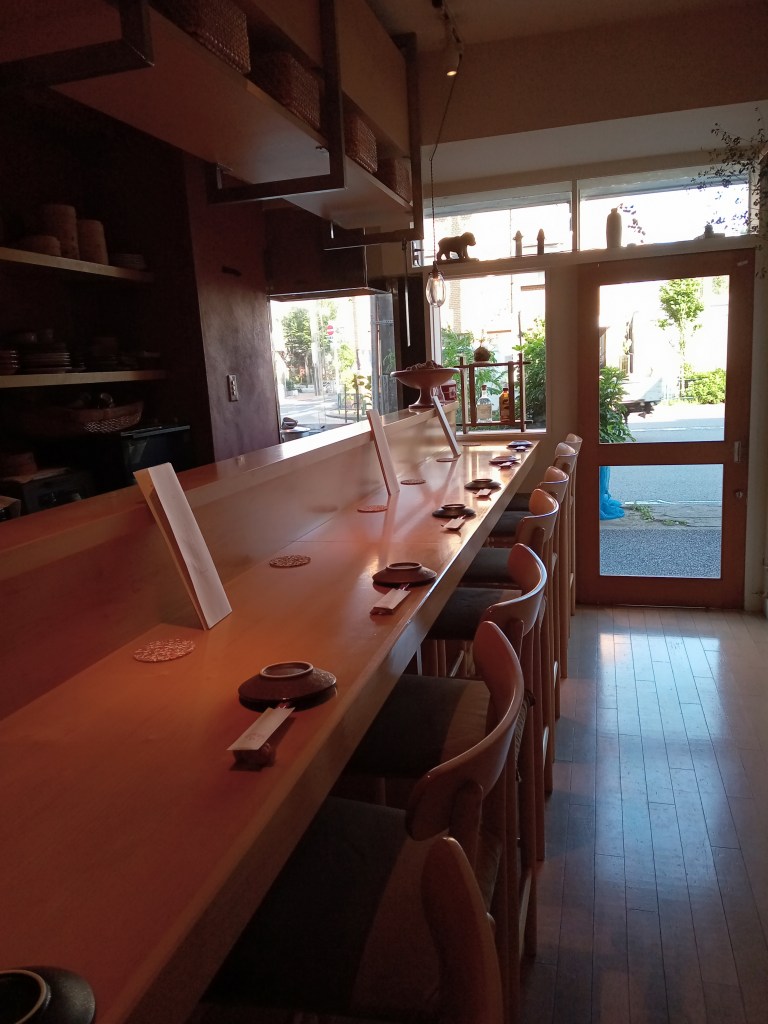
30 minutes after seeing her off, I was contacted by another Sado teacher who happened to be in Tokyo at the same time. It was summer break after all. We managed to meetup for lunch and went to the market where my friend Teppei works in an upscale part of Tokyo known as Toranomon, which means “Tiger’s gate.” I surprised Teppei at his work. I am always glad to meet him. He invited me to see his new bar that he opened this year after lunch. We had tonkatsu from a nice restaurant. After lunch, I drove to Teppei’s new bar. It was one of those cozy hole-in-the-wall places with a straight bar top, 6 or 7 stools, and a small kitchen behind the bar where they cook everything in front of you. It was a modern, wooden style bar. I think he took inspiration from Portland, as he had several craft beers available and even had cans of Breakside on display. The food was very tasty, and of course it was nice to be speaking with my old friend again. I couldn’t stay for long though, as I had my return trip to Niigata that night. I made the drive solo, spent the night in Niigata city, and finally arrived home around 10am.
Earth Celebration
The biggest event on Sado is the yearly Earth Celebration. It is a festival of taiko drumming featuring the drum troupe Kodo. Kodo is perhaps the most famous taiko drumming group in the world. Taiko drums are large drums that are played with thick wooden sticks. Taiko drumming has its origins in late antiquity, and has been used ceremoniously for religious purposes, warfare, and celebration in Japan for centuries. Kodo has helped popularize this Japanese tradition around the world. Kodo also happens to live and train on Sado. Kodo members live an ascetic lifestyle on a compound where they have a rigid schedule. They practice drumming, exercise with daily runs, cook and eat, and sleep in dormitories together. All this time they are barred from having a cellphone and romantic relationships. It all seems very strict to me, although I’ve heard it has relaxed somewhat since the 80’s and 90’s. I can’t argue with the results though. They are all very skilled instrumentalists.
The Earth Celebration is a three day festival that takes place every August. It happens around the same time as Obon, which is the Japanese holiday venerating dead ancestors, as well as being the peak travel period in Japan. There is a three day holiday period so many people return to their family homes or take the opportunity to vacation. As a result of these two events, Sado was easily the busiest I had ever seen. The Earth Celebration draws people from all over Japan and the world. It was nice to see the island so busy. The celebration was a bit muted this year as the venue was much smaller than usual due to COVID restrictions, though it was the first live show in three years.
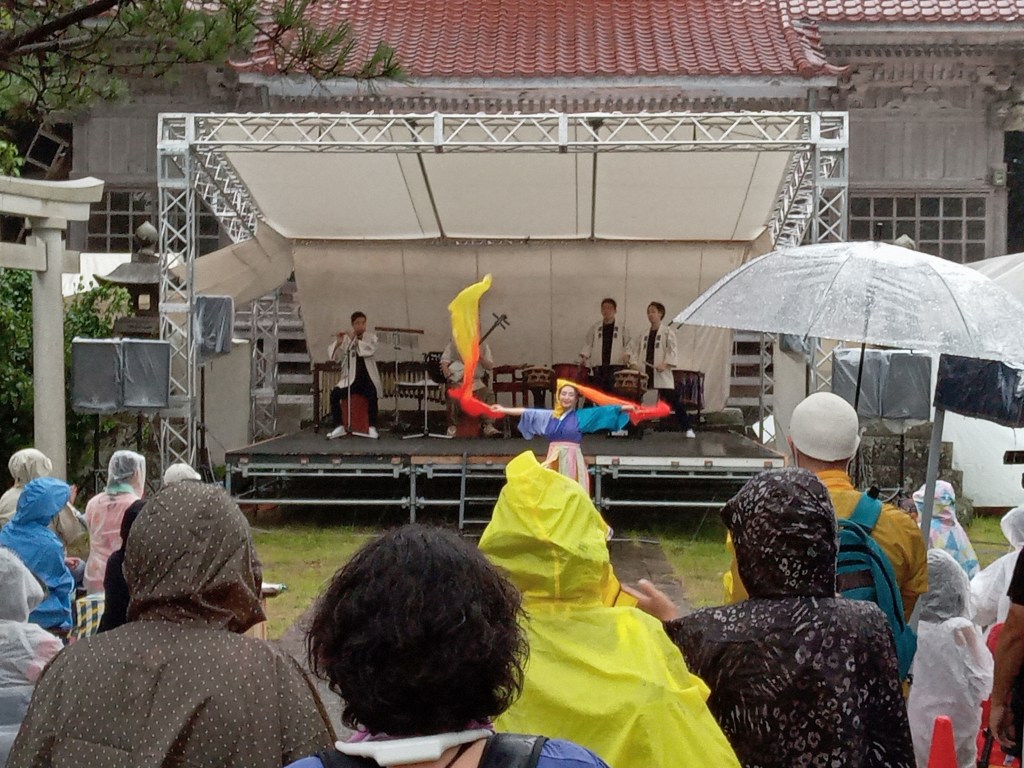
The festival took place in Ogi, a town on the southwest coast of Sado. I attended the performances on days two and three. The area centered around a park had been turned to an outdoor venue and festival. The festival had art and food stands from the mainland. There was also a second stage where some of the newer Kodo members performed before the main performance. They performed a sort of dance show with a talented artist named Chieko. It was a kind interpretive dance play. First she appeared dressed as a young woman, before a demon came and terrorized her while they danced around the stage to the drum beat. She left the stage and returned dressed as a sort of diviner, and engaged in a metaphysical battle to cast away the demon. It was a very animated and interesting performance, and it was easy to follow this story. After this warm up performance was the main event on the main stage. As soon as we sat down and the performance started, the clouds began absolutely pounding everyone with rain. It was futile to stop it and by the end of the show, I was completely soaked. Still though, I enjoyed the show. In fact, I found it somewhat appropriate that a celebration of the Earth would be marked by the presence of heavy rain. Anyway, the performance was fantastic. It isn’t just drums but also includes flutes and other traditional Japanese instruments. You really get a sense of the physical shape of these drummers. For one thing, their costumes are quite revealing of the bodies they tone through intense training. During the show they glisten with sweat from beating a drum at a sustained rate. Their coordination was excellent as well as their synchronicity. The feeling of the bass drum sound waves hitting your chest was exhilarating.
The next day was the final performance of the festival. I’ve been told that if you can only attend one, this was the one to go to. Additionally, it would be a little different than the one I had seen the previous day, as this one would be in collaboration with two guest artists. Miyavi is a Japanese rock and pop guitarist. One of my friends told me he was quite popular around 15 years ago. Furthermore Kodo would be joined by Hiromitsu Agatsuma who is a master shamisen player. The shamisen is a traditional stringed Japanese instrument that is kind of like a banjo with a distinctive twang. The final show had incredible energy. The drumming and dancing was excellent. I particularly enjoyed a section when three drummers came out with two large sticks attached to each of their backs. They were about 15-20 feet long. They would drum and then lean over with such force that the sticks would whack into the ground with a whip-like crack. It was an amusing costume, but definitely a testament to their ability to maintain the rhythm that they could even play those sticks in time to the beat. My favorite parts of the show were during songs where the two guest artists played alternate dueling call and responses that to me seemed like a challenge to the other. Both players were highly skilled and hearing the electric rock guitar in contrast with the traditional shamisen was truly amazing. The finale was a celebration with maybe 25 Kodo members on stage, drumming, playing flute, and dancing and singing with confetti flying and flags waving. The show was fantastic and I highly recommend it. I would love to return in the future.
The Germans
As I mentioned earlier, August was the peak of Sado tourism. I had the pleasure of meeting a kind group of Germans. Actually, they weren’t all German. Three were, one was Austrian, one was Korean, and one was German by nationality but originally from Russia. Still though, I found it easier to just refer to the group as the Germans rather than spell it out. In any case, they were all visiting from Tokyo. Most worked at a lab at a university in the Tokyo area. I ended up coming with them to do a lot of the touristy things I had yet to do in Sado. Despite living here for 9 months now, I still hadn’t seen a lot of the requisite tourist sites. It reminds me of how when I lived in Oakland I would rarely visit San Francisco to see the tourist sites, but when I moved to Portland and returned to visit I felt like I usually made time to see the things in San Francisco that I neglected to before.
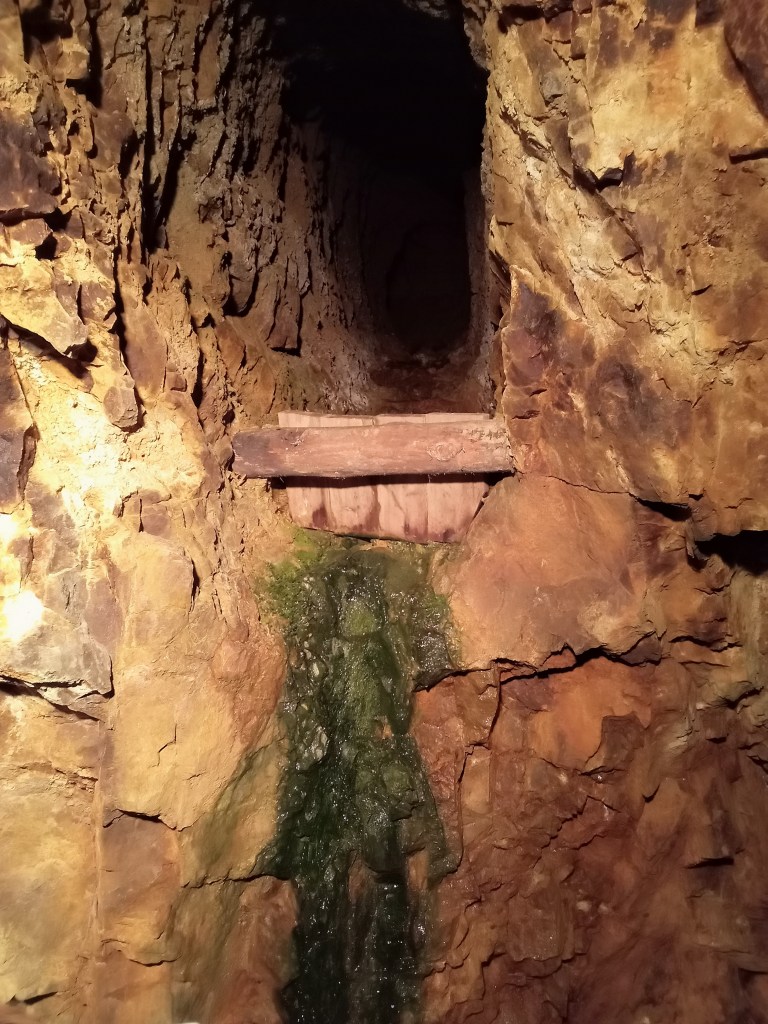
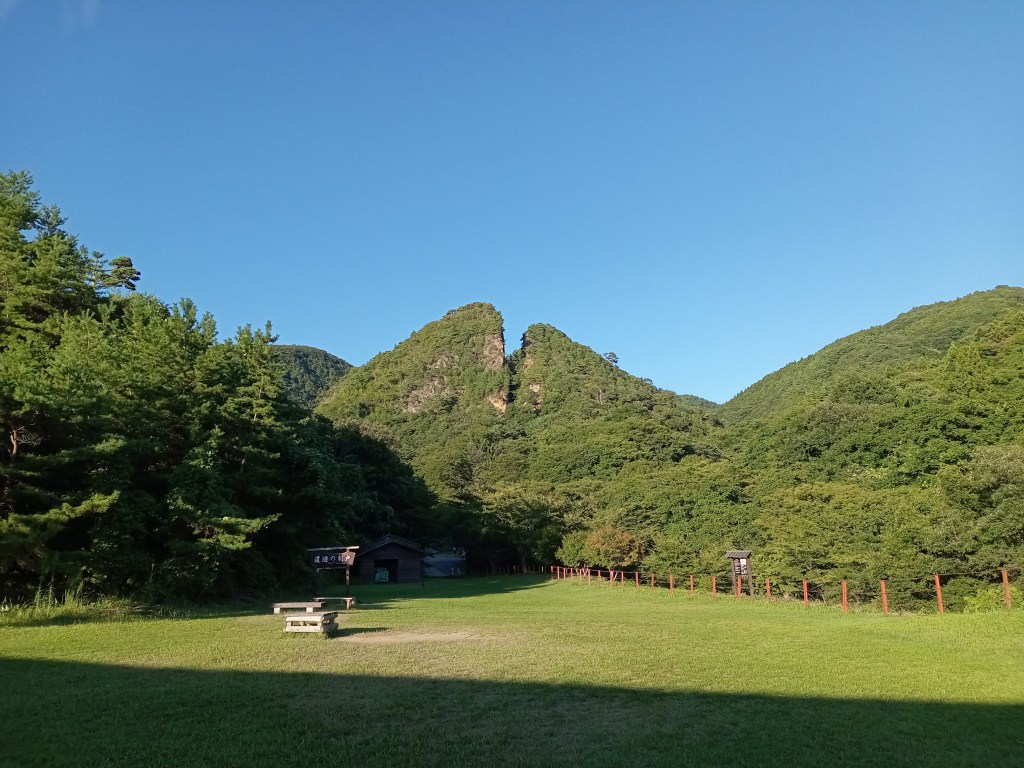
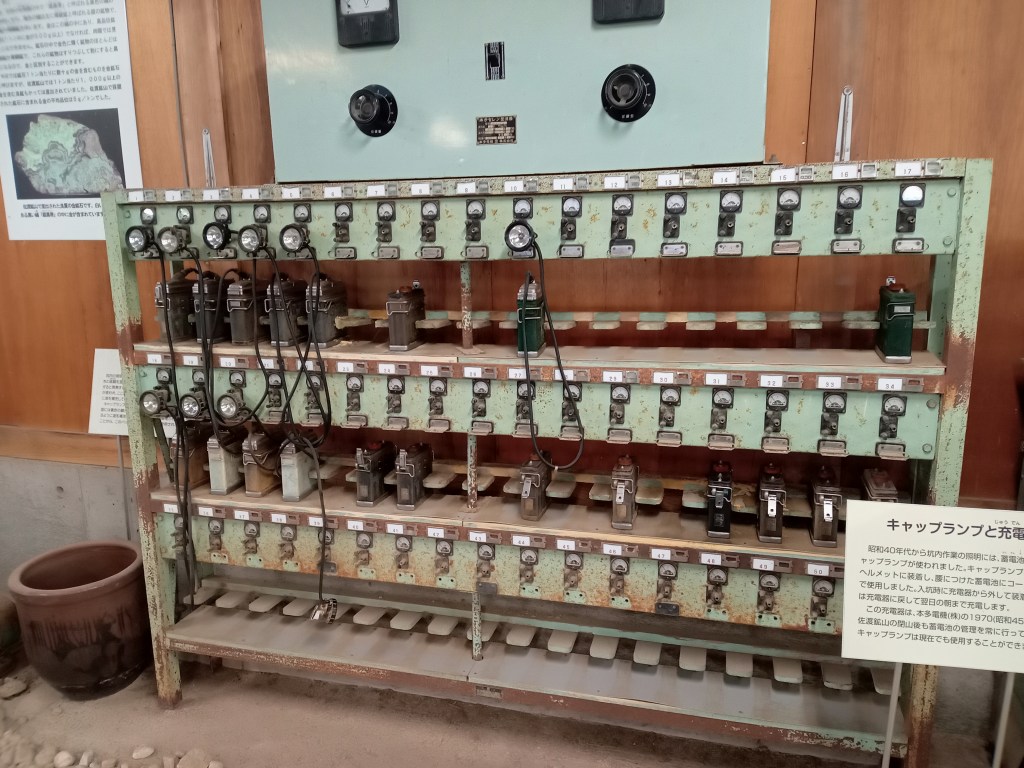
The first thing we visited was the Gold Mine. While the Earth Celebration is the biggest event in Sado, the Gold Mine is the most important monument. I have discussed the Gold Mine here a bit before. Indeed, when discussing Sado the Gold Mine is bound to come up at some point. When I was telling my friend Megumi that I was to be placed in Sado when I first learned, her first response was about gold. This is kind of how Sado exists in the Japanese popular belief. We opted for a short route through an old tunnel. The cold subterranean air of the mines were a welcome respite from the August humidity and heat of the outside. It got as low as 50° and the cool, dank atmosphere allows parts of the mine complex to be leased out to age sake. Inside there are several plaques that document the history of the mine. The Shogun era mining was absolutely brutal work. Homeless people and criminals were sent to work in slave like conditions. The life expectancy of a miner was not very long. An interesting aspect of the mine is the sheer length of its operation. It was an active mine from the early 1600’s all the way until 1989. You can imagine how much the technology and working conditions changed in that span. At the end of the short walk there is a building containing a lot of artifacts from the 300 year long operation of the mine. I did enjoy the walk but I would like to return at some point. I was told by a friend later that the route we opted for was the shortest as well as being the least interesting. Maybe some day soon I can have a post dedicated to the mine itself.
We spent a lot of time at the beaches around Sado. Being an island, Sado has plenty of opportunities for swimming. We mostly went to Tassha Beach and Sobama Beach. Tassha is a beautiful beach popular with tourists and locals alike. The beach is adjacent to several volcanic cliffs and small islands. There is also a lot of wildlife in the area. It is a very popular snorkeling spot. Sobama is perhaps the “best beach” of the island. It is the biggest sandy beach on Sado. Unfortunately, most Sado beaches are quite rocky or only have small sandy strips. Sobama on the other hand is a few miles of soft sand. Likewise, it is a very popular beach on Sado.
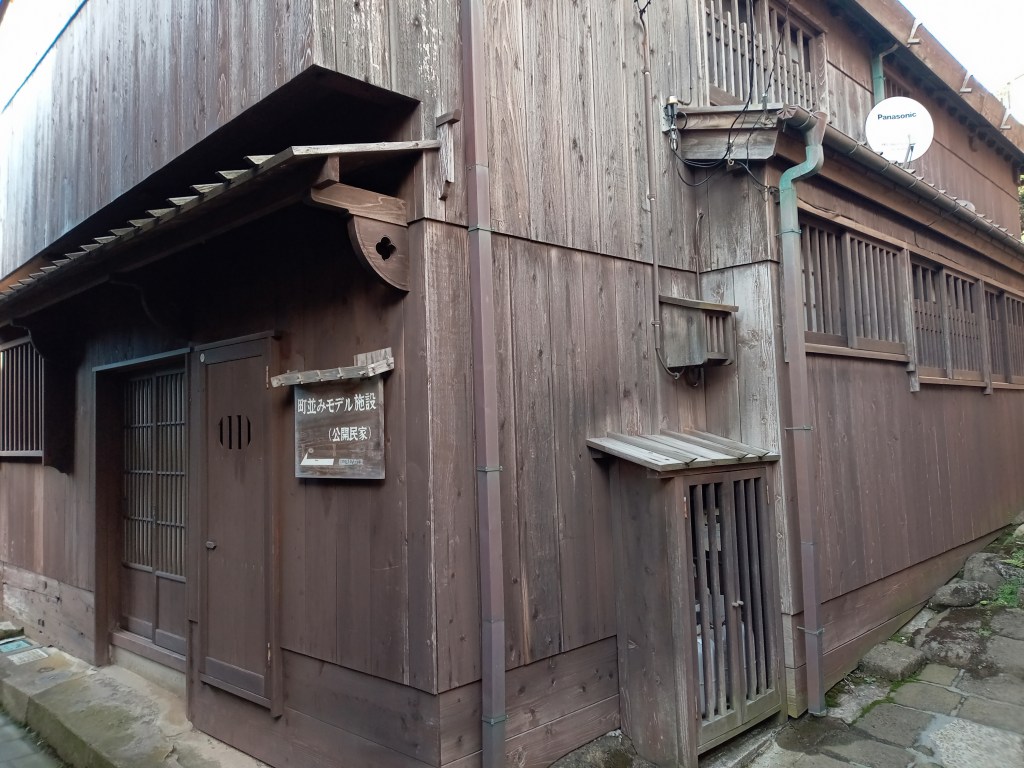
After a day at Sobama Beach, I went to Shukunegi with one of the Germans. Shukunegi is another famous tourist attraction on Sado. It is a preserved wooden village originally constructed in the 16th Century. It was built in a valley and a natural harbor so it is very protected from the wind and weather. Its rustic buildings and historic charm is a popular spot for photographs. Interestingly, people still live in Shukunegi. I feel like living in a tourist attraction would be a bit strange. It is also important to keep it mind when visiting and to be respectful of peoples homes. The wooden homes, narrow streets, and deep drainage canals hearken back to medieval Japan. The oldest home in the area was nearly as old as the US Constitution, which put it into perspective for me. We tried to book a ride in the taraibune, the traditional barrel-like boats of Sado, but unfortunately we were too late and they were all booked. I will definitely have to come back and try it again.
After our walk through Shukunegi, we met up with another German and headed for the onsen at Hotel Osado. Onsen are hot spring water baths and are very popular in Japan. Being a volcanic island, Sado is home to several hot springs. I had always been recommended the baths here and wanted to go, but I was too worried. If you didn’t know, I have a tattoo and Japan is very strict about tattoos. While it isn’t visible when I am clothed, the bathing at onsen is nude and not in a bathing suits. Several onsen have been known to not allow entry to tattooed individuals. This policy has its roots in organized crime, as tattoos are considered a mark of being a Yakuza affiliate. In any case, with the Germans I was motivated to try it anyway. Thankfully, no one bothered me! In fact, the German lady told me in the women’s bath area, there were two other Japanese women with prominent tattoos. I suppose the hotel’s policy was permissive. I have heard the stigma is slowly going away in Japan. I have seen several Japanese people here with tattoos. Maybe Sado is just different and more accepting. I have my theories. Anyway, the bath was nice and soothing. The onsen was outdoors and overlooking a cliff and the sea. We missed the sunset, but it was still nice to see the boats on the water and the Aikawa townscape. If you are ever in Japan, I recommend visiting the hot springs.
After about five days, I bid the Germans farewell. They were actually biking back home to Tokyo over three days. They were all very nice and expressed their enjoyment of Sado and desire to return someday and appreciated my recommendations and willingness to show them around. I feel as though Sado is my home now, so it made me happy to see them enjoy it. Truly, I enjoyed seeing some of the famous sites I had not yet seen. In any case, I hope to see them again someday. I think one of them is planning on visiting this winter. Perhaps next month when I am in Tokyo.
Goodbye Kanai
Finally I would like to discuss my job. I have moved from teaching in Kanai to Aikawa. This was always the plan, scheduling was just screwed up due to COVID restrictions on entering Japan forcing other teachers to cover different schools. Now everyone who was set to arrive has arrived and everyone who was to leave has left and we are all where we are supposed to be. I feel like we are beginning a new year. All the new arrivals are kind and very enthusiastic. Honestly, some of the people who left had been here multiple years and were kind of “over” and burned out on the whole experience. They didn’t share the same excitement as us new people. It is nice to have new teachers who are happy to be here again. Additionally, with the departures, we lost nearly everyone who had stayed multiple years on Sado. I feel as though there has been a sort of reset with all these new people here. About this, I am excited.
I was told not to mention my departure until shortly before it occurs. I waited until my last week to let all my elementary schoolers know that I would be leaving. During my last elementary class, my students all sang a sentimental song of thanks for me. It was a bittersweet moment. On my final day, my former middle school had a farewell ceremony for me. I gave a short speech in the gym in front of all the students and teachers. I was then presented a photo album and bouquet from the student council. It was a very kind and unexpected gesture. At the end of the work day, I said goodbye to all my coworkers, who followed me out of the building and waved to me as I drove away. I will miss my former students and colleagues. They were all very nice. The Kanai students have the reputation for being the “well behaved” kids of the island. In any case, it wasn’t like I was leaving the island for good, merely changing schools. I have already run into some of my former colleagues. On an island, it is unavoidable.
Now I am working much more close to home. I no longer have to commute 50 minutes a day to my two schools. Now I cover six schools, and go to a different one every day. I am much busier now. On three of my workdays, I teach all six class periods, which rarely happened before. I was at two of the biggest schools on the island. I had over 400 students at just two schools. Now I’m not sure I have that many between all six. Teaching at smaller schools can be nice. I feel like I have more time to help individual students than I did at Kanai. I can also devise more complicated activities that wouldn’t have been feasible in classes of 30 students. I did enjoy having only two schools though. Being at the same school every day makes you feel like a bigger part of that school. I might not have had classes with them every day, but just walking through the halls together, eating lunch, helping out with clubs, playing sports, etc. makes you feel closer to the students and teachers. Going to each school once a week makes me feel more like a “guest” teacher, rather than an integral part of the school.
It has been nice to kind of have a “start over” here though. I feel much more confident in my teaching now than when I arrived. I now know some tested activities that the students enjoy and I can avoid some of the mistakes I made when I first got here. Additionally, it was fun to have my self introduction classes at all my schools again. It made me feel like a brand new teacher again. All the students are very curious about you and excited to meet you. It was just a fun first week. The students are all kind as well, if a bit less studious than my Kanai kids. I am now about 3 weeks into my new schedule. September has been somewhat unremarkable. I have been focused on getting used to my new schools. Furthermore, Summer is over, and while it has still been warm, it seems like the string of fun public events has largely ended. Jellyfish have colonized the local beaches, making swimming uncomfortable. The rice fields across the island have started to be harvested.
If you’ve read this far, thank you. I know it is quite a lengthy post this time. Truthfully, each of these topics could have been a separate post. I wanted to finish this in early September, but now it is already September 20th. I have written this over the course of multiple days while I have had free time, so I’m sure the tone is somewhat inconsistent. October is going to be a busy month for me. I am going camping, taking the Japanese driving test, and have a trip to Hawai’i planned, which I am very, very excited for. As always, I will do my best to keep you all updated.








 Sam in Japan
Hi buddy, Thank you very much of you to take time of your busy schedule and making us feel the presence being there with you by the way you are describe, I don’t think you should feel pressure to write all the time so just do your best.
Love Dad.
LikeLike
Time passes me by very quickly as well and I always find I write less blog posts than intended or take longer to do so. It was wonderful to read about your trip in August. The Earth celebrations sound very impressive, I hope I can see them one day!
LikeLike
I chuckled when I read your caption on the photo taken from your Tokyo hotel mentioning The National Sumo Arena. I guess the building has a seriously strong foundation? Invariably, you take excellent photos of this beautiful and “exotic” country.
LikeLike