The Okesa dance is perhaps one of the most recognized and strongest of the traditions of Sado island. The incantation-like singing and twang of the stringed Shamisen accompaniment is the first thing you hear over a loudspeaker when you disembark the ferry on arrival here. There are also silhouettes of the dancers in their kimono and traditional straw hats lining the sidewalk of Ryotsu’s business district. It is a traditional dance with origins in the Edo period. Every town and village on the island has their own unique variation of the Okesa. Saturday was Aikawa’s Yoi no Mai festival. This translates to “Evening of Dance” in the local dialect. It attracts visitors from all over the island and even some from the mainland.
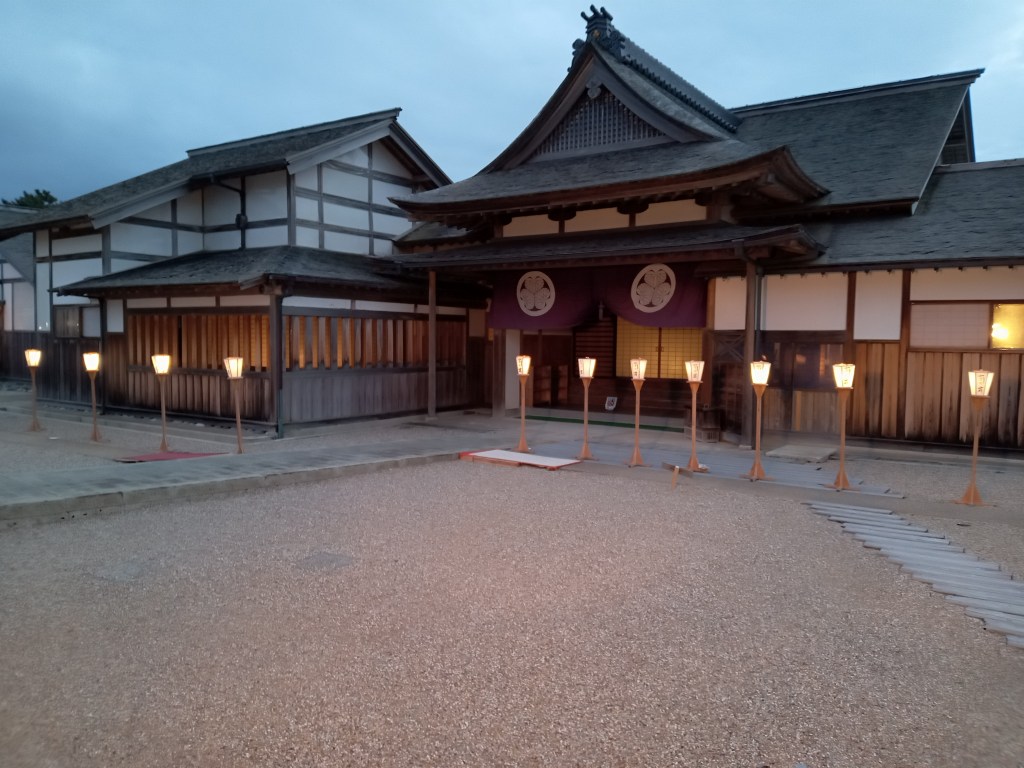
Being that my house is walking distance from the festival, I decided to host some of the other English teachers for dinner. Then we headed up the hill to Kyomachi Street in the old part of Aikawa. I think I’ve mentioned this before here, but the Aikawa of today is a shell of its old self. When the gold mine was very active in the Edo period, Aikawa was the largest town and political center of the island. They say as many as 50,000 people lived here then. That’s roughly the population of all of Sado today. Kyomachi Street was the center of the town back then. It runs from the former administrative center of Sado to the gold mine and was dotted with wooden buildings containing shops and restaurants servicing miners and the related industries. Today, only a few of these shops are open, and the street is mostly residential, as the commercial center of town has moved to the coastal, lower section of Aikawa. That said, Kyomachi Street may still be seen as the cultural and historical center of the town. It was beautifully lit by lanterns and the street was lined with tourists. Snack vendors in stalls were selling street food and drinks. A few of the onlookers were dressed in traditional kimono. It was an exciting time and the busiest I’ve seen Aikawa thus far.
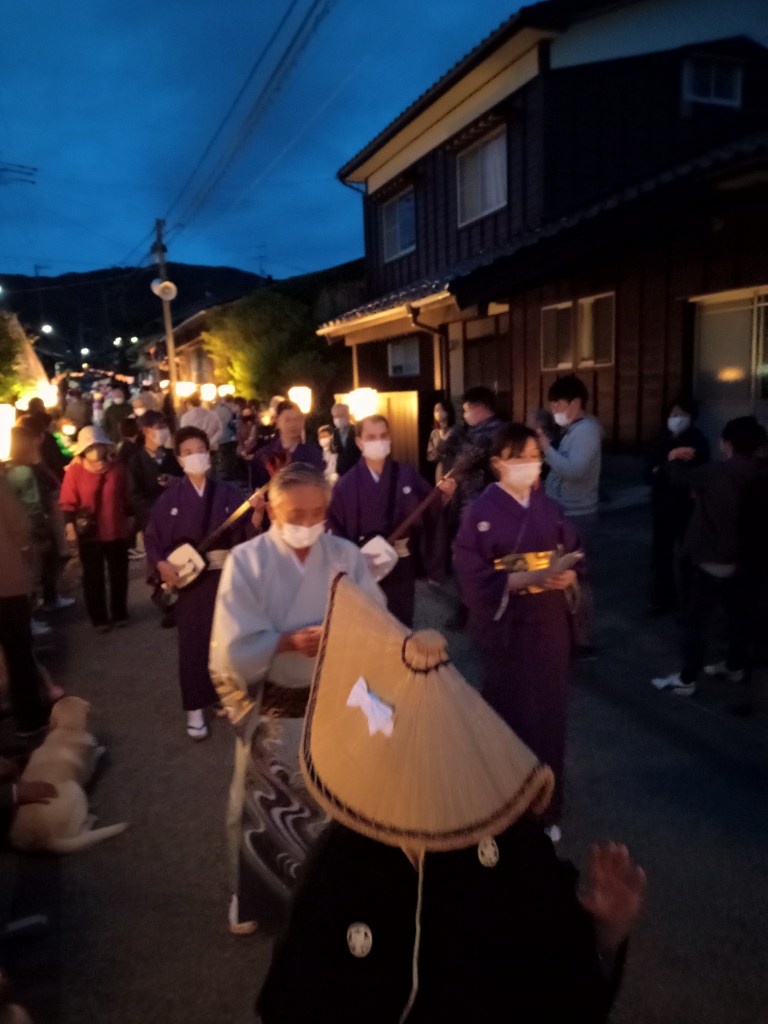
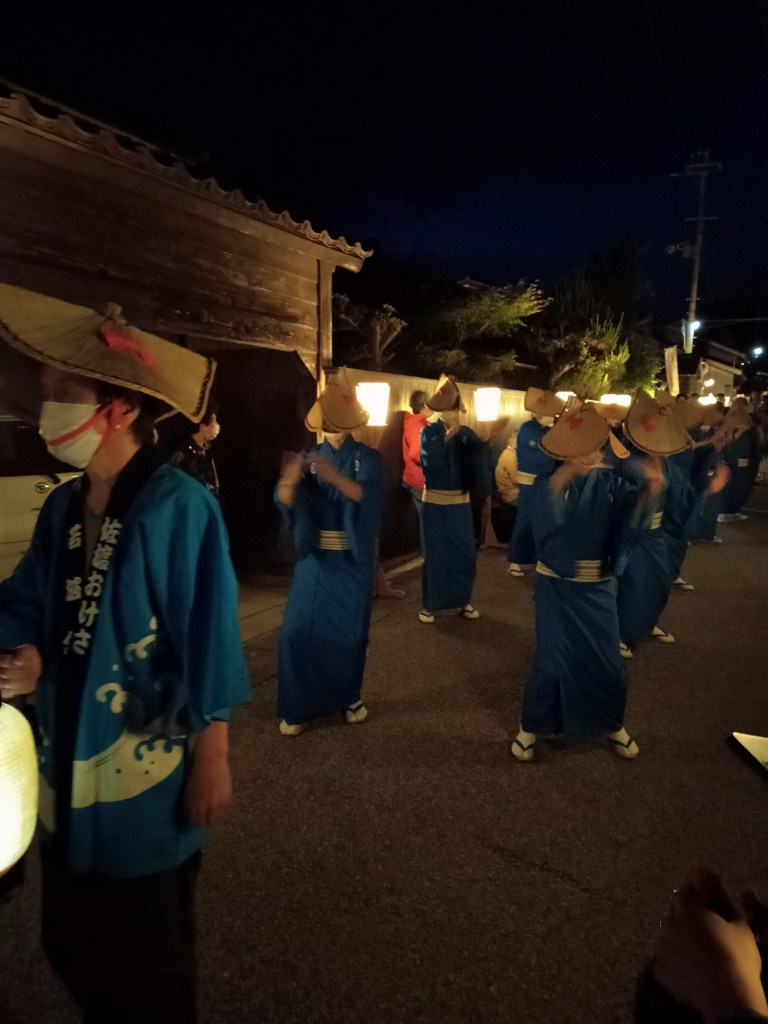
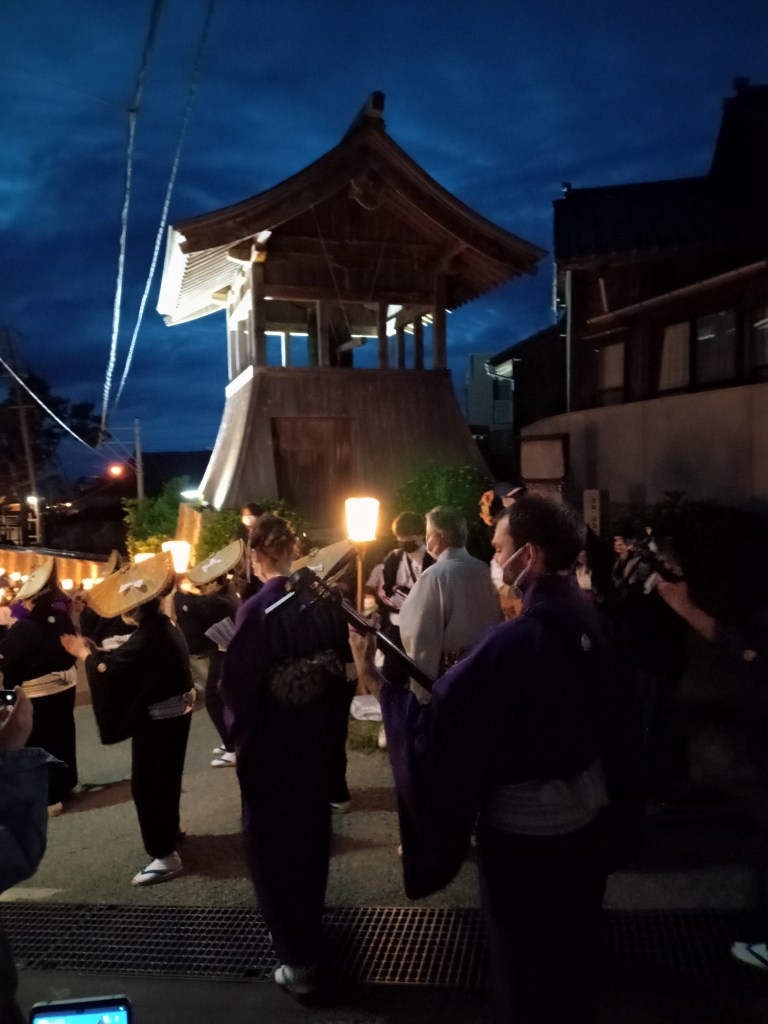
The actual dances started shortly after we arrived. I suppose it was somewhat like a parade. Various troupes of dancers slowly dance in procession, starting at the top of the hill, near the road to the gold mine and ending in front of the administrative building. The groups were organized with a lantern bearer in front, followed by the dancers, with chanters and musicians in the back. Every troupe had their own uniform of vibrant kimono, and the dancers also wore the traditional straw hat which obscured their faces from most angles. The dance is synchronized and the choreography contains a lot of very flowing, water-like movements, punctuated by a synchronized clap every few measures. There is an accompaniment by two shamisen players, a traditional Japanese stringed instrument that sounds a bit like a banjo. In the back there are a few singers, who chant a call and response song. I ran into some friends and coworkers and tried asking them what the meaning of the song could be. From most, I was unable to get a response as I was only told that it is in very old language and hard to understand or translate. I did meet a kind older woman who studied Sado history in college before moving and raising a family here. She was very helpful in explaining some of the traditions and history of the Aikawa Okesa. She told me the tradition is “only” about 400 years old. Supposedly, the lyrics were originally about all the rumors of the town: who was in a relationship with whom, who was having an affair, who was on deaths door, and so on. The governor of Sado didn’t like this gossip so he decided to have it changed to the modern iteration, where the chants are for things like asking for a bountiful harvest and success in war.
It was nice to see this famous, traditional festival in Aikawa. People in Sado are very proud of their local villages and towns and living here makes me feel as though Aikawa is my home, so it makes me proud in a way, even if I don’t have the years or generations long connection to this place like some. It makes me glad to have gotten placed in a particular part of Japan that has such a rich culture and unique history. Finally, here is a link to a video of the festival. You can get a good sense for what it is like here. I think I even recognize some of the dance troupes from this year. In any case, I’m sorry for the poor quality of the photos. I haven’t been in the habit of taking my American phone with me recently, so I’ve been using my Japanese phone which has a much worse camera. Anyway, until next time and thank you for reading.




Americans have mostly been cut off from their cultural lineage and yearn for a connection to the past. I am so happy you are experiencing life as it could be when a people value and preserve their culture. What a gift!
LikeLiked by 1 person
Yeah. I guess going for a value meal at MacDonalds doesn’t fully qualify as “cultural heritage’.
LikeLiked by 1 person
Hi Buddy, The pictures are not bad they are nice and clear,I am glad that you are liking the Japanese culture and enjoying their traditions, thank u for the the pictures and the post.
Love
Dad.
LikeLiked by 1 person
A really nice post and fun to watch the video of the festival!
LikeLike