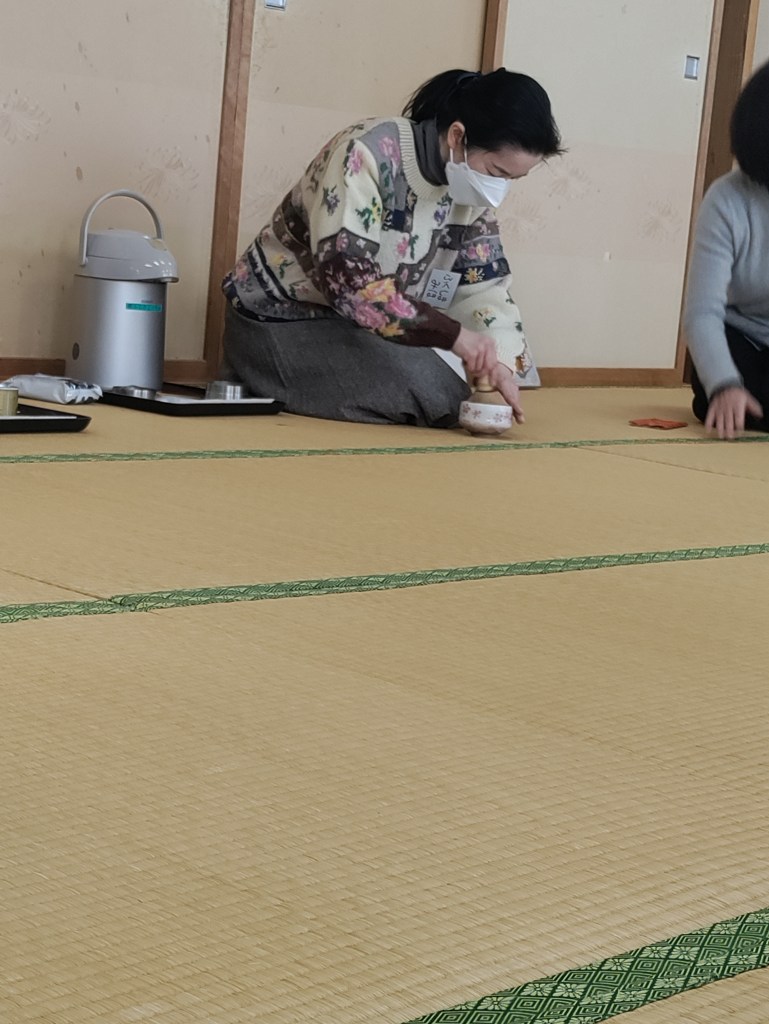
On Sunday, I and some other English teachers were invited to come see a tea ceremony put on by the local cultural society here on Sado. I had heard of the tea ceremony, or sadō (long o, so phonetically distinct from the island I call home), but have never actually seen it. Well, I guess I still haven’t because it turned out to be just a demonstration and lesson about the tea ceremony, and not an actual, formal tea ceremony. As a result, no one was dressed in kimono nor adhered to the strict customs of the ritual.
Nonetheless, it was interesting to learn about. The ritual has its origins in Zen Buddhism and has existed in some form in Japan since the 9th century. There are many rules that must be obeyed. For instance, one has to enter the room with their right foot first and exit with their left. You’re also forbidden from stepping on the creases between the tatami mat. You must rotate the bowl while serving and there is a particular way to both give and accept the bowl. There are many others as well and it’s safe to say performing the ritual properly while remembering everything that is necessary no simple task.
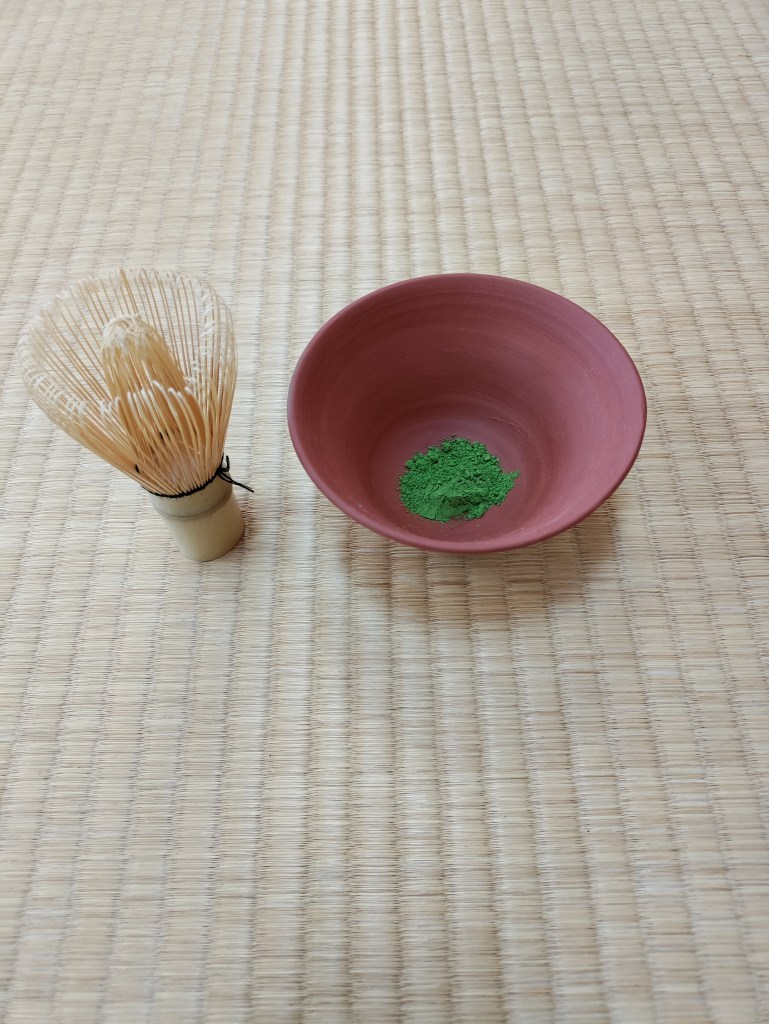
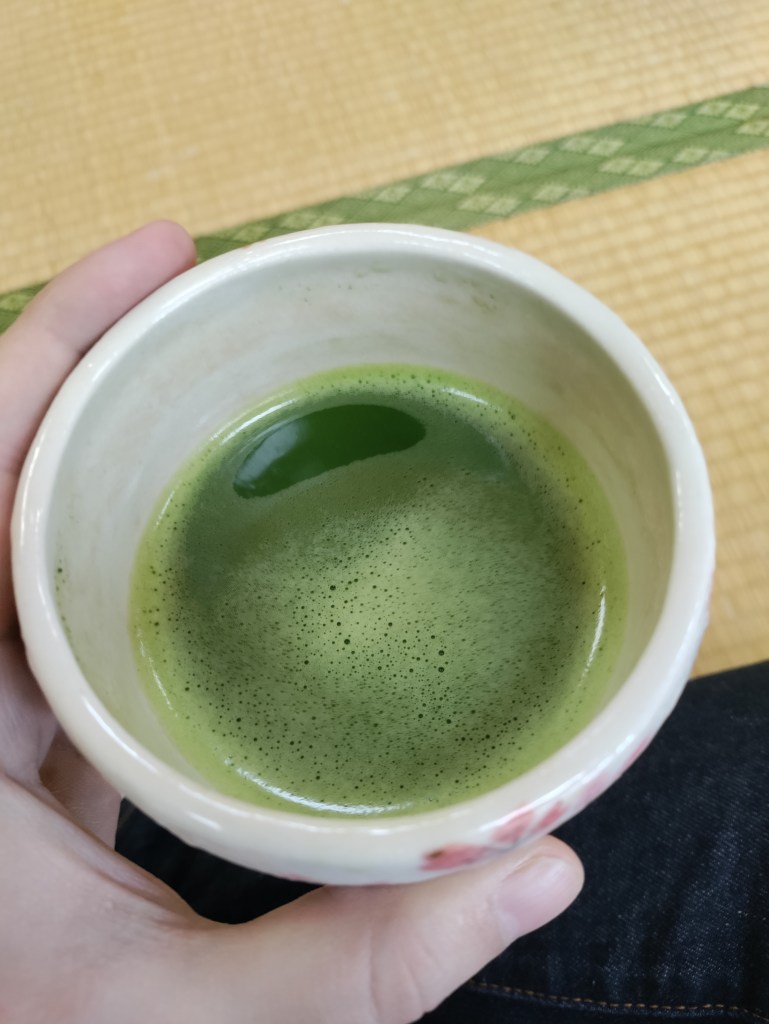
At first, the members of the cultural society made tea for us. It is matcha, or powdered green tea leaf tips, mixed in a bowl by a stirrer made of bamboo. The texture becomes frothy from being stirred vigorously and kind of reminded me of espresso. Next, it was my turn to try and prepare the tea. I’m sure I committed many faux pas when attempting to make my cup of tea. I was pleased with the final result though. I did my best to serve in the proper style. First, you face the person you are serving while sitting on your legs, the traditional Japanese sitting position known as seiza. Rotate the cup so that any pattern or picture on it faces away from you and toward the person being served. Place the cup on the tatami mat and bow. The cultural society was very gracious and happy we came. Now that I have some context as to how the ritual works, it would be nice to see a formal ceremony.
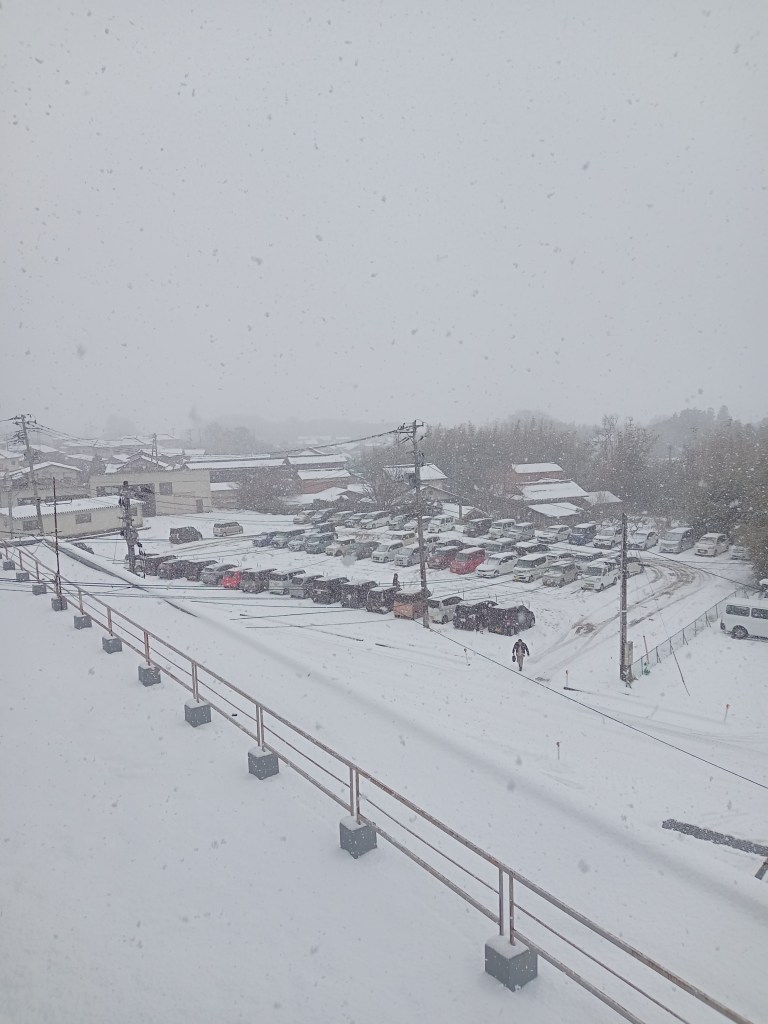
My Japanese seems to be improving. I’ve been attending some Japanese classes at the local library. The first time I went in December, I was very lost and had trouble understanding the lesson, but at the most recent class, I did much better. I still don’t understand everything the teacher was saying but I understood much more. A lot of the grammar points we study are things I learned in college Japanese classes which that I have forgotten, so it is a good refresher. I still have a long way to go if I want to be able to communicate well with most people, but it’s nice to see I haven’t totally forgotten everything and that I’m beginning to remember the Japanese I learned in college. Of course, simply being here and hearing Japanese every day and trying to speak with the locals has helped as well. It has warmed up a bit, and the intermittent snow that has been coming down since Christmas has finally subsided. Being primarily a tourist driven economy, I imagine we are in the calmest part of the year for the island. I’m looking forward to the spring, when the weather will warm up and I’ll be able to explore more of the island and more events will be held.
 Sam in Japan
Hi Buddy, Thanks for introducing us to tea ceremony just in case if it happens when we are there lol, but the weather seems like Portland muggy and cold but maybe little colder, I am glad that u understand and speak little of japanese language and you hv been there for just 3 months now and this is good progress keep it up both the learning of language and educating us with their customs.Tc
Love.
Dad.
LikeLike
Good report . I got on to soothing , non-caffeinated Matcha tea myself. I will have to learn the frothing part of this concoction. Macha variety represents some of the best leaves grown specially under a somewhat sheltered situation. The good stuff! We miss you in Portland and spring is not ridiculously far away. I really appreciate your journal.
LikeLiked by 1 person