Graduation Day

Today was the graduation ceremony for the Middle School 3rd years. I was supposed to work at my Elementary School, but they understood that I was expected to attend so they were kind enough to give me the day off. On Friday, the teachers and students spent the morning preparing the gym for the ceremony. We all cleaned, set up chairs and decorations, and got it looking decent in there for the parents for today. Japanese schools seem to emphasize everyone working together. It is interesting; I don’t remember ever having to do stuff like this when I was in school, at least to the same extent. I suppose it ties together with the kids all cleaning the school every week and serving each other lunch. In any case, we got the gym looking sparkling for today.

Graduations in Japan are similar to American graduations in a lot of ways but also quite different. The graduating students all walked in to Pachelbel’s Canon and Bach’s Air. When all the 3rd years were seated, everyone stood and sang “Kimigayo,” the national anthem of Japan, with a piano accompaniment played by a 2nd year girl. Next they sang some sort of official school theme, like a college varsity Alma Mater song. It was surprising to hear a Middle School with their own song, but I guess every school in Japan has their own. Next, there was a speech by the Principal. He has a very stern, deep voice very fit for public speaking. Following the speech was the actual diploma conferral. Even more Baroque music was played over the speakers. There seemed to be a very proper way of doing it. The students march up the stairs to the stage individually. Their movement to the stage reminded me of a military color guard with sudden stops and sharp turns. On stage the student would wait for their name to be called. There were no cheers from respective families like an American graduation. The student and Principal would exchange a bow followed by the Principal offering the diploma. The student would grab it, first with their right hand, then with their left, and take a step back so that only they would be holding the diploma. They would quickly and smoothly whisk it under their right arm before exchanging a final bow, turning around in place, and returning to their seat. It was all very formal and rigid, and every student accepted their diploma in the same fashion.

Next, the 3rd years led all the student body in singing some sentimental choral songs. At this point, some of the graduating students began to cry. I was told tears are common at graduation ceremonies in Japan. Students spend all 3 years of school with a single homeroom teacher, and people even refer to them as being like “another parent,” so it can be bittersweet for them to leave after having a relationship with their teacher like that. Finally, at the end, the 3rd years all marched out of the gym in procession to Pomp and Circumstance and applause. What followed was a short reception, before the graduates marched out of the building this time, with the parents, teachers, and younger students lining the halls and showering them with more applause and cheers of congratulations. After the ceremony, I was invited to have some bento sushi with the other teachers and school staff. This was a kind gesture, as ALTs are not always included in staff events like this. I enjoyed some local sushi and it was nice to socialize with the other teachers outside of the school work environment. In conclusion, I found Japanese graduation was similar to American graduation, but a lot more formal and with more bowing and crying, and less cheering.

In other news, today is the first day businesses are permitted to open after being shutdown since late January due to coronavirus cases in Niigata. I’m glad because it has been a bit boring with not much to do during the past 6 weeks or so, and bad weather kept me from wanting to go outside much. Finally, I just want to apologize for the poor pictures this time. My Japanese phone has an annoying bug where it seems to not save pictures if I don’t wait long enough on the camera app after taking them. I ended up losing some good shots today this way. Oh well, as they say in Japan, “Shikata ga nai.”
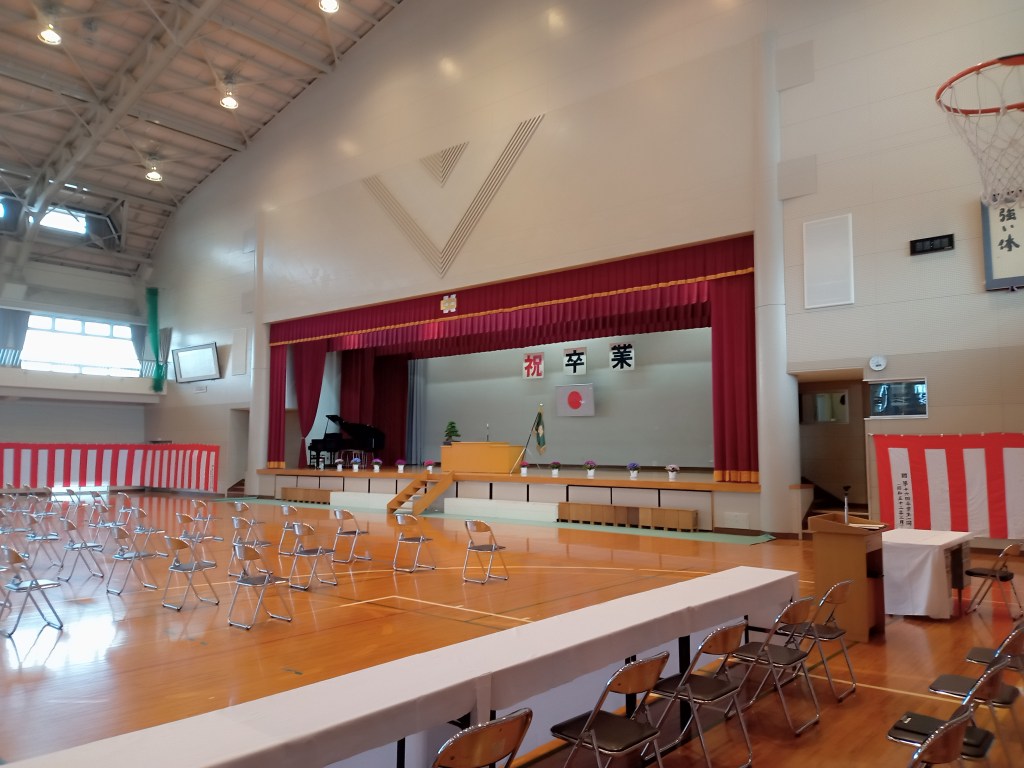
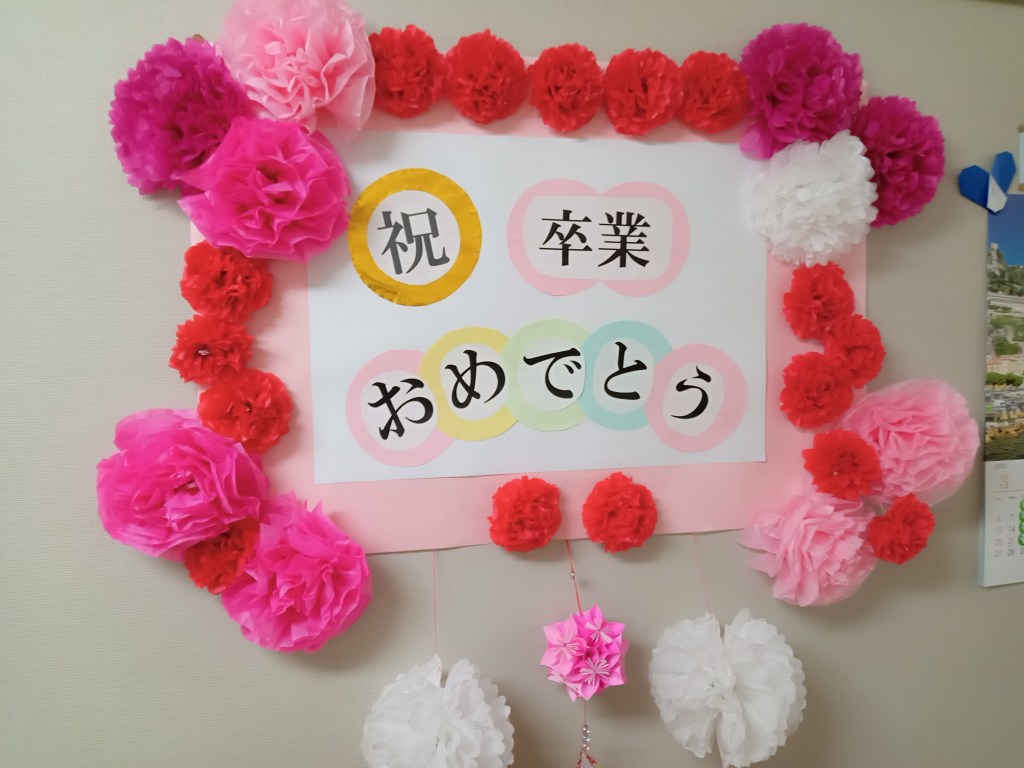
The stage is set
Accepting a diploma
“Congratulations Graduates”
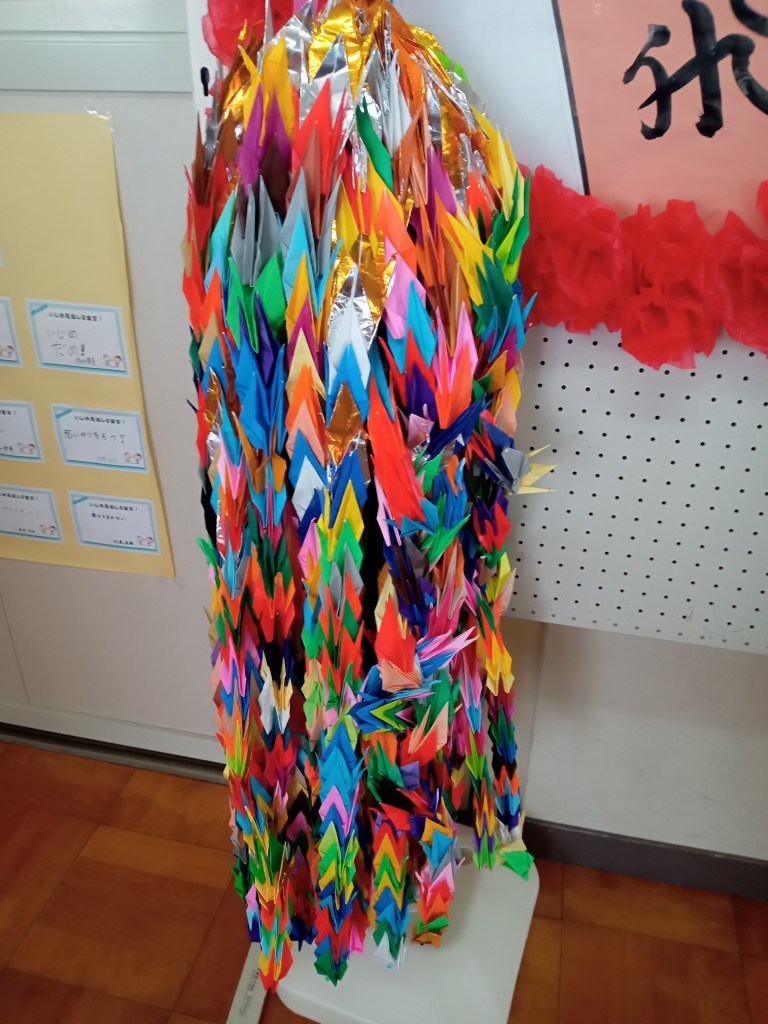
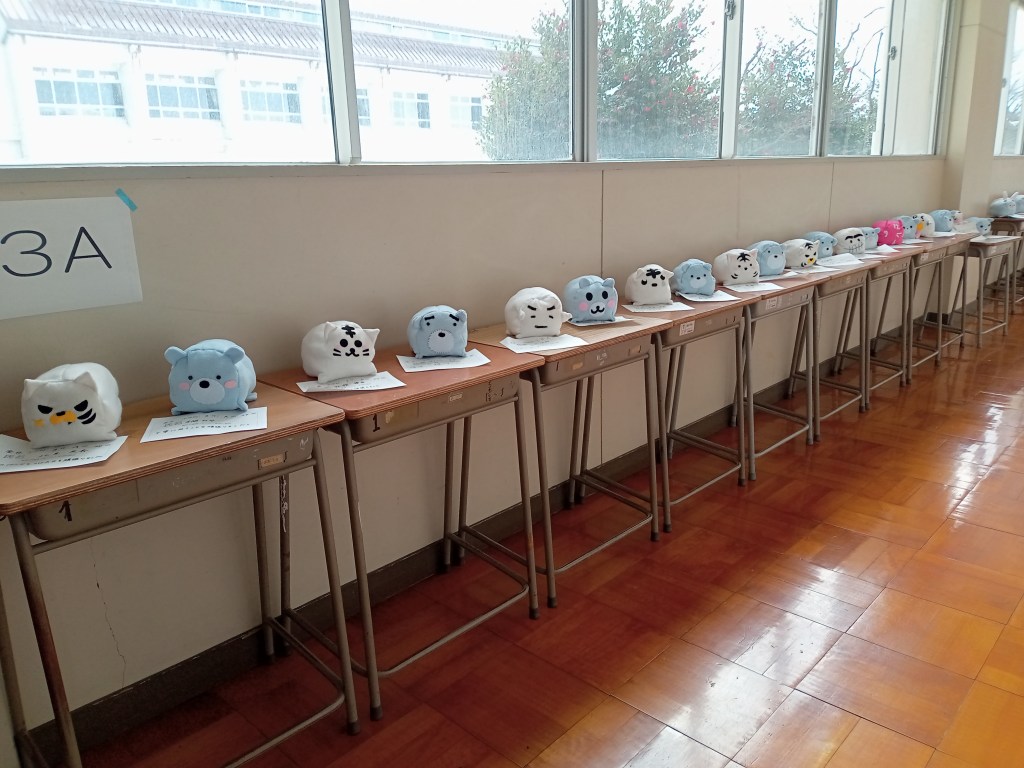
Origami cranes for the graduates
It’s nearly spring

More Winter Sports and World Heritage News

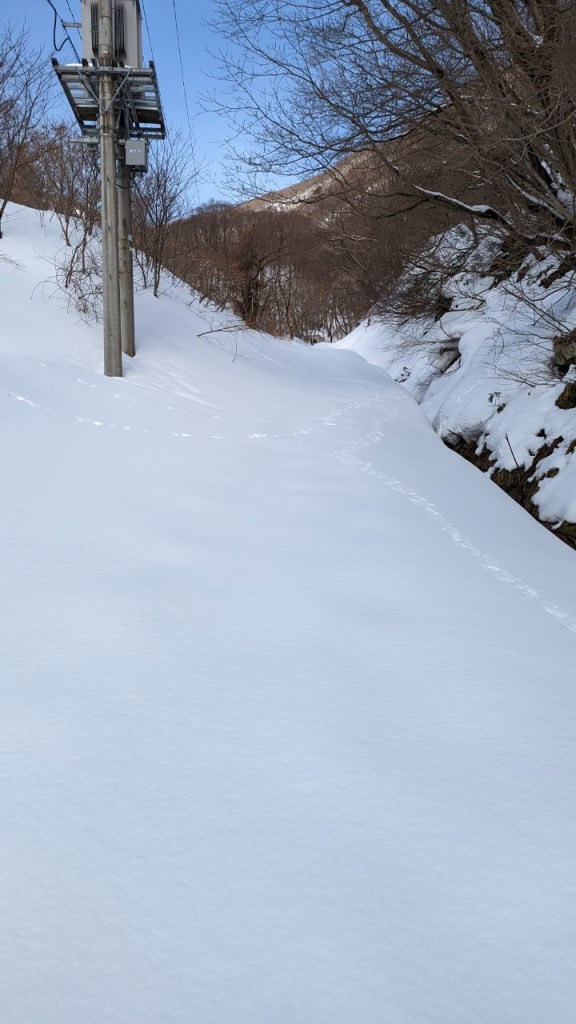
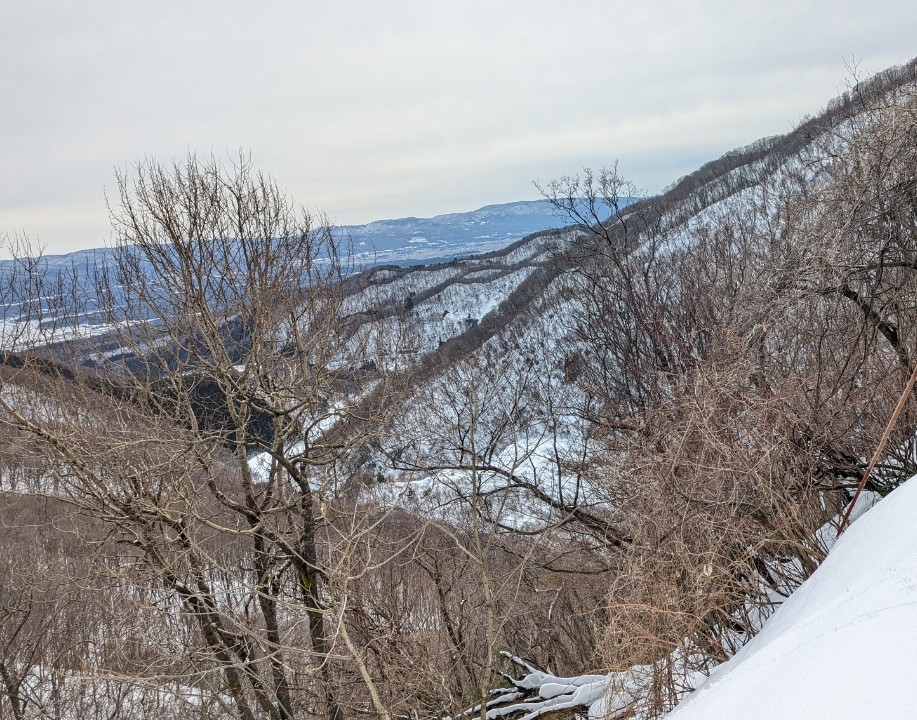
On Saturday, I tried my hand at snow shoeing. Many of the mountain roads are buried under a few feet of snow and are closed for the season. Some of the other teachers and I rented snow shoes and hiked our way up one of these roads in Ryotsu. Let me tell you, snow shoeing is a lot easier to get the hang of than skiing. That said, I did have some difficulty. The rental shoes were a uniform size and too small for my weight, and I was still sinking pretty far into the snow. On some of the deeper stretches of the road, my friends would fall maybe 2-4 inches into the snow while I would sink about 6-8 inches. As a result, it was a bit of a tiring slog up the mountain. That said, it was good exercise and the views from the mountain were gorgeous on this sunny day. I started feeling pretty sore in my hip about a mile and a half in, so I told the others to continue on to the summit while I found some solid ground to rest on where I had a video call with my Dad. Snow shoeing was very enjoyable and is a great way to spend time outdoors in the winter. I’d like to try it again sometime, hopefully with larger shoes.

In other Sado news, in late January the Government of Japan formally requested the gold mines to be recognized as a UNESCO World Heritage site. This has been controversial because of a supposed history of forced labor during the operation of the mines. This has led to tension between the South Korean and Japanese governments. There was even a short write-up in the New York Times. As a public employee, I would rather not discuss my own personal thoughts on this subject here. Still, I would recommend reading the article. I found it objective and unbiased. I think the authors describe the current economic situation on Sado accurately as well. There were also some nice pictures and you can even see my house in the picture of Aikawa. Anyway, I hope the situation is resolved without much difficulty or disagreement but that is probably wishful thinking.

Since the Japanese school year starts at the beginning of April, we are quickly approaching the end of this year. There is going to be a graduation ceremony at both my schools in early March. For my middle school 3rd years, this will be the last time I see them in school. The Japanese school system functions much differently than in the US. From what I have been told, graduation is essentially guaranteed. It is mostly a matter of testing into the next level and being accepted to good schools. The next month will mostly be devoted to studying for the high school entrance exam. As 9th Grade is technically the end of compulsory education, high school is seen as being the crux of one’s education. I would compare it to how college education is seen in America. As a result, testing into a good high school is very important, and both academically and athletically promising students will sometimes leave small towns like Sado to attend more rigorous or prestigious high schools in cities. Though I am excited to see most of my 6th Graders start middle school in April, where I will continue to teach them. Tomorrow is the Emperor’s Birthday, a public holiday across Japan. I’m looking forward to a nice day of rest.

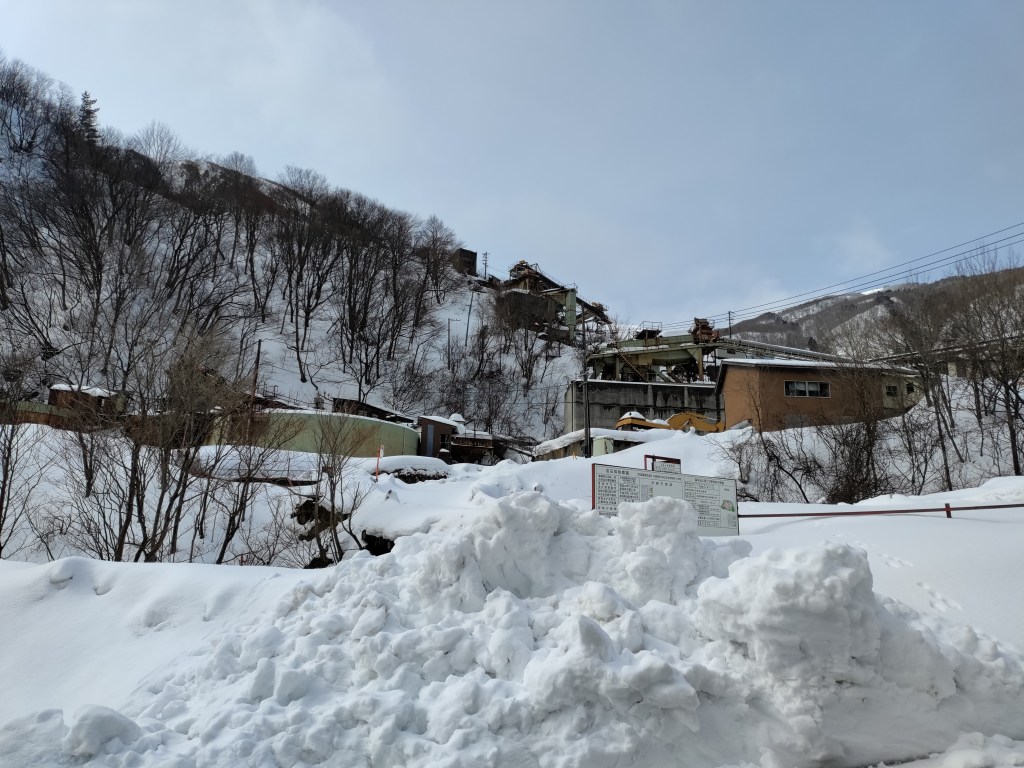
A stone quarry near the start of the trail
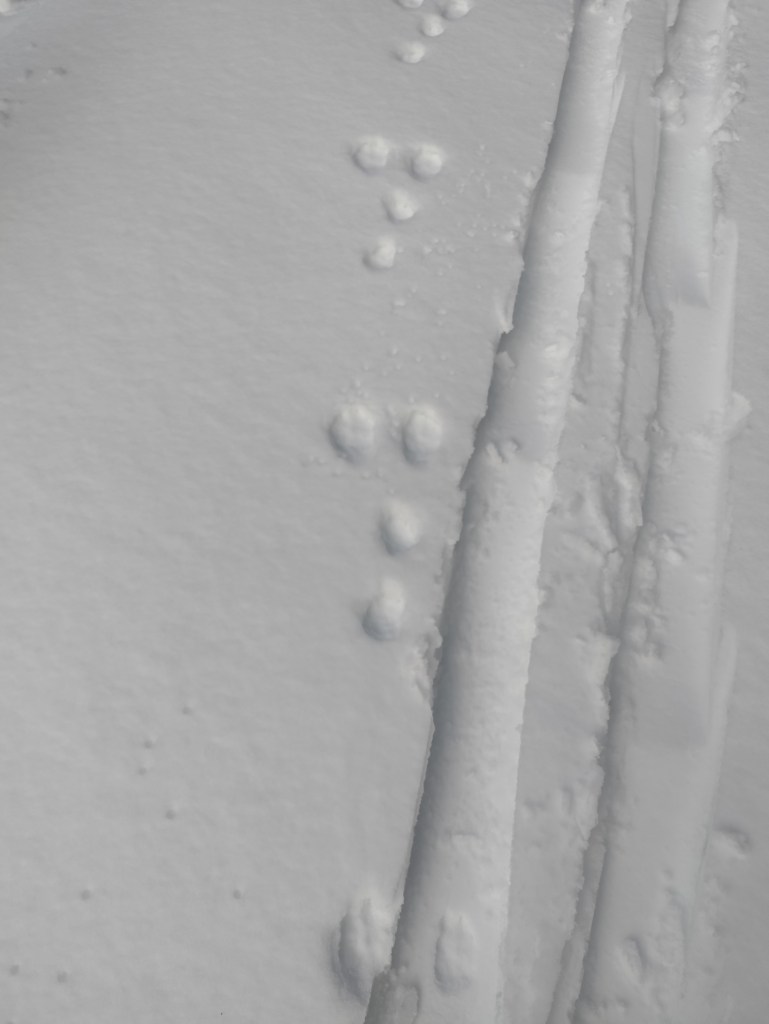
Bunny and ski tracks
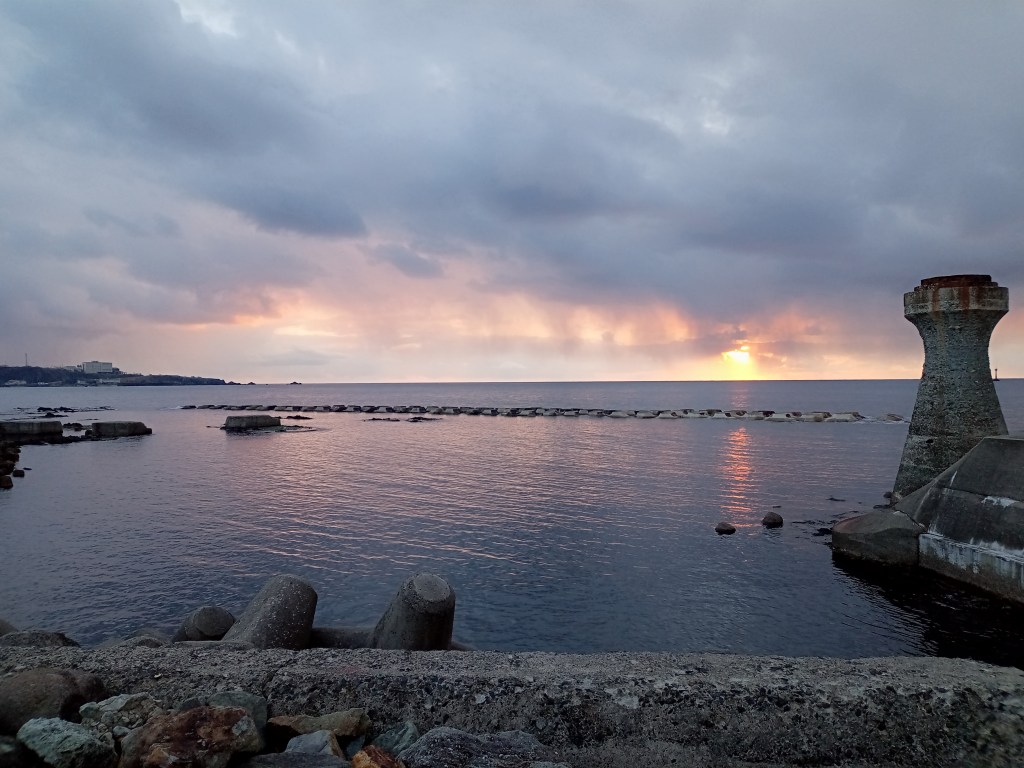
A calm day on the Sea of Japan

Skiing

Here’s a quick lesson on Sado geography: it’s basically a microcosm of Japan. It’s a volcanic island with plains in the middle where the bulk of the population live. The Osado (Big Sado) and Kosado (Little Sado) mountains straddle the island and run across the length of the north and south portions. The mountains become covered with snow from late November until March and I was surprised to learn there’s actually a (small) ski slope here. Some of the other English teachers are from the American northeast and regularly ski and snowboard and they invited me to the slope last week.

We took a shuttle bus from a community center about 20 minutes up to the slope. The place was bustling and I even ran into some of my students. I rented skis, pants and a jacket and I bought a day pass. All in all it was about $30. The conditions were great, as the mountains received heavy snowfall the previous night. I had not been skiing since I was a very little kid. I have almost no memory of the experience so I was basically learning from the beginning. The first thing I realized is it’s a lot harder than it looks. I have poor balance already just on my feet, so I fell in skis a lot. It’s much harder to get up with skis strapped to your feet. Luckily every time I fell, some nice locals would stop, come over to me, and help me get back on my feet. Once, my students came over to help me after I fell. Of course, they were very amused by the situation. I never managed to make it down the whole slope without crashing out and having to walk, but it was fun regardless. I was starting to get the hang of it at the end of the day, and the other teachers were very helpful in explaining everything. I’m sure I’ll get it someday. Maybe I’ll try my hand at snowboarding next time. I might take to it easier.

After the slope closed for the day, we all decided to get food and hang out together. We had a great time. Sometimes you don’t realize how isolating it can be out here both from the language barrier and from COVID protocols, so meeting face to face with people I can have more complex conversations with was a welcome experience. I am a bit sad though because many of the teachers are leaving at the end of their contract in July. Out of the 10 JETs here right now, 5 are leaving. I think we have a really good group of English teachers right now, so I will miss them. I suppose that is life on the JET program though. It’s not a career and everyone has different plans. That said, we should be getting replacements when they leave, but with strict border controls back in place, we’re not sure when people will be allowed to immigrate again. Anyway, things are going well. There are 2 holidays coming up, National Foundation Day and the Emperor’s Birthday. I’m not sure if there are any traditions associated with either or if they’re just public holidays but it will be nice to have some days off here soon.

Sado Topography, the ski area was in the Osado mountains on the north
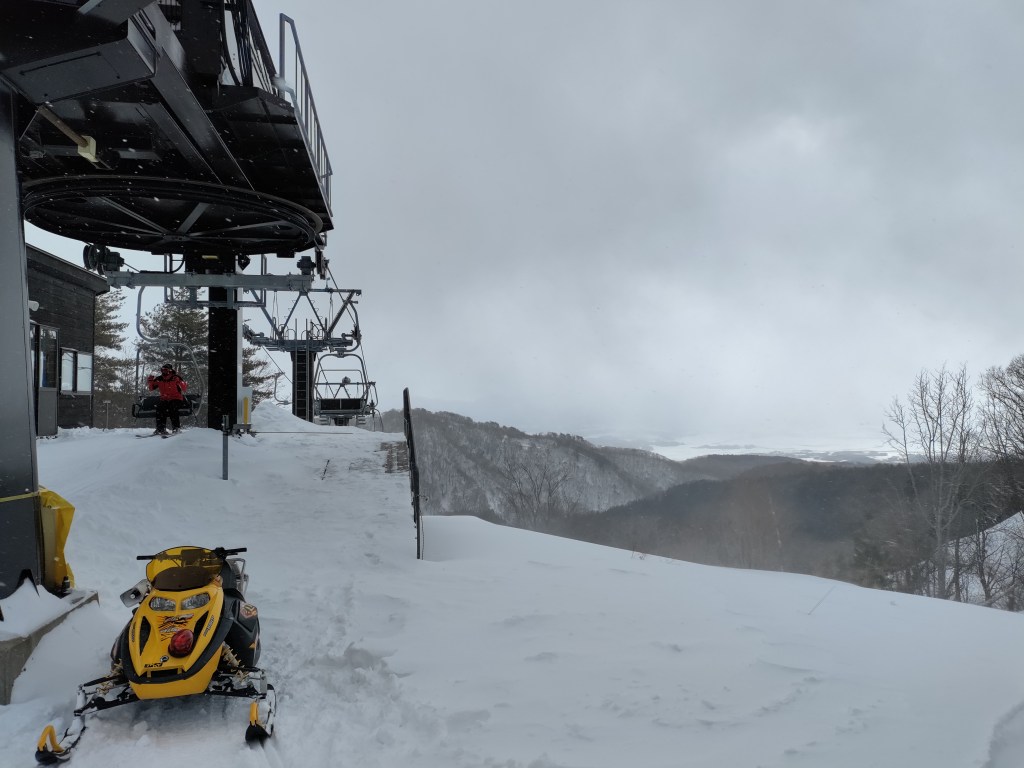
Ski lift was installed 3 years ago
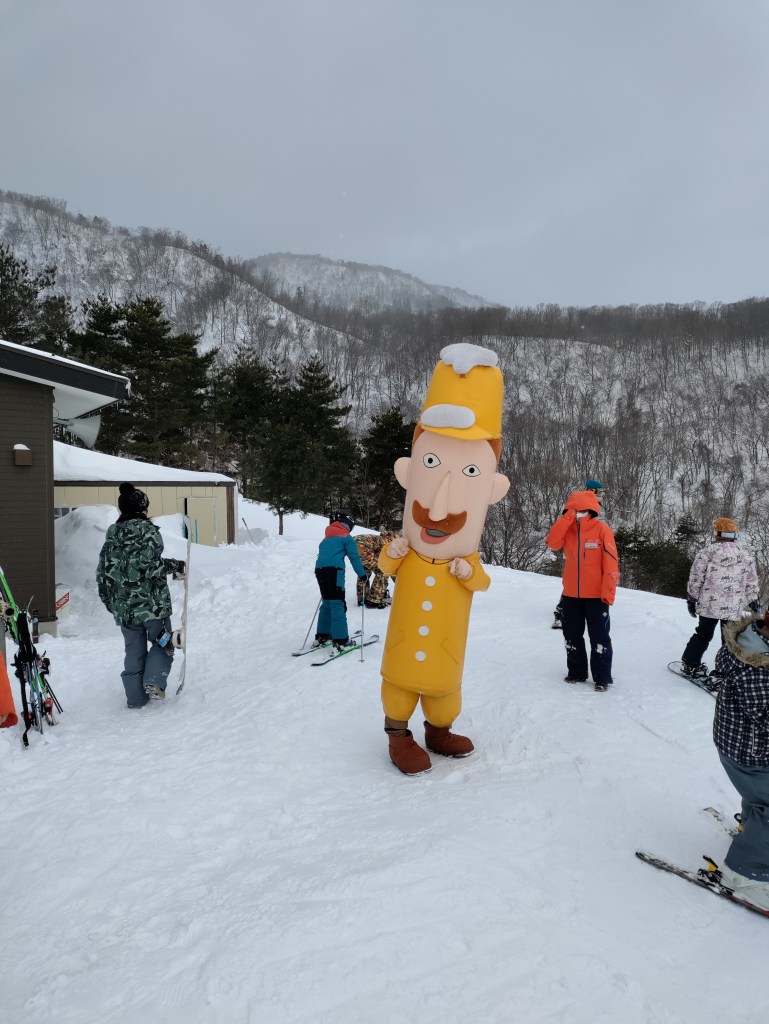
Some mascot for Niigata ski resorts. Apparently he was a Russian man who came to Niigata and taught Japanese people how to ski.
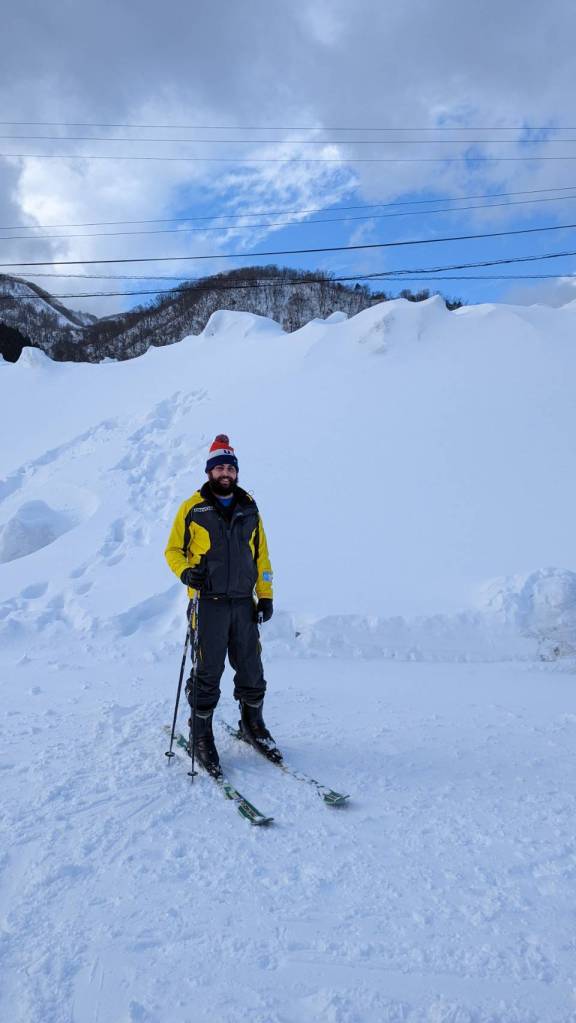
Ready for action

Tea Ceremony

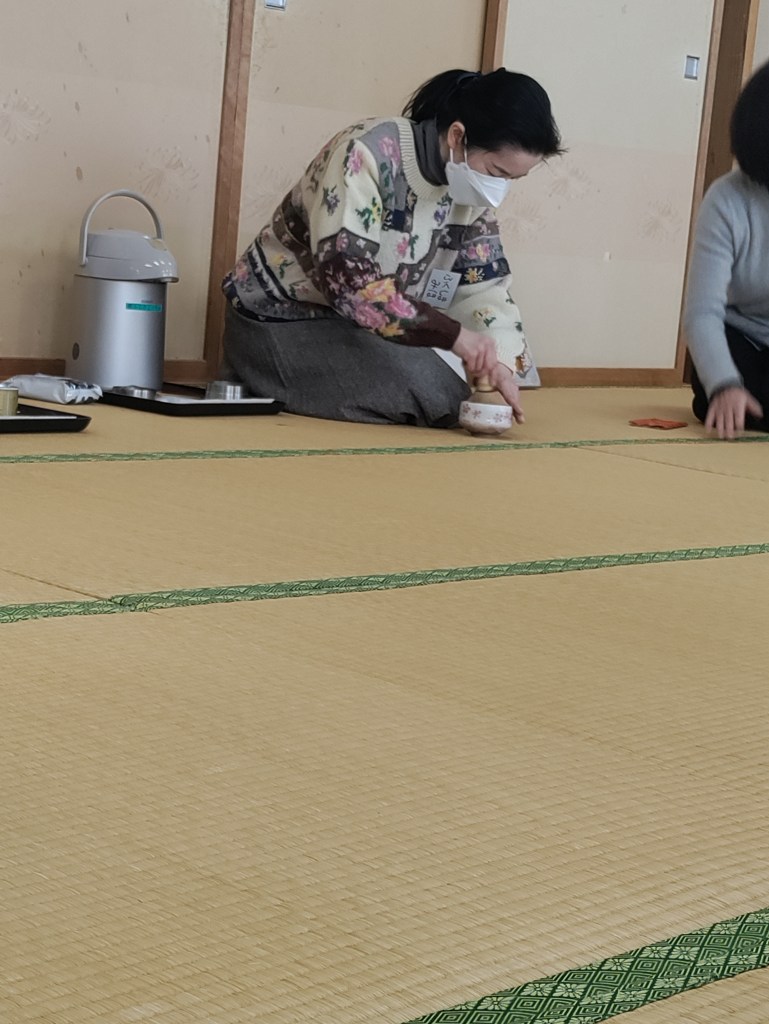
On Sunday, I and some other English teachers were invited to come see a tea ceremony put on by the local cultural society here on Sado. I had heard of the tea ceremony, or sadō (long o, so phonetically distinct from the island I call home), but have never actually seen it. Well, I guess I still haven’t because it turned out to be just a demonstration and lesson about the tea ceremony, and not an actual, formal tea ceremony. As a result, no one was dressed in kimono nor adhered to the strict customs of the ritual.

Nonetheless, it was interesting to learn about. The ritual has its origins in Zen Buddhism and has existed in some form in Japan since the 9th century. There are many rules that must be obeyed. For instance, one has to enter the room with their right foot first and exit with their left. You’re also forbidden from stepping on the creases between the tatami mat. You must rotate the bowl while serving and there is a particular way to both give and accept the bowl. There are many others as well and it’s safe to say performing the ritual properly while remembering everything that is necessary no simple task.

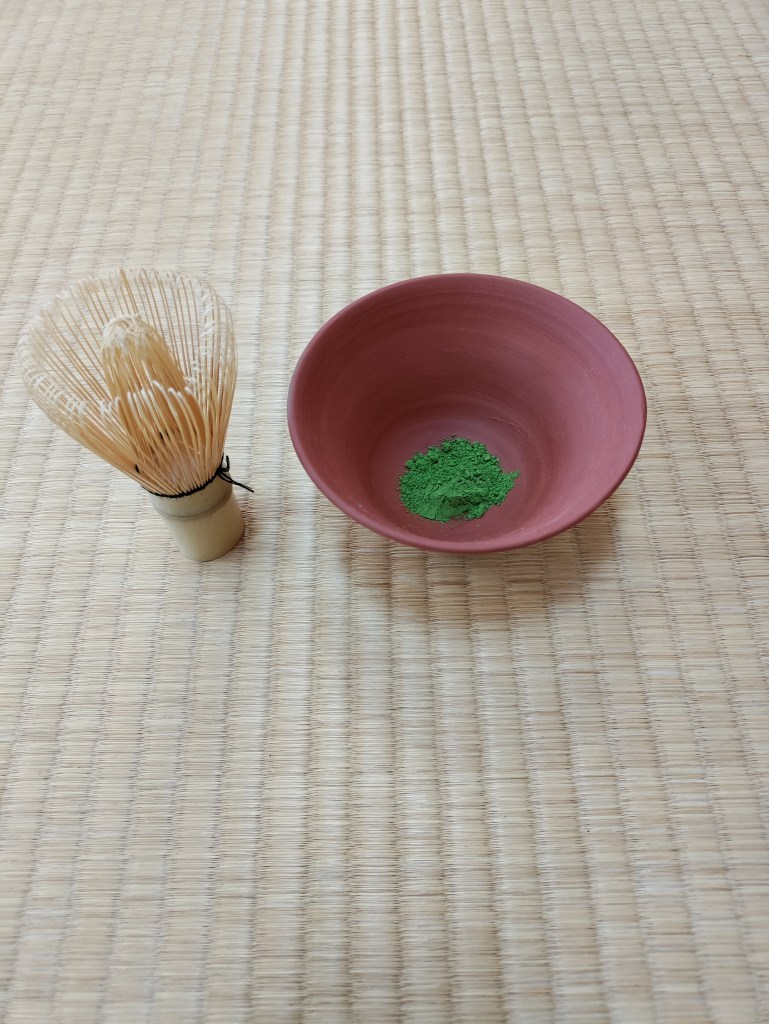
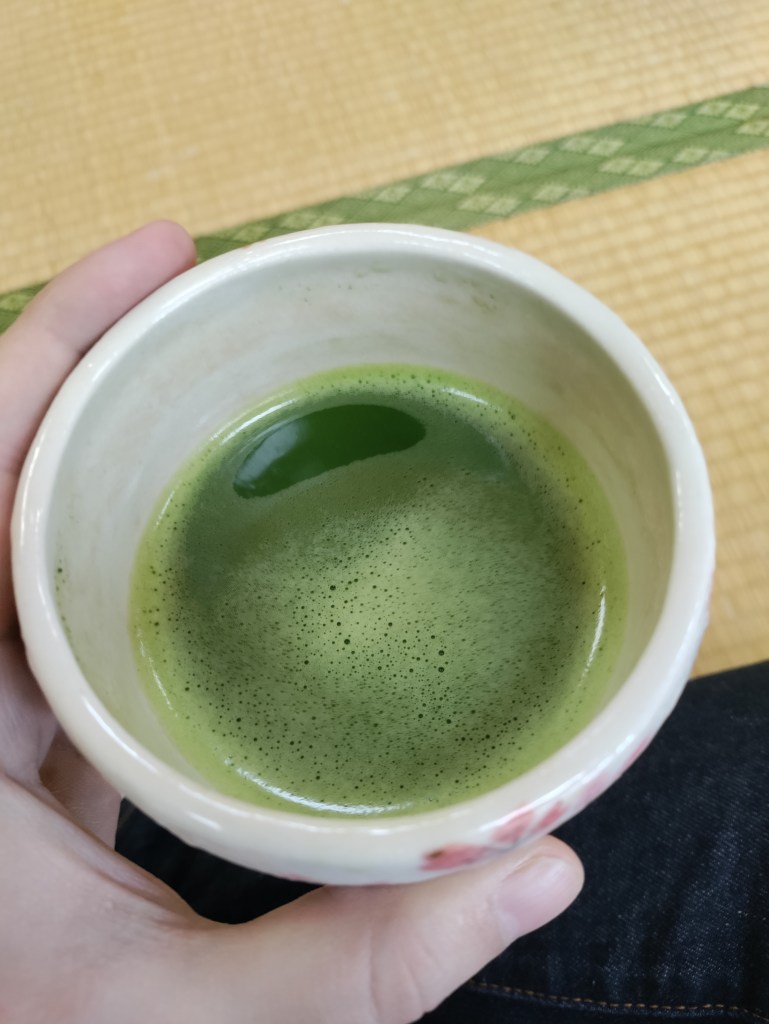
At first, the members of the cultural society made tea for us. It is matcha, or powdered green tea leaf tips, mixed in a bowl by a stirrer made of bamboo. The texture becomes frothy from being stirred vigorously and kind of reminded me of espresso. Next, it was my turn to try and prepare the tea. I’m sure I committed many faux pas when attempting to make my cup of tea. I was pleased with the final result though. I did my best to serve in the proper style. First, you face the person you are serving while sitting on your legs, the traditional Japanese sitting position known as seiza. Rotate the cup so that any pattern or picture on it faces away from you and toward the person being served. Place the cup on the tatami mat and bow. The cultural society was very gracious and happy we came. Now that I have some context as to how the ritual works, it would be nice to see a formal ceremony.

My Japanese seems to be improving. I’ve been attending some Japanese classes at the local library. The first time I went in December, I was very lost and had trouble understanding the lesson, but at the most recent class, I did much better. I still don’t understand everything the teacher was saying but I understood much more. A lot of the grammar points we study are things I learned in college Japanese classes which that I have forgotten, so it is a good refresher. I still have a long way to go if I want to be able to communicate well with most people, but it’s nice to see I haven’t totally forgotten everything and that I’m beginning to remember the Japanese I learned in college. Of course, simply being here and hearing Japanese every day and trying to speak with the locals has helped as well. It has warmed up a bit, and the intermittent snow that has been coming down since Christmas has finally subsided. Being primarily a tourist driven economy, I imagine we are in the calmest part of the year for the island. I’m looking forward to the spring, when the weather will warm up and I’ll be able to explore more of the island and more events will be held.

One of the volunteers stirring a cup of tea
The bowl, matcha powder, and mixer
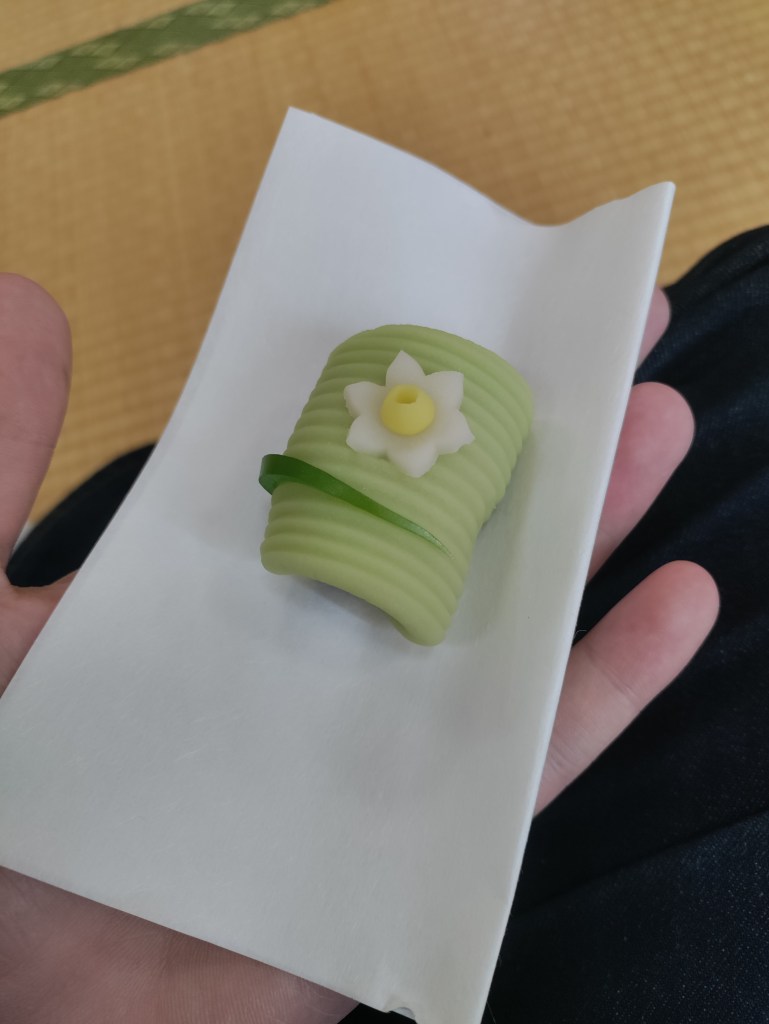
A kind of sweet that is traditionally served with the tea
Frothy cup of tea
Looks like the students learned about sewing in Home Economics
Weather from mid January

Coming of Age Day

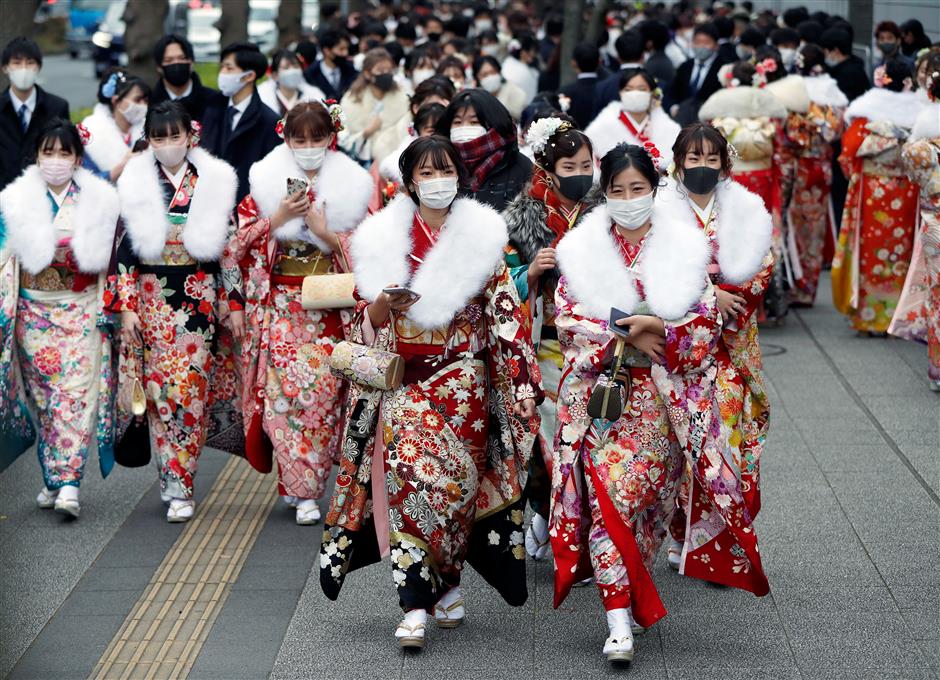
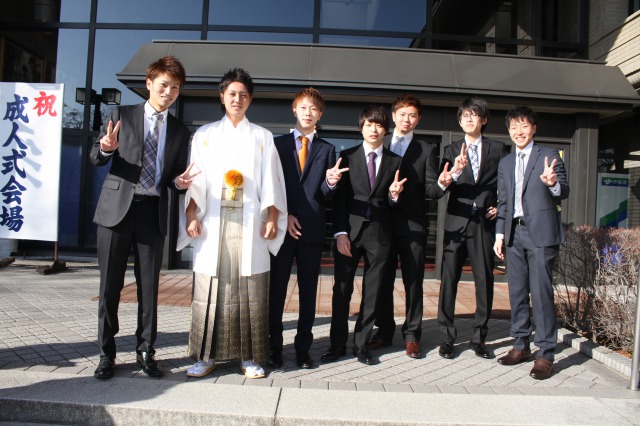
Monday was the holiday known as Seijin no Hi here in Japan, usually translated as Coming of Age Day. This is an important holiday in Japan. It is the day when one is traditionally considered to be an adult. Anyone who turned 20 recently or will be turning 20 soon dresses in nice clothing and goes to the local temple to pray. Women generally wear nice, vibrant kimono with fluffy, white scarves and men sometimes wear Japanese traditional clothing but these days mostly just wear suits. Afterwards, there is usually a public party along with many private celebrations. Just like turning 21 in America, turning 20 is the age when one can legally drink, so oftentimes there are boisterous celebrations involving youths drinking “for the first time” and sake is also a common gift on the day. As of last year, the Japanese government lowered the age of adulthood to 18, instead of the traditional age of 20. This has led to some confusion as to who should be celebrating the day: people who turned 18 or people who turned 20. In any case, the drinking age remains 20, and some of my students were upset, saying when they celebrate their Coming of Age Day in a few years, they want to be able to go out drinking!

Unfortunately, I ended up being a bit disappointed on Monday. I went out on Sunday night, knowing I would have the day off Monday, being a national holiday. I learned that on Sado the traditional Coming of Age Day isn’t celebrated in January, but in August. I was told that the weather is too cold in January, so they prefer to celebrate in the summer. Fair enough, as it has been very cold recently. Of course, bringing up Coming of Age Day that night elicited nostalgic responses from everyone in the restaurant about their own experiences turning 20 and how they celebrated the day. It was fun, but I was a bit disappointed, because I wanted to see the local celebrations. I suppose I will just have to wait until August.

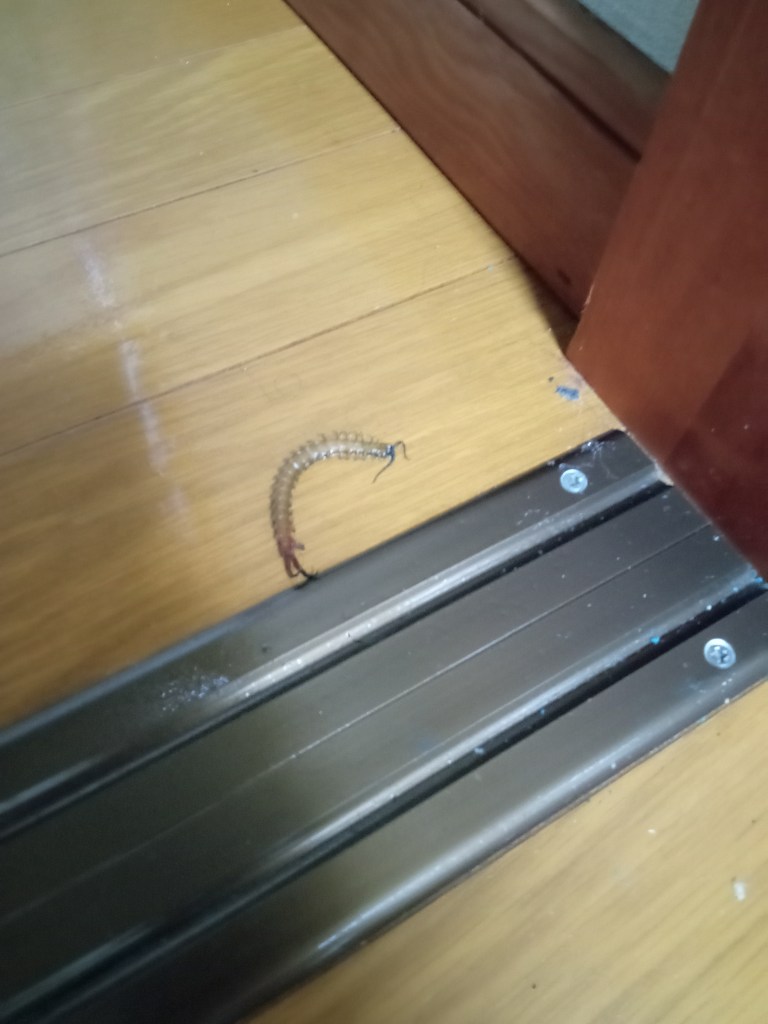
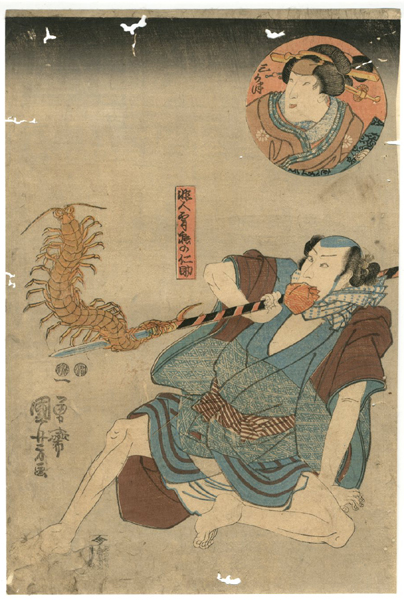
In other news, I came across my first mukade in my home while living here. When living in rural Japan, one thing that perhaps is overlooked at first is the amount of bugs. Japan is absolutely crawling with insects. I don’t know if it’s the humid weather or what but finding large insects in your home is just part of the experience of living here. Mukade are giant centipedes (interestingly enough, the Japanese word for them is rendered as 百足, which also means “100 legs/feet”). They actually represent evil in Shintoism, that’s how derided they are. They are aggressive and can grow as long as a foot. You wouldn’t be faulted for mistaking some of the larger ones for a snake at first glance! They are venomous as well, and while they’re not dangerous to humans, I’ve heard their bite is excruciatingly painful. Luckily, I was able to spot this one and sprayed it with the bug poison my fellow teachers wisely advised me to invest in. When I went to the local restaurant afterwards, they all concluded it was quite rare to come across one in January and one patron declared that I must be “lucky,” he said, his sarcasm palpable. Supposedly, the peak season is the monsoon months of May and June, so I guess I have that to look forward to. It appears that I’m just going to have to get comfortable with the fact that I’ll probably have more insects than I’d like making their home inside mine in the near future. Things no one tells you before moving to Japan, huh? In any case, everything is going well at work. I’m getting used to teaching and getting better at preparing activities for all my classes. It feels good to be settling into more of a routine here.

Some women celebrating Coming of Age Day in Tokyo last year.
Some men in suits and one in traditional clothing celebrating this year in Miyagi.
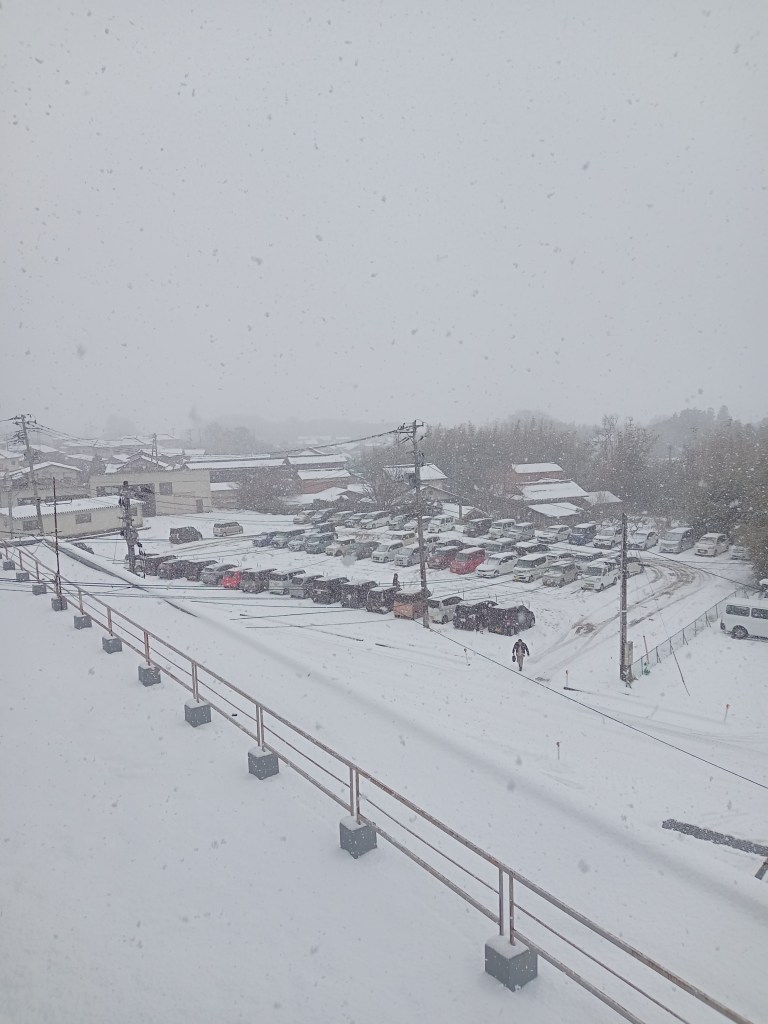
No one playing baseball or swimming (or coming of age) in this weather.
A mukade and banana for comparison. I think (hope?) they don’t get this big here.
I sprayed him good. He was maybe 5 inches long.
Medieval art of a man engaged in battle with a mukade. Clearly, they have been a problem here for a long time.

Rice Bowl!

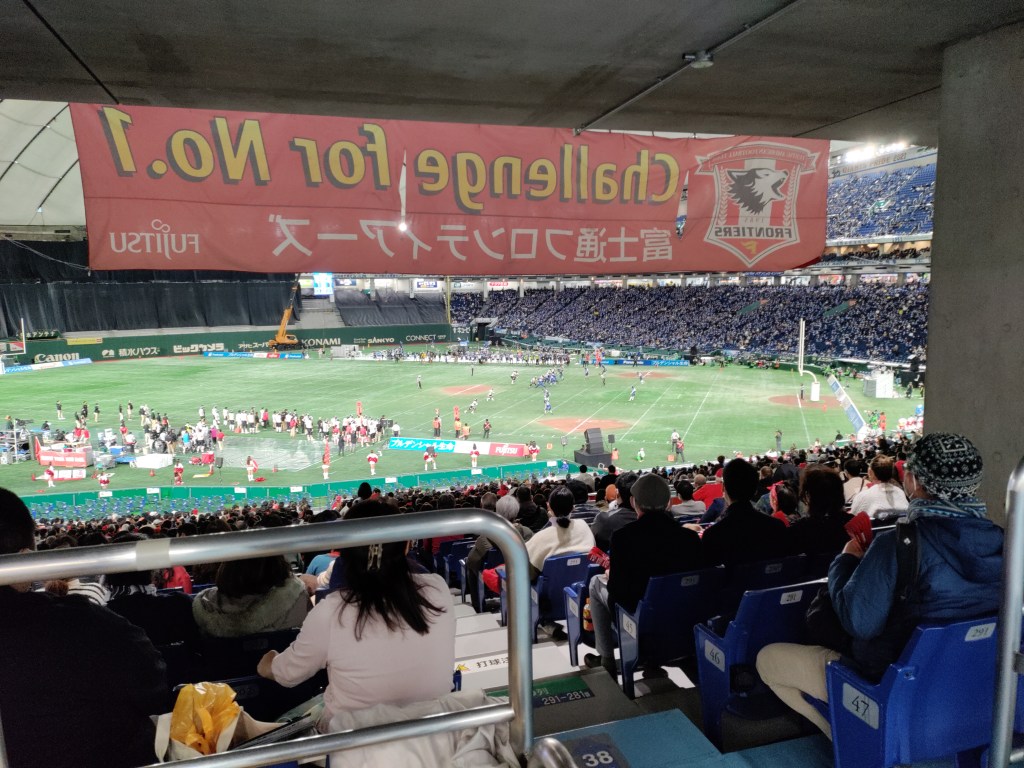
My trip to Tokyo coincided with the annual football championship known as the Rice Bowl. Aside from the Canadian Football League’s championship Grey Cup, the Super Bowl of Canada (which I have also been to), this is probably the biggest American football game outside of the USA. My love of obscure sporting events got the best of me, and I decided to buy a ticket. Before this year, the game was between the top college team in Japan and the top semi-professional team in the X League, Japan’s football league. However, starting this year the Rice Bowl will be the championship for the semi-pro league only. In recent years, the X League teams have dominated with a larger amount of money and resources at their disposal, and a college team had not won for the last 17 years, so I understand the decision to make it X League only.

The Rice Bowl is somewhat known in Japan. When I told people I met in Tokyo that I was going to the Rice Bowl, the response was mixed. Some people knew of the game and said it was popular and well known among Japanese sports fans. Others had no idea what it was and thought I was talking about a dish! Nonetheless, it is broadcast on tv and can draw 40,000 people. The game actually has a long history. It has been run every year since 1948 and is on January 3rd every year, similar to American college football New Year’s traditions. This year, the game was between the Panasonic Impulse and the Fujitsu Frontiers. Being a corporate league, all the members of the teams actually work for the companies they play for. As far as quality of play, I would say it’s probably on the lower college level, maybe similar to Division 2 or 3. Teams are allowed some foreigners on the roster, and both teams had some former Division 1 NCAA players on their roster.

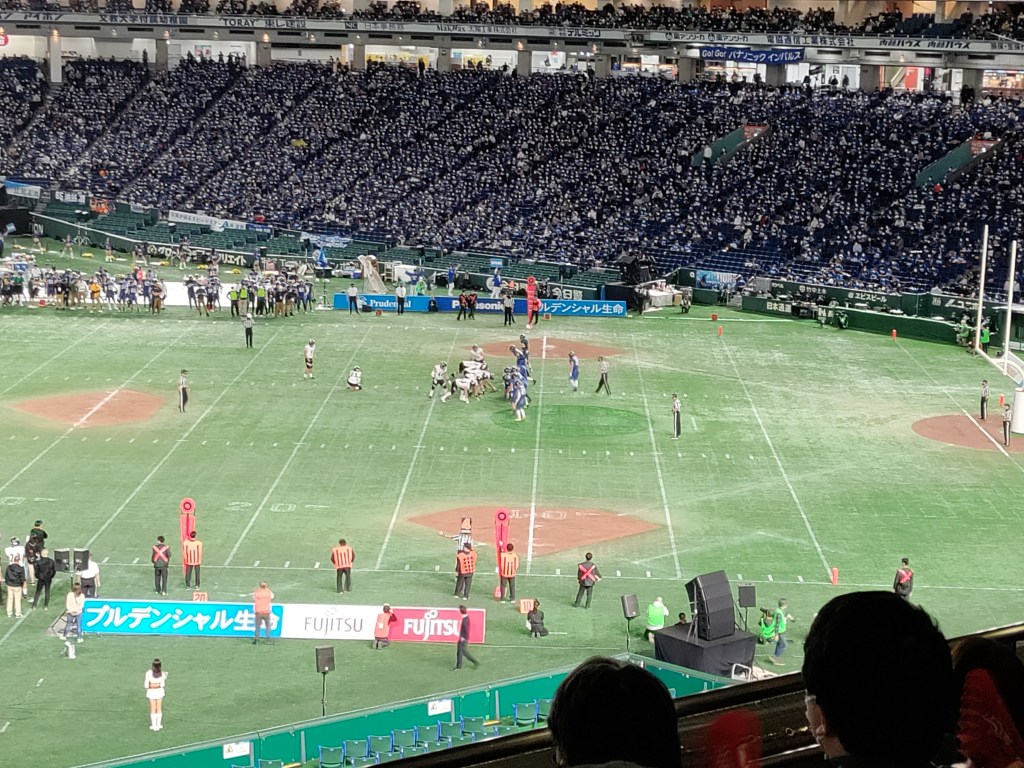
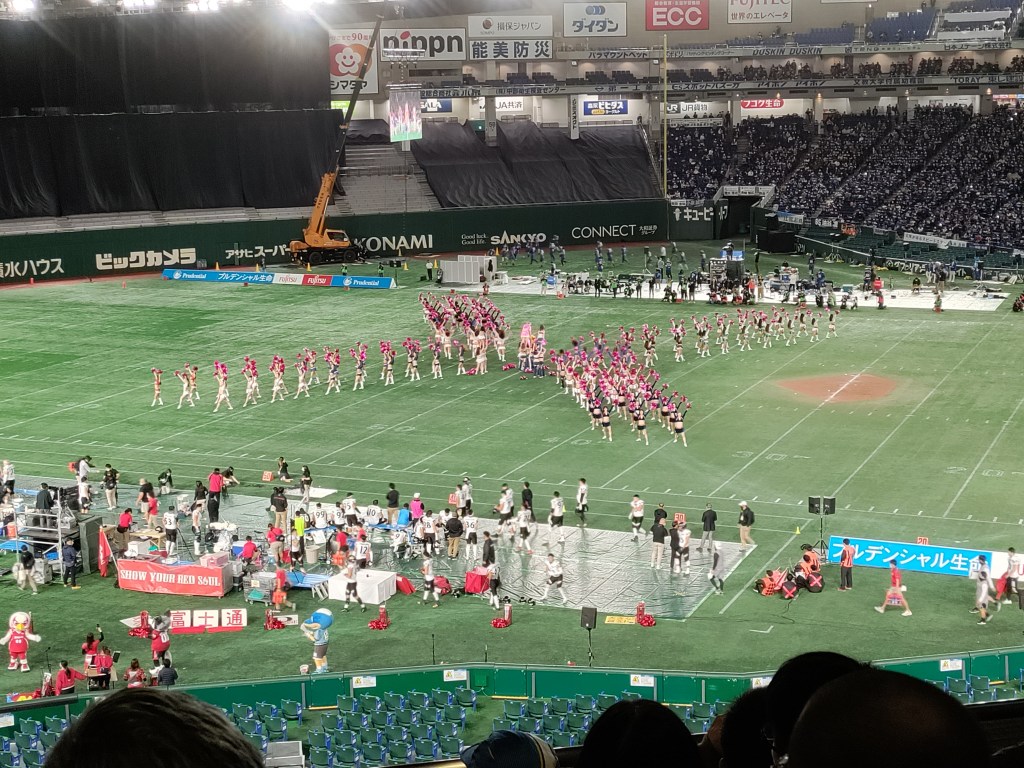
The game is held at the Tokyo Dome. All 3 times I have been to Tokyo, I have ended up going to the Dome to see some sporting event! I was seated on the Fujitsu side of the stadium, so I suppose I was rooting for them solely for that reason. The game was very competitive. Both teams played very hard, and Fujitsu benefited from 2 key plays. The first was a missed Panasonic field goal in the 1st quarter. The other was late in the 4th quarter with Fujitsu up by 3 points. The Panasonic running back fumbled the ball on the 1 yard line and it was recovered by Fujitsu in their end zone. I saw the official motion for a touchback and I started cheering, but most of the Fujitsu fans near me were just confused, until the referee explained what happened over the PA and the Fujitsu section erupted in applause and cheers. Fujitsu ended up getting a stop on 4th down in the final seconds and winning by a score of 24-18. Overall, it was very fun. The game had everything you would expect from a football game. There was even a halftime show, featuring all the cheerleaders from all the teams in the X League, whom I believe also all work at their respective companies. About half way through the halftime show, a man in dressed in drag as a cheerleader came out and led the rest in a dance routine. Honestly, I’m not sure what it was about but it was quite amusing regardless.

After the game, I went to Yokohama to visit Megumi and her family. It was nice to see them all again, and they treated me to a home cooked meal as well as some traditional Japanese New Year’s food known as Osechi. Osechi is a whole variety of different foods eaten after New Year’s. Each is supposed to have a distinct significance that imbues whoever consumes it with a certain quality for the New Year. For instance, eating lobster is said to lead to a good year at work. Likewise, eating an egg dish is said to be good for students. I had a good time catching up with the Hobo family after nearly 3 years since I saw them last. It’s nice that our families have managed to remain in contact for all these years. I invited them to visit Sado as well, and I hope to see them out here some time in the future. I left Tokyo the next day and I’m now back in Sado. Overall the trip was very fun, but I am glad to be back home. This Monday is a very important holiday in Japan so I will be posting about it soon.

The football field fit tightly in the Tokyo Dome. I was surprised the diving pits for the bases weren’t covered with some kind of turf. I also liked how the goal post seems to lock in exactly where home plate would be.
It was pretty low key, you could just walk up to where the broadcasters were.
Lining up for a field goal.
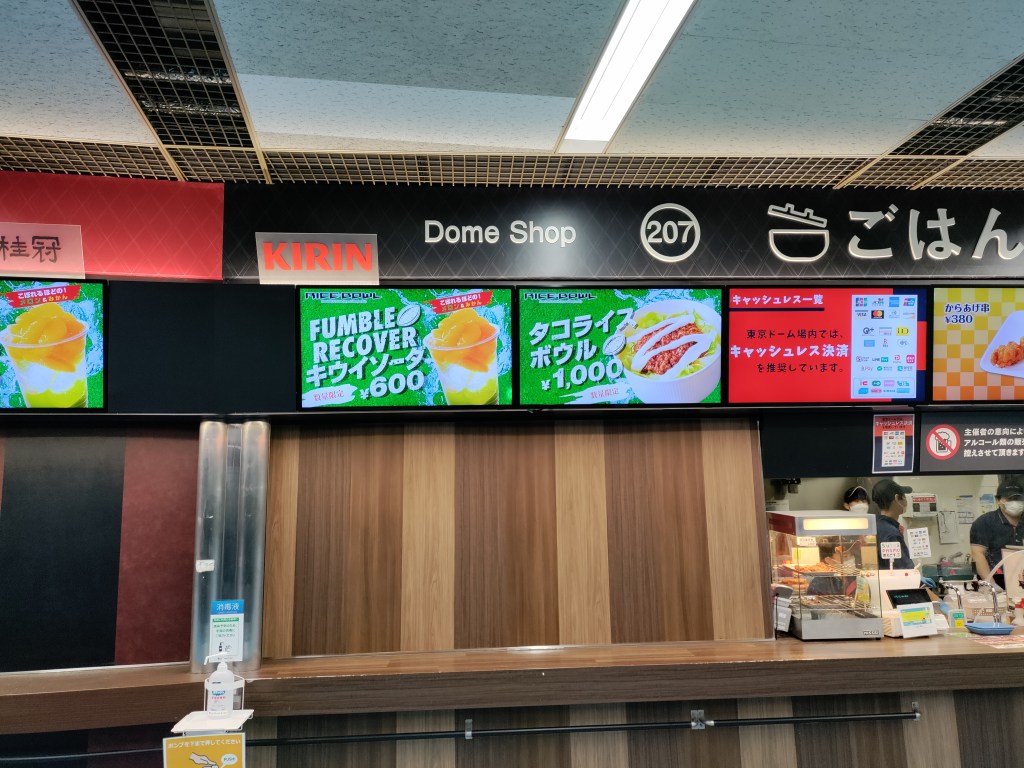
Even the concessions were football themed.
The halftime show
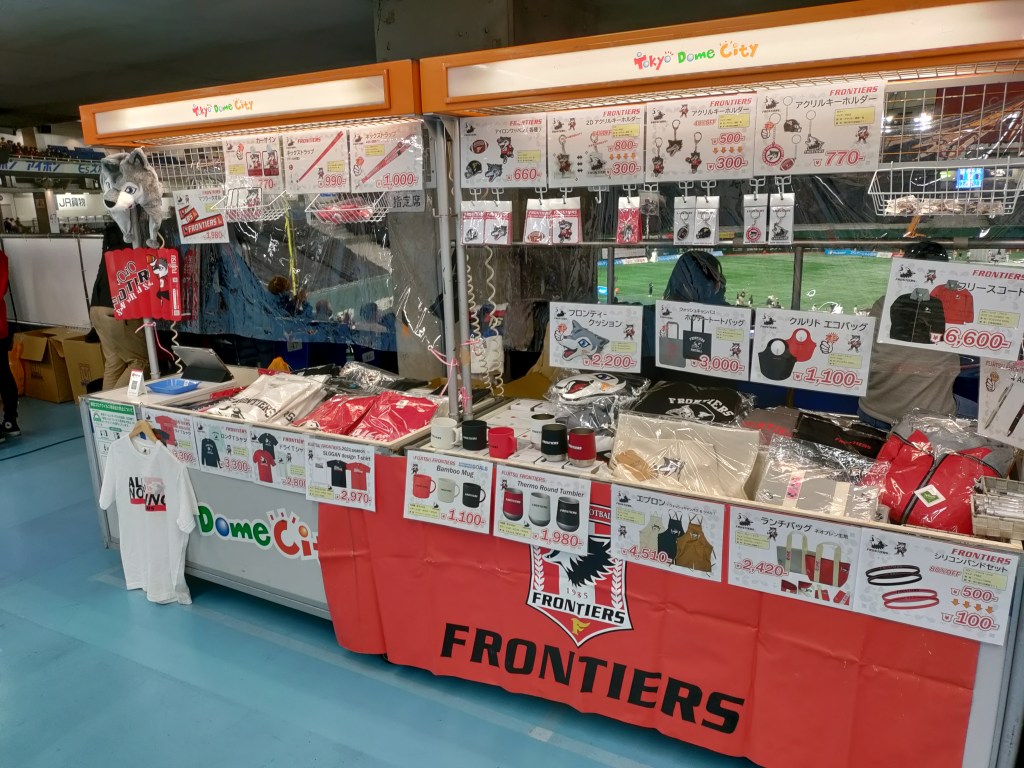
Fujitsu merchandise for sale.
Various kinds of Osechi

New Years in Tokyo

This is my third time visiting Tokyo and it has also been the most exhausting. Perhaps it’s because I’m traveling by myself this time but the scale of the city feels overwhelming. Tokyo is just massive. Tokyo is kind of like a “city of cities.” It’s broken down into what is translated as “wards”. These wards act as their own municipalities and provide local government services. I’ve heard it compared to the boroughs of New York. Some of the more famous wards are Shinjuku and Shibuya. Furthermore, these wards are then broken down into informal districts like Harajuku in Shibuya, Ueno in the Taito ward, Roppongi in the Minato ward etc. It’s all very confusing for someone who is not a local. Still, I’ve been having a good time regardless. I am staying in Asakusa, which appears to be a bit on the residential side. There’s a small amount of restaurants and bars near me by the train station, but it isn’t exactly the bustling metropolis one thinks of when they imagine Tokyo.
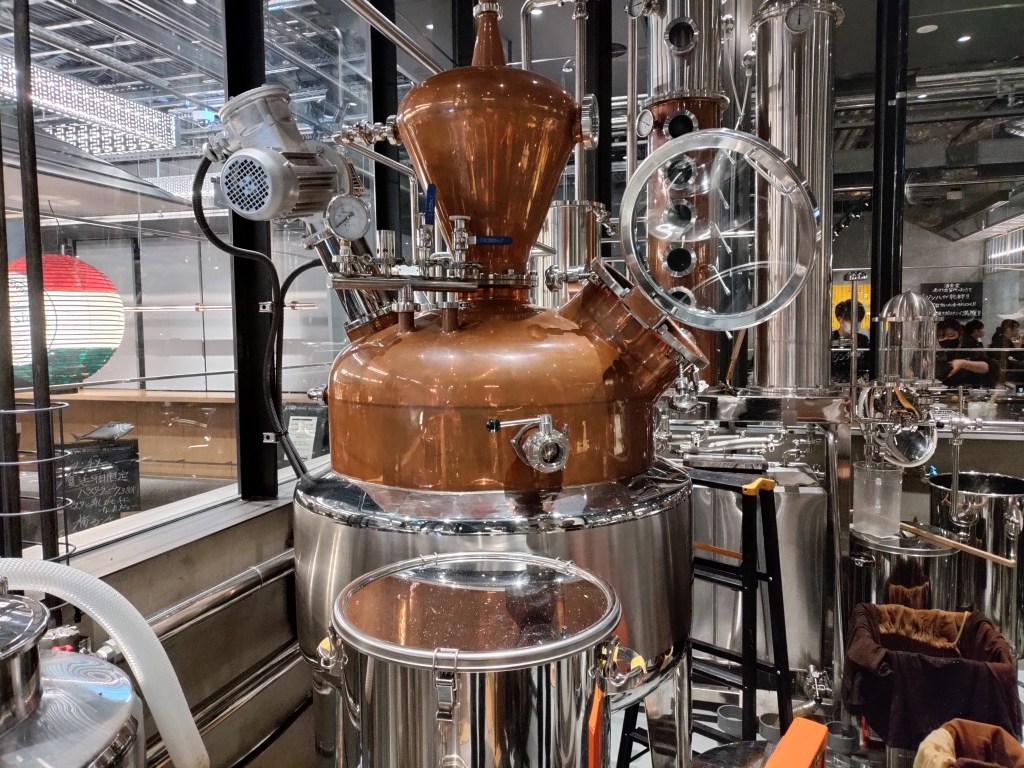
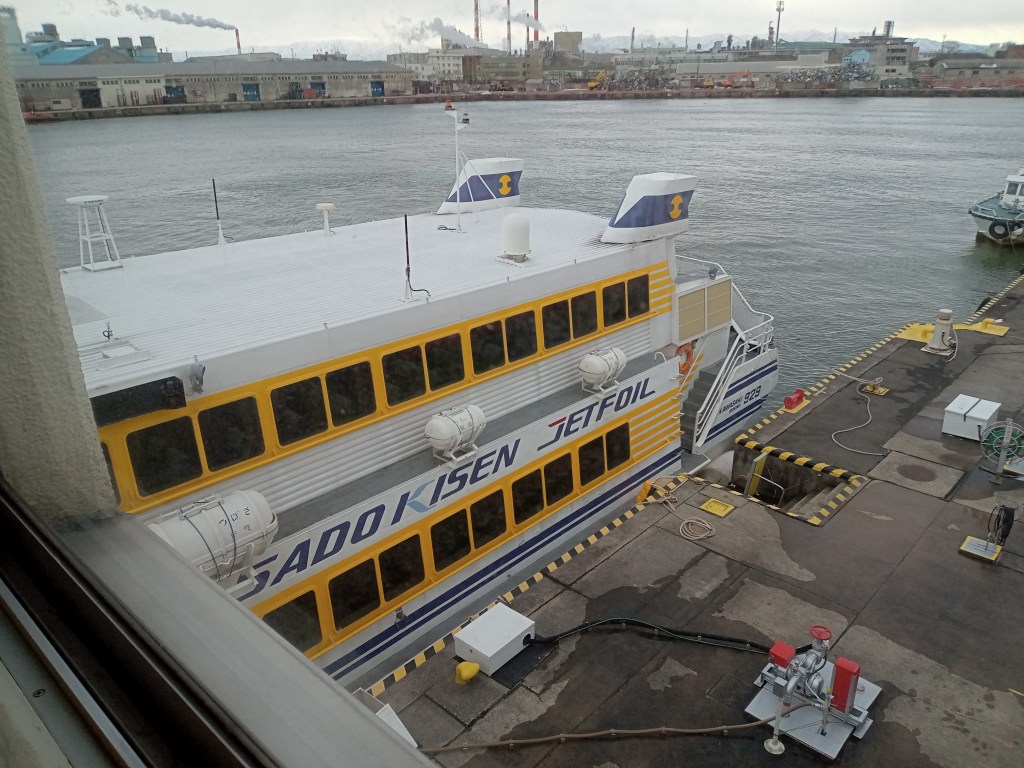
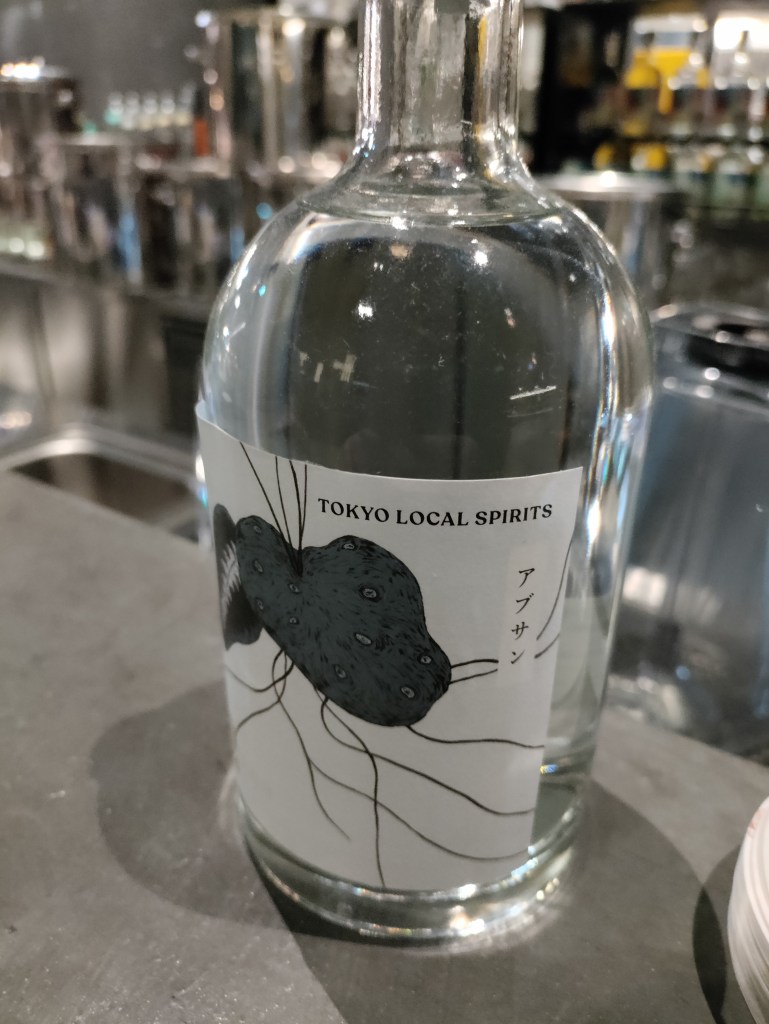
I arrived here on Wednesday. I took the jetfoil from Sado to Niigata, before taking the bullet train from Niigata to Tokyo. From getting on the bus in Aikawa to arriving in Tokyo, I’d say it took about 5 hours. On the first night, I visited Teppei in Minato, the south of Tokyo. Teppei was my roommate around 7 years ago in America and we’ve kept in contact since then. He now works as a small batch gin distiller. His small distillery was in a fancy, new building filled with pop up bars and restaurants. It was sort of a shock to go from rustic and rural Sado to this trendy restaurant space in Tokyo! We went to an old pork restaurant where they cook the meat over coals right in front of you before plating and serving a few small dishes. I tried liver for the first time and it was all very delicious. I had a great time catching up with my old friend. I hope to see him in Sado some time.

On Thursday, I went to Shinjuku. Shinjuku is known for being a sort of night life and entertainment area. I was there to visit a wine bar owned by the brother of one of my friends: a restaurant owner in Sado. It was a nice bar and they had imported wine from all over the world. I spoke with my friends brother, and, even though there was a strong resemblance in their appearances, the contrast in their disposition was reflected in their respective establishments. My friend in Sado is a very jovial and energetic guy. He plays a role in leading many of the festivals in Sado for instance. As such, his restaurant is a very lively and popular place, with darts, sports on TV, video games etc., the atmosphere is very casual and partylike. By comparison, the Tokyo brother had a much more reserved demeanor. His bar had dimmed lighting and played jazz over the speakers. Smoking wasn’t allowed inside (still somewhat common at Japanese bars and restaurants). It was a relaxing place; the kind of place where it would be nice to bring a girl on a date.

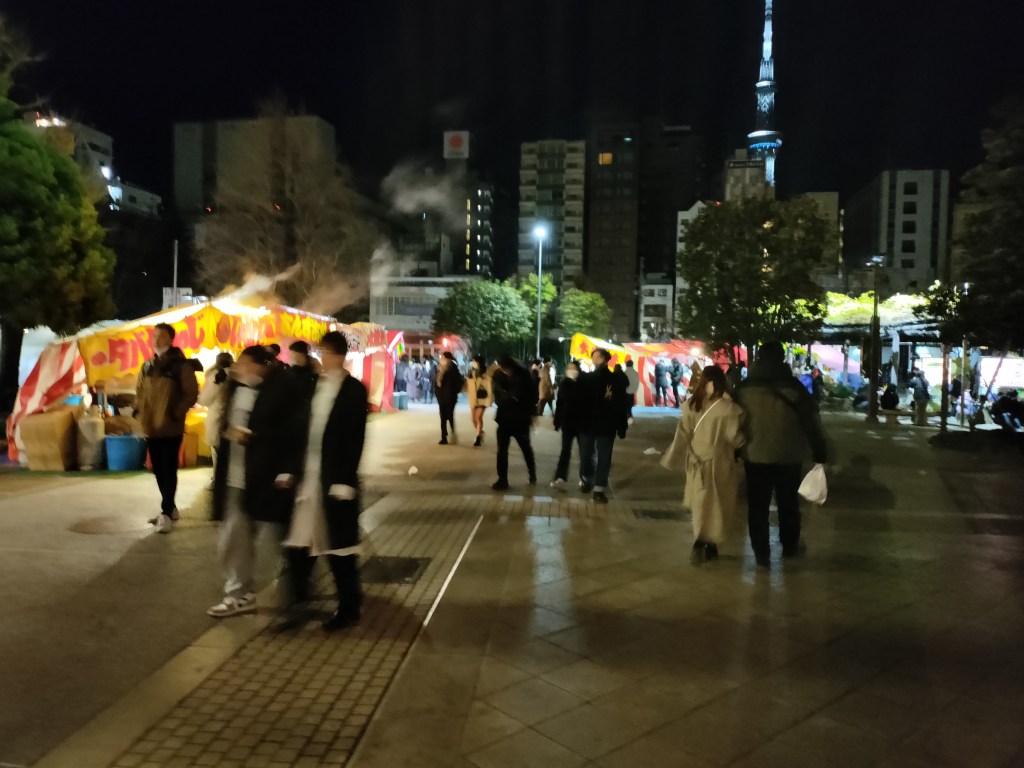
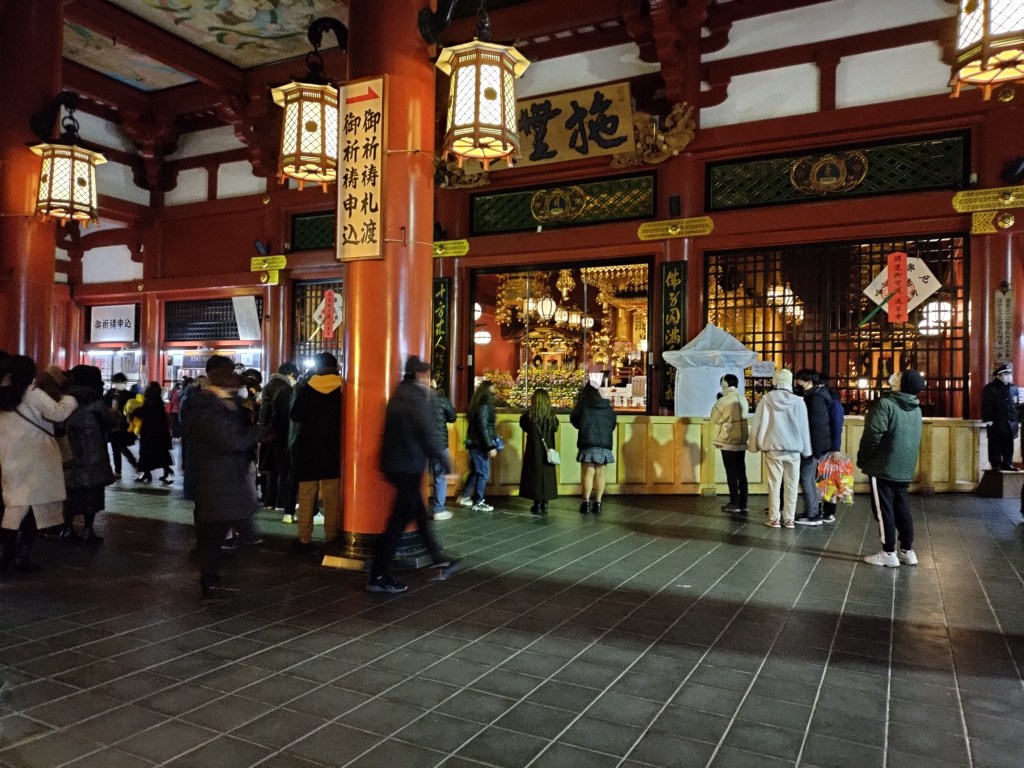
Yesterday, I went to Akihabara. Akihabara is like the pop culture hub of Japan. Being such a huge video game fan, I love it there. There’s tons of shops dedicated to gaming and computer parts along with arcades, I could easily spend hours and hours there. I went to an arcade and the sound from all the machines was deafening. I tried to play the competitive video game Street Fighter with some of the locals but I horribly was outmatched. For New Years Eve, I went to an event at the club Ageha in Shin-kiba. Normally, clubbing isn’t something I often do, but this club is the biggest and one of the most famous in Japan, and it is permenantly closing in a few weeks, so I thought it would be fun to do something a little different and also see the club while I still could. The venue was huge; I’ve heard it has a capacity over 1000. I had a fun time dancing, counting down to the New Year and meeting people. A few of the people I met were going to a temple for New Year’s and invited me to go with them. I was surprised because it was so late but I decided to go with them. We went to a temple in Asakusa and I was really shocked at the amount of people there. By this point it was 4AM, but the atmosphere was almost like a festival. There were stalls selling snacks, candy, and souvenirs. Smoke from food being fried filled the air. I knew visiting a temple in New Year’s Day was a tradition in Japan, but I assumed it was after sleeping! I wasn’t allowed to take pictures inside the temple itself, but it was very pretty and ornate. A large, gold leafed statue of the Buddha sits on a stage, surrounded by various plants and flowers. The ritual seems to go like this: you bow twice in front of the statue, offer a coin, ring the large bell they have, make a prayer for the new year, and bow again.

Tokyo has been very fun if a bit tiring. The city is so huge that, even though I have been multiple times before, there is so much to see and do. I still have 4 more days in the city before I need to return home, so I still have some time to explore and experience more. As always, I’ll keep everyone here updated. Happy New Year from Tokyo!

The jetfoil that connects Sado with Niigata
Teppei’s distillation equipment
Bottle of the gin
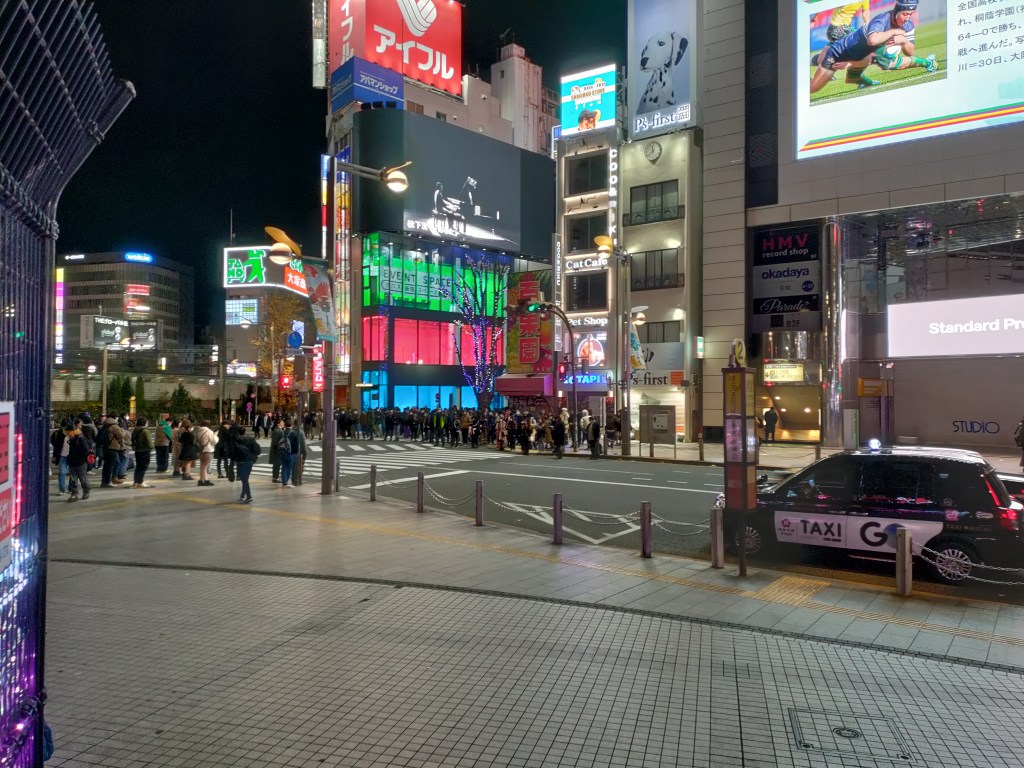
The trendy Shinjuku area
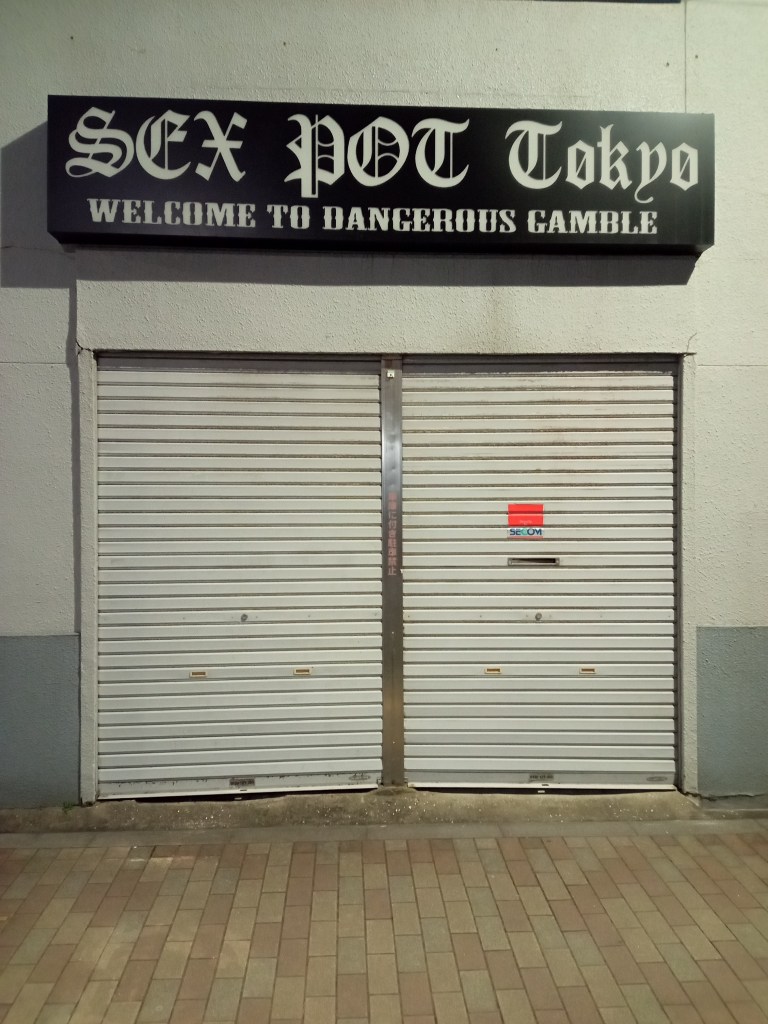
No idea what they sell here but sounds, uh, interesting.
Akihabara
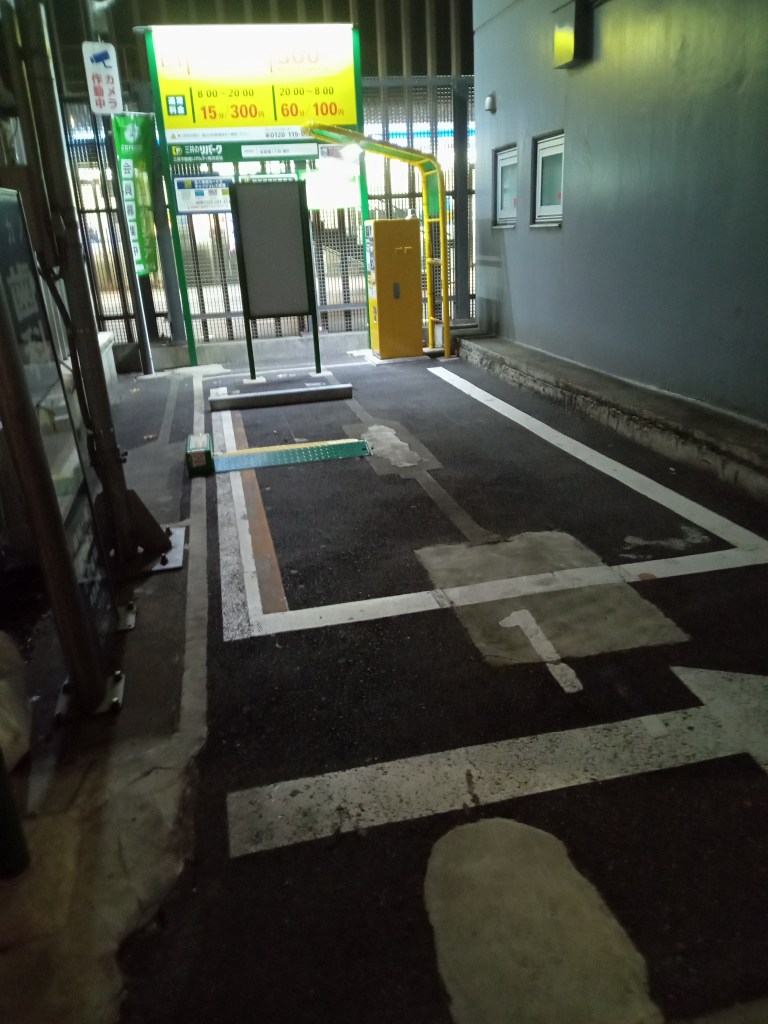
A single parking spot for rent.
Raw meat sushi. Horse, chicken, beef, and fois gras.
The dance floor at Ageha
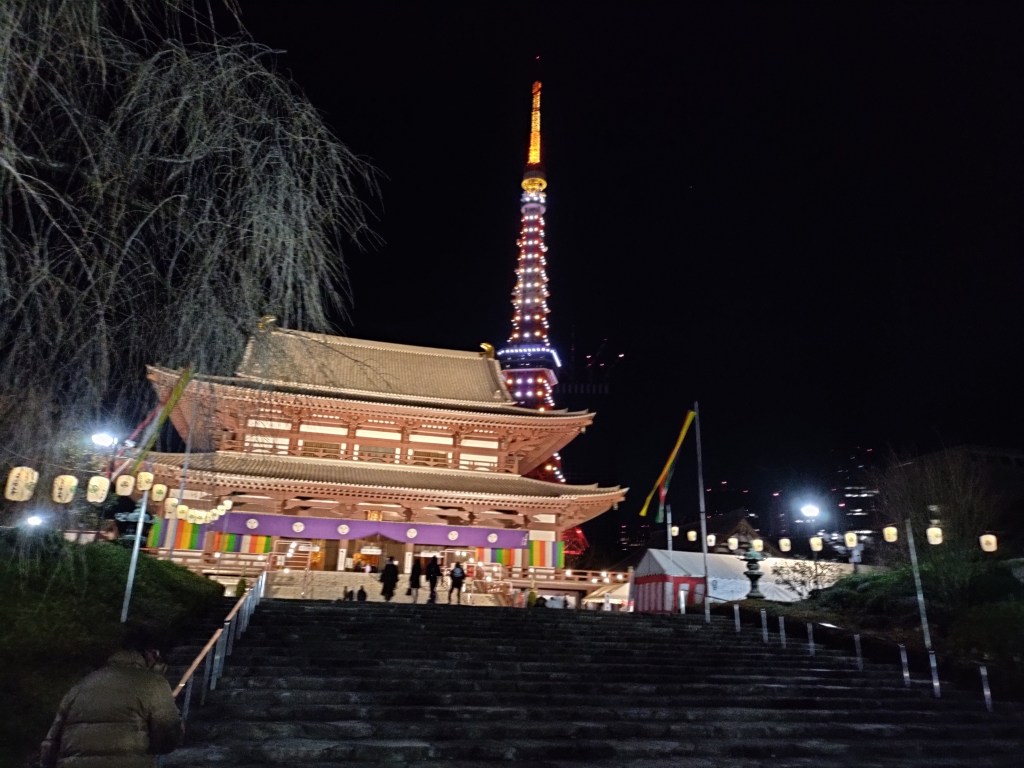
Temple on New Year’s. Tokyo tower in the background.
Crowd on New Year’s at the temple
Stalls selling food.
People praying for a good New Year

White Christmas

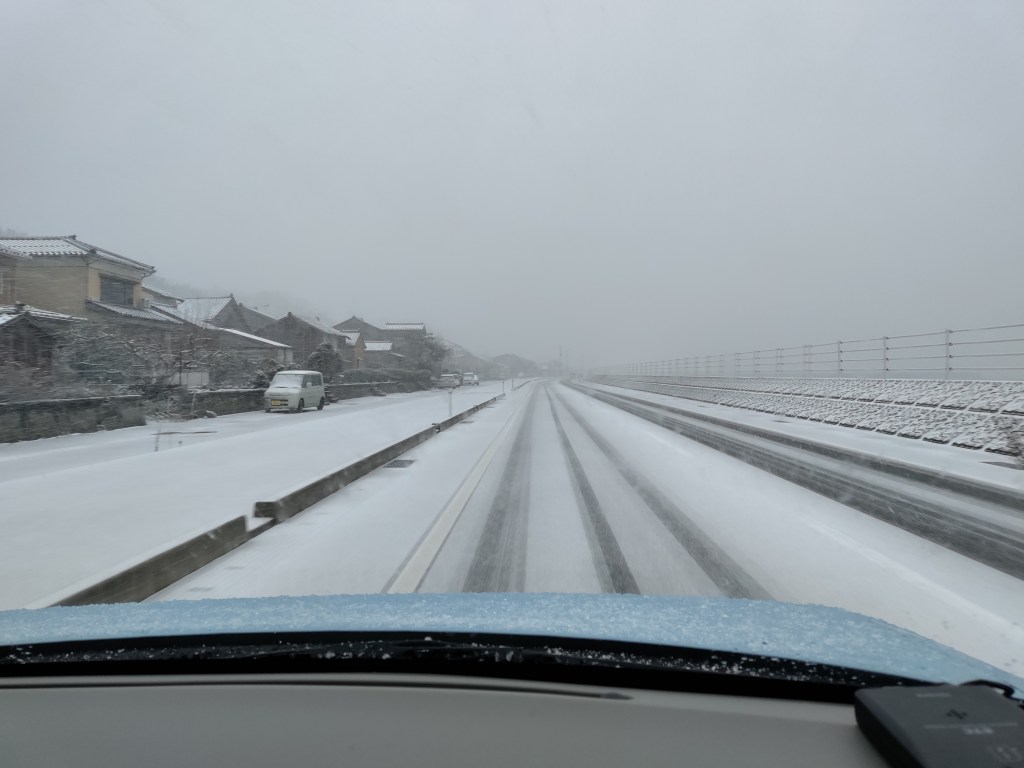
Snow is an annual occurrence on Sado. It starts in the mountains and then before long the interior plains are covered. This Christmas weekend we were powdered with a snow storm. Supposedly this is a little bit earlier than usual, as most snow falls in January and February, meaning this may be just a taste of what is to come. By my estimate there was about 4 inches of snow in Kanai, the middle of the island where I commute. Of all of Sado, it snows the least in Aikawa, but even here we got about 2 inches of snow on the coast. Unfortunately, the roads aren’t salted nor plowed so driving right now can be a bit difficult. I’ve managed ok with snow tires. The snow has created some beautiful, bright landscapes.

As for Christmas itself, I had a good time with some of my fellow teachers. Nearly all the other teachers had taken vacation time and already left Sado for the mainland to do some winter sightseeing and the rest were scared off by the snowy road conditions. So in all only 3 of us showed up. Still, it was nice to spend Christmas with some other people. We ate chocolate and the host cooked delicious curry udon. Later that night, I visited a Shinto shrine. Sadly there wasn’t enough light by the time I got there to capture any good pictures but it was beautiful and calm in the fresh snow and crisp air.

Christmas isn’t seen as a major holiday in Japan. If it weren’t for being on a Saturday this year, it would have been a regular workday for me. On my drive to our Christmas celebration, I saw many businesses open like a regular Saturday. The only Christmas tradition I know of in Japan is, and this is true, buying fast food fried chicken to eat with your family. The gold standard is KFC (or “Kentucky”, as it is known here), and you have to reserve your order a month or more in advance. There’s only one fast food place on the island, a Japanese chain known as MOS Burger. I stopped in on Christmas Eve and they were absolutely swamped with takeout fried chicken orders. I saw the fryer basket absolutely filled to the brim with chicken and around 20 bags waiting to be picked up. I’ve also heard Christmas is sort of a “couples holiday” in Japan and it’s common to go on dates, much like Valentine’s day in America.
While Christmas isn’t seen as a big deal out here, New Year’s is more akin to how we celebrate Christmas in the west. It’s very common to return to your hometown and stay with your parents and extended family over New Year’s. New Year’s Day is a public holiday and many workplaces have a New Year’s break to allow for all this travel. Going to a Buddhist temple on New Year’s Day and praying for a prosperous year is a common tradition. Since I am going to have 6 days off for the holiday, I decided to take the opportunity to travel a bit in Japan and booked a hotel room in Tokyo. I’m very excited for this trip and looking forward to seeing my friends in the city. Of course, I’ll keep everyone updated here as well.

Road conditions
The gate to the Shinto shrine. Just a tad dark.
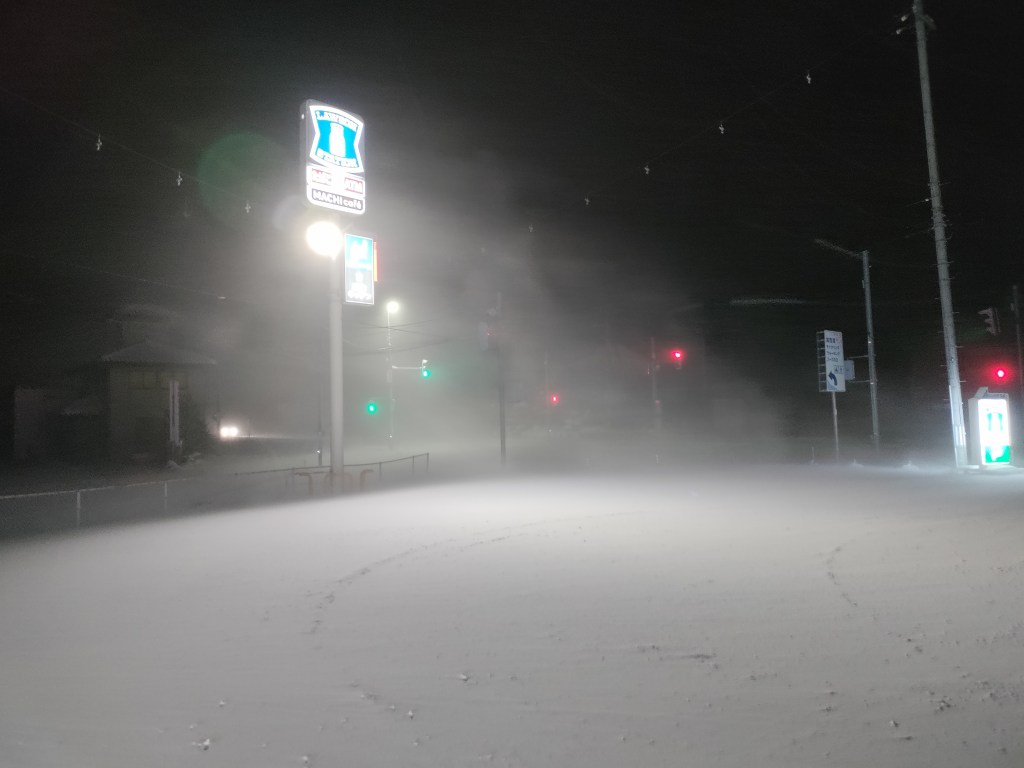
I was prepared for the temperature on Sado, but I wasn’t ready for the wind. As you can see, the snow really gets blown around by the island wind.
KFC Christmas meal 2021 edition
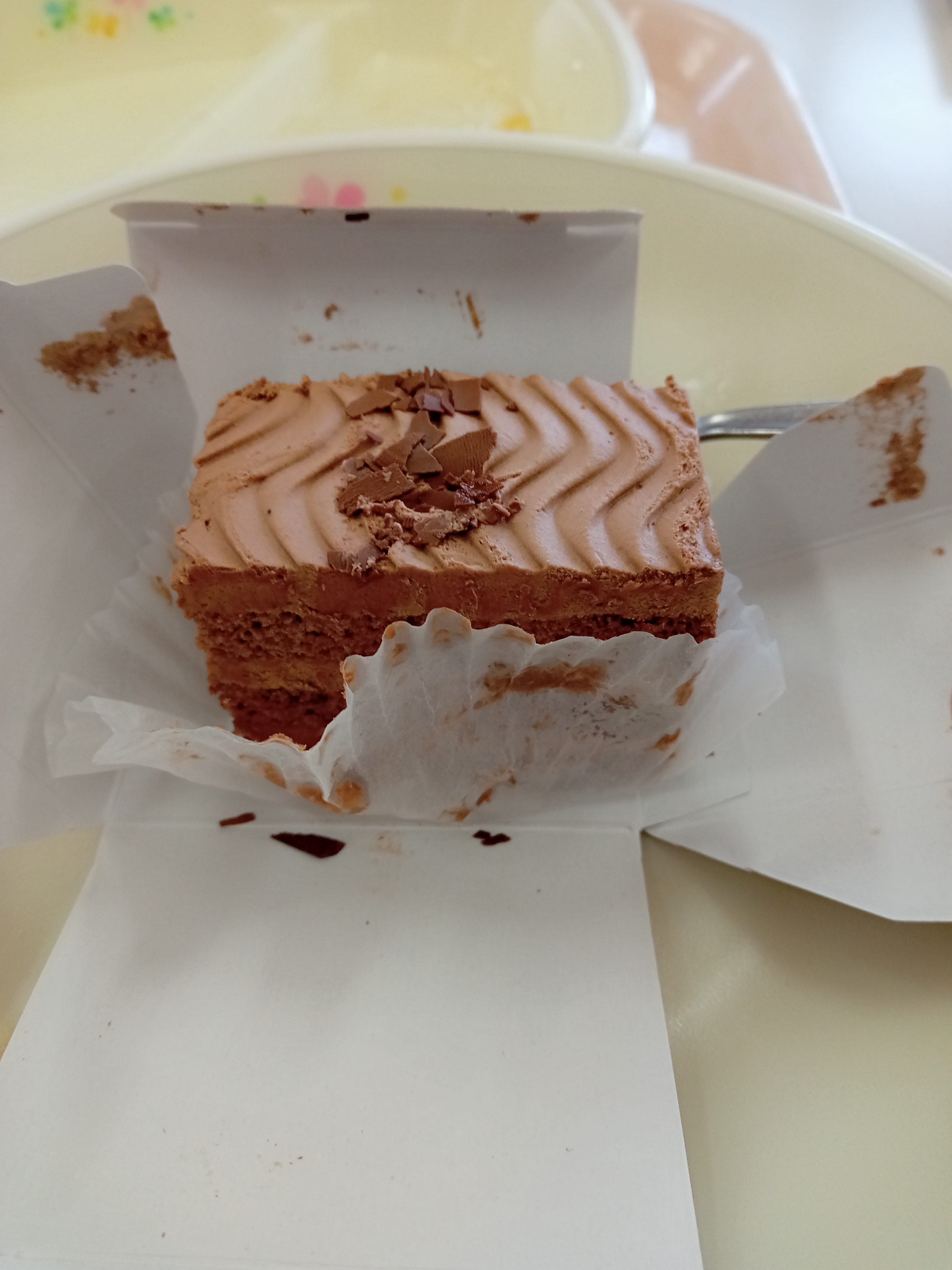
The school lunch on Christmas Eve came with a little cake.
Rice fields covered in snow
A little bit of snow at some mine ruins in Aikawa
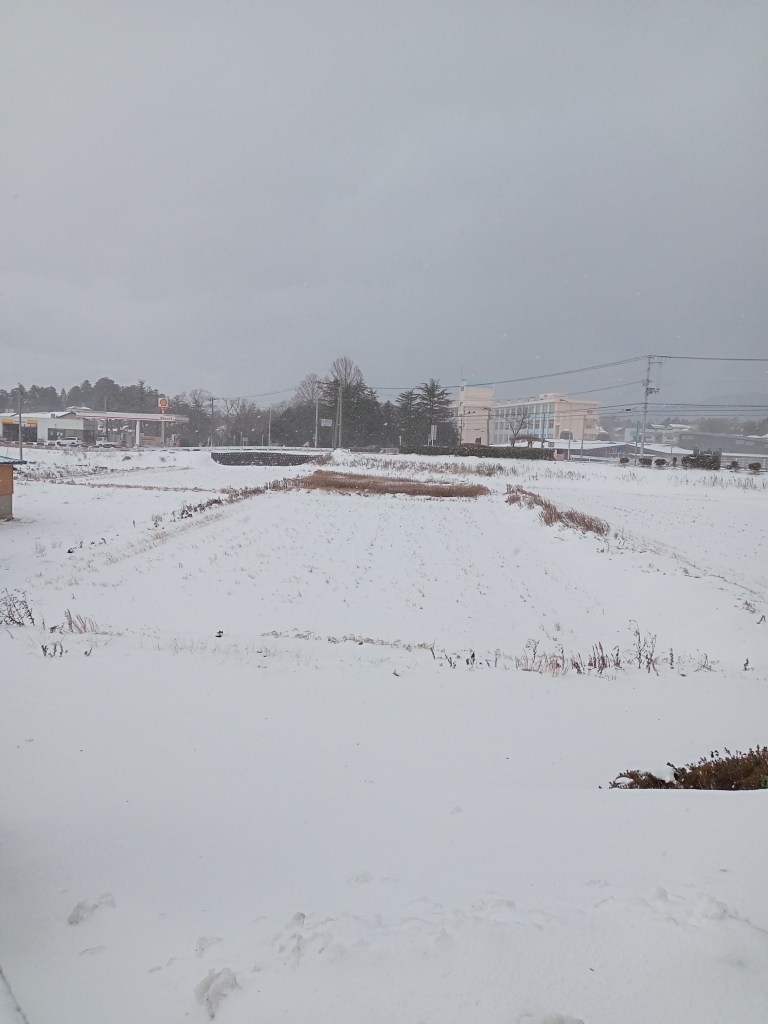
Snow at my school today

School Lunches

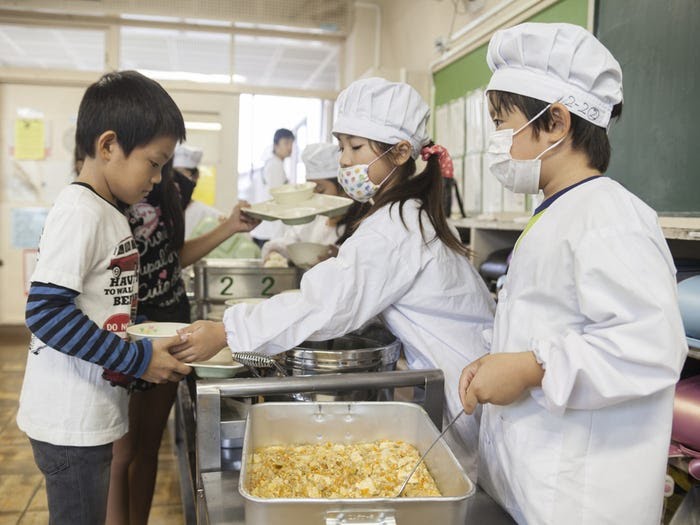
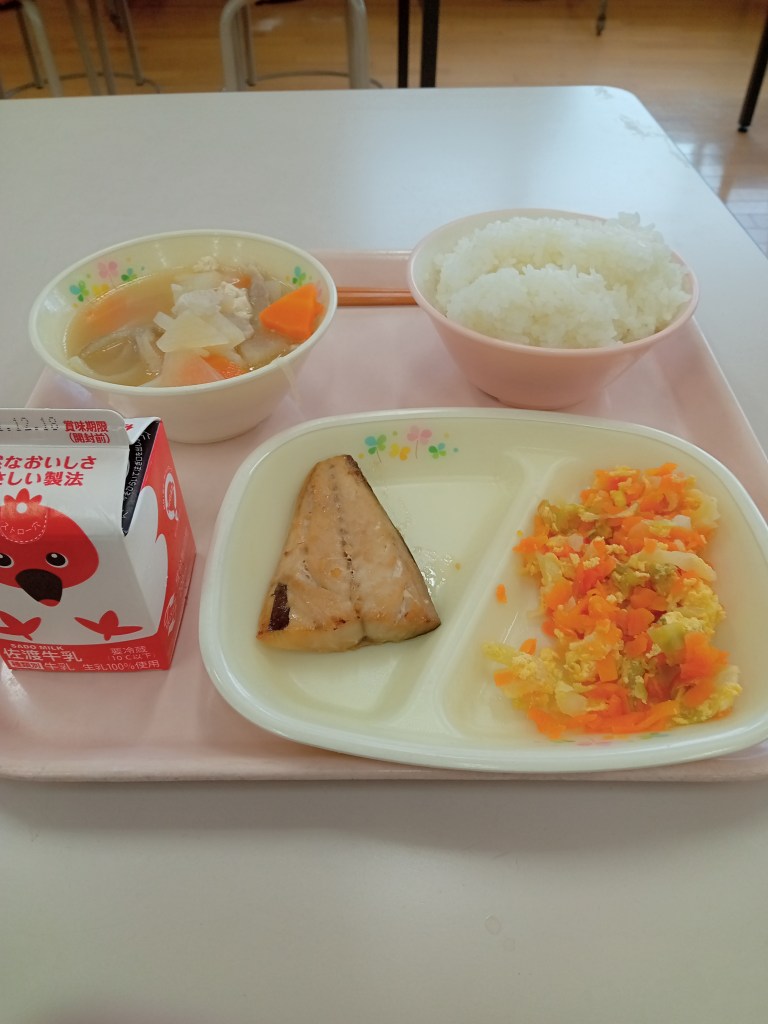
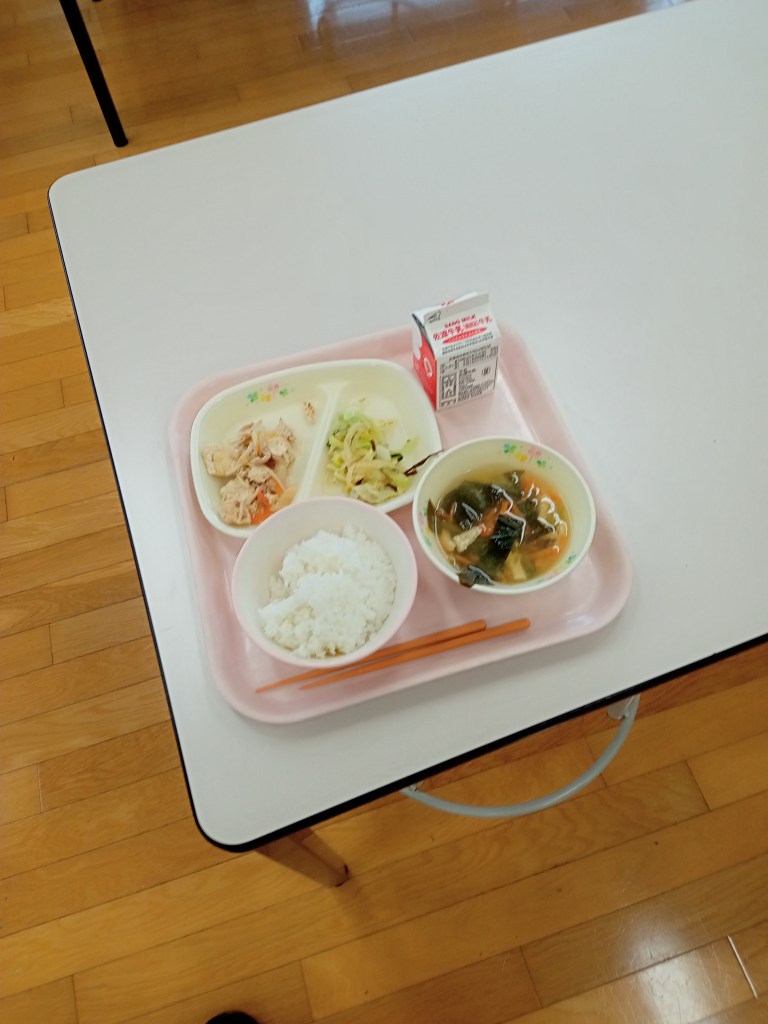
Before I got to Sado, the local Board of Education asked me if I was going to pack a lunch or get a school lunch everyday. I decided to go with the school lunch because it was less to think about and seemed like a good way to interact more with the students and teachers. I was a bit concerned though, that maybe other teachers all brought their own lunch and I’d look like a silly foreigner eating a kid’s meal. Well, to my surprise, the vast majority of the teachers and school staff eat the school lunches. I was also surprised by a lack of dedicated lunch staff in Japan. The students actually serve lunch to other students and teachers. During lunch, about 5 kids will all put on white coats and hats and dish out the meals. They will assemble a tray for their teachers as well and serve us first, although the teachers don’t seem to start eating until everyone has been served.

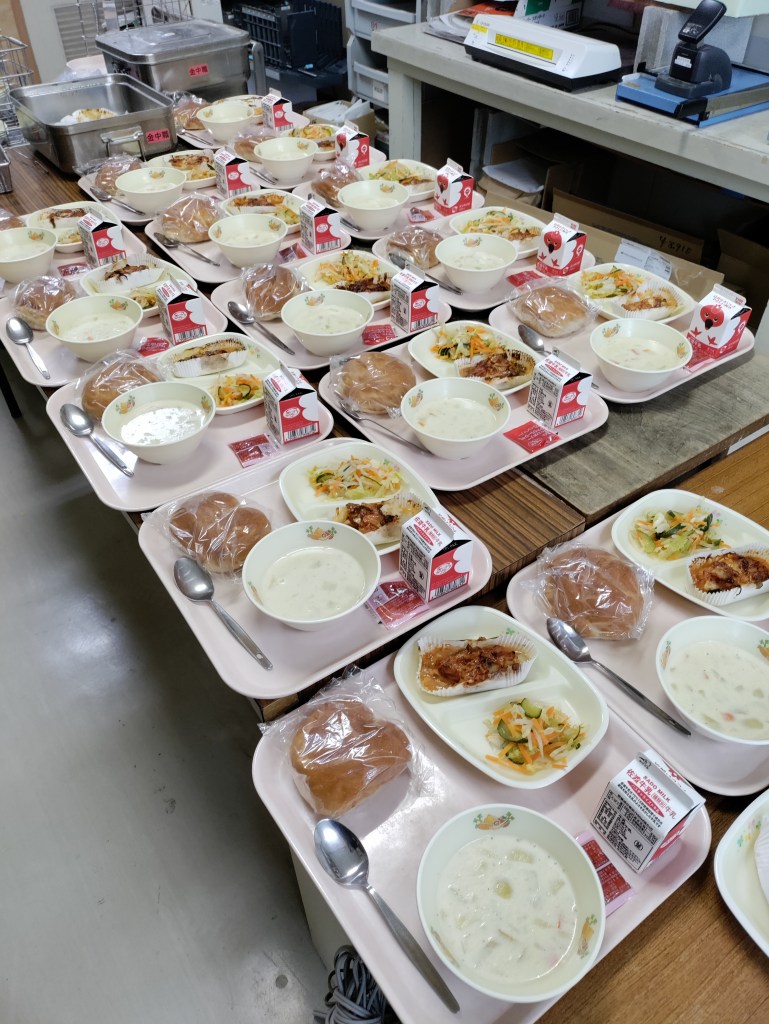
The food all seems very balanced. Usually there is a bowl of rice, but sometimes we get a roll and some jam instead. There’s soup with seaweed and mushrooms or potatoes and carrots. The main plate always has some kind of vegetable dish and some kind of protein dish, usually chicken, fish, or tofu. I have heard beef is served on special occasions but I have not had any yet. A carton of local milk is also served daily. Apparently, the food is all locally produced in Sado, and this is how it is done all across Japan. As a result, the school lunches vary wildly depending on what crops are grown in the different regions of Japan. As for taste, it’s nothing to write home about (although I suppose that is exactly what I’m doing right now) but it’s not bad either. Overall, the meal costs about $3 a day and it is paid by every teacher on a monthly basis. I think the system here works well. The food seems healthy, it gives some responsibility to the students, and encourages eating locally.

Some kids serving lunch (note: these aren’t my students, I just found this picture online)
The school lunches all laid out in the teachers’ office
A typical school lunch

The Tomb of the Christian

On my drive home on the highway I frequently passed by a sign pointing to “The Tomb of the Christian”. I was curious what it could be. It uses the more archaic spelling in Japanese of “Kirishitan” (キリシタン) derived from Portuguese “Cristão”. This is the word used to refer to early Japanese adherents of Christianity who converted following the arrival of European traders in the 16th and 17th century. Today it is more commonly spelled “Kirisuchan” or “Kiristo-kyouto” (follower of Christ), so I thought this could be a historical site, perhaps where Christian martyrs were buried after the Shogunate government cracked down on the religion in the 1600s. I decided with the extra time I had today I would drive there and check it out for myself.

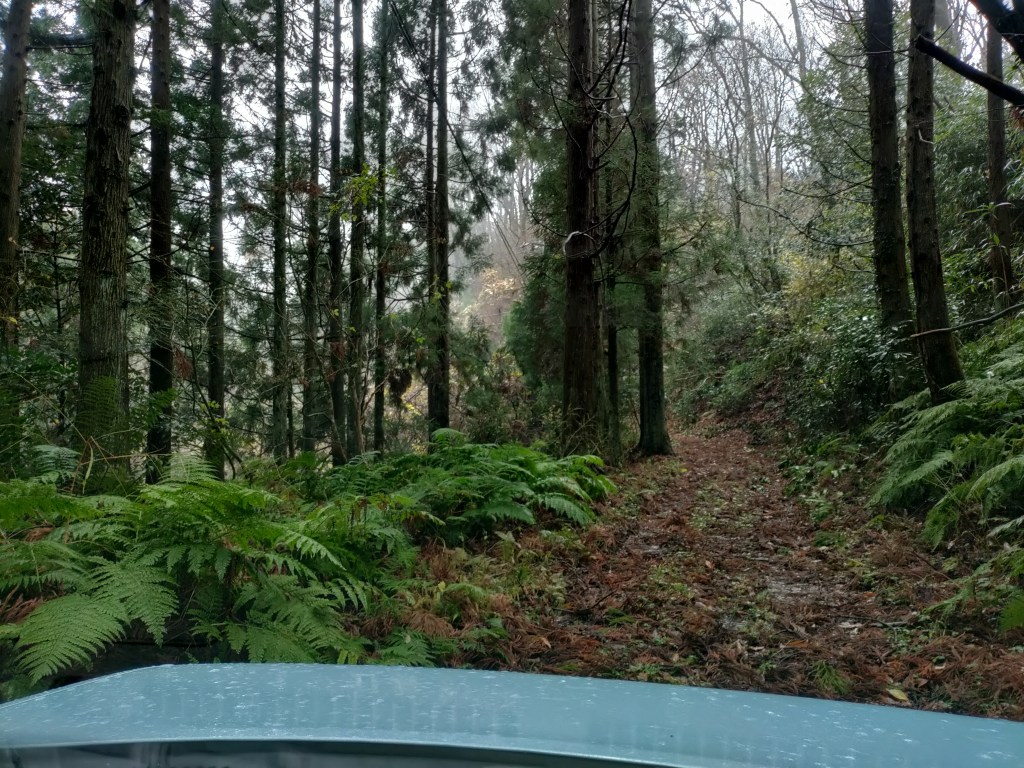
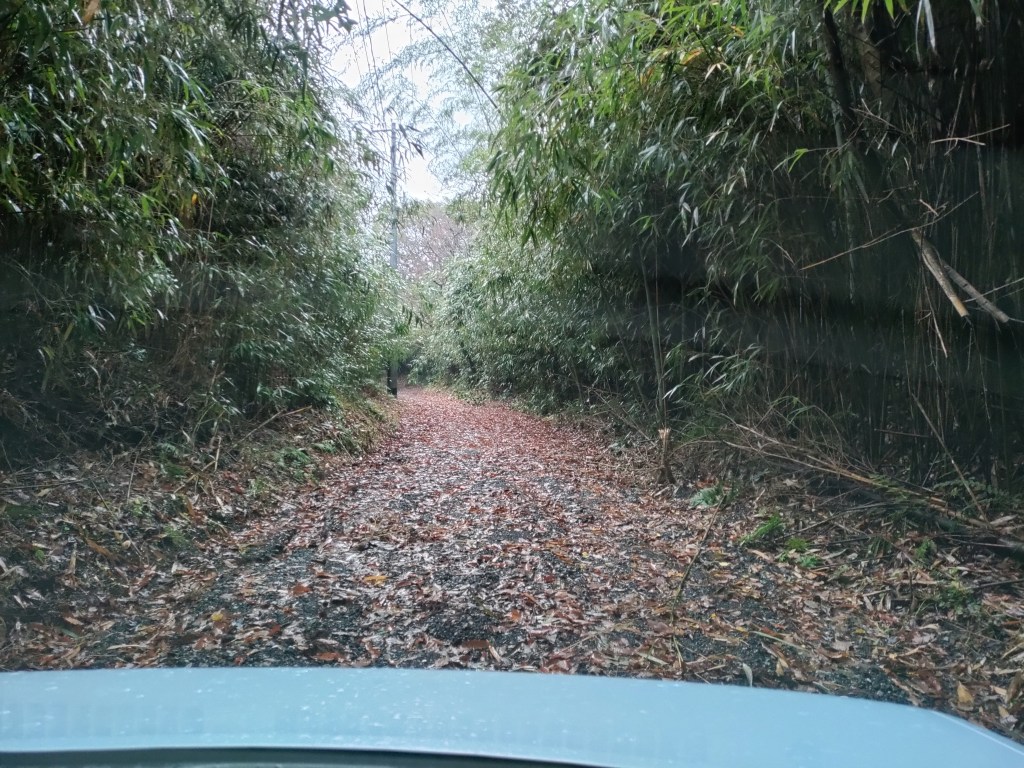
Little did I know the treacherous drive I would face to get there. The road was entirely unpaved and very narrow. Even with my tiny car it would have been impossible to pass anyone going the other way. There were some sheer drops and no guard rails. It was wet and muddy with rain and I was worried about getting stuck. There were sections where the road was completely torn up by rain runoff which creating numerous meandering streams that carved away the road. It was a bumpy and slow ride. My car and I made it through alright though. I credit the valuable off-road experience I gained on the Gambler 500 earlier this year!

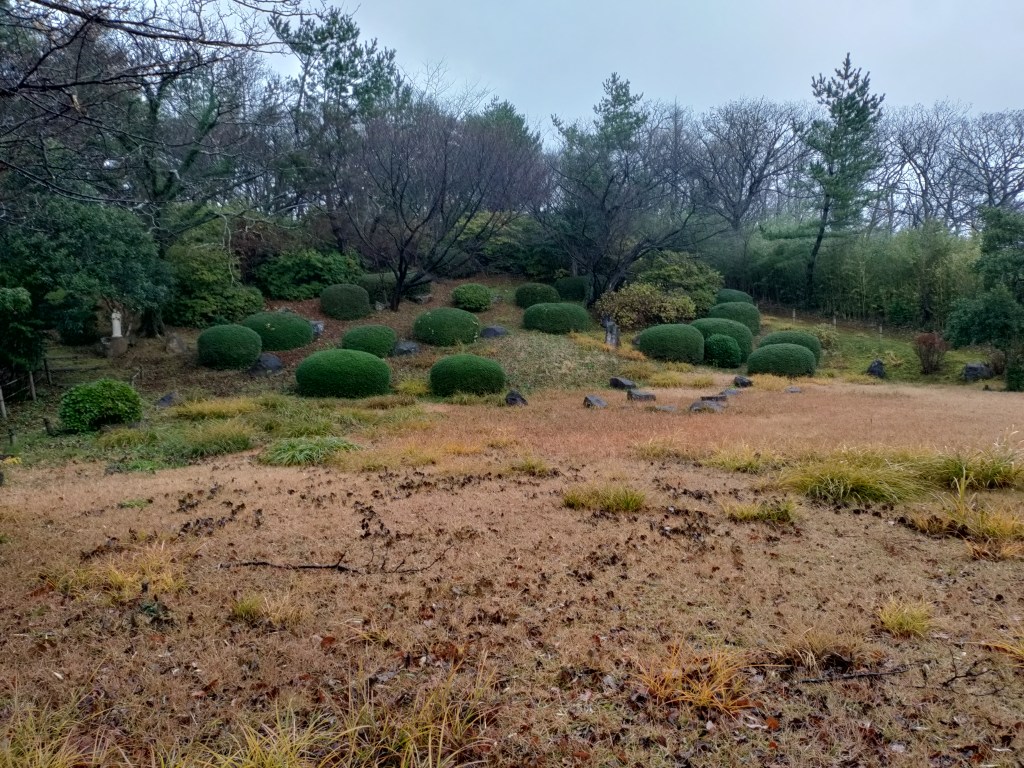
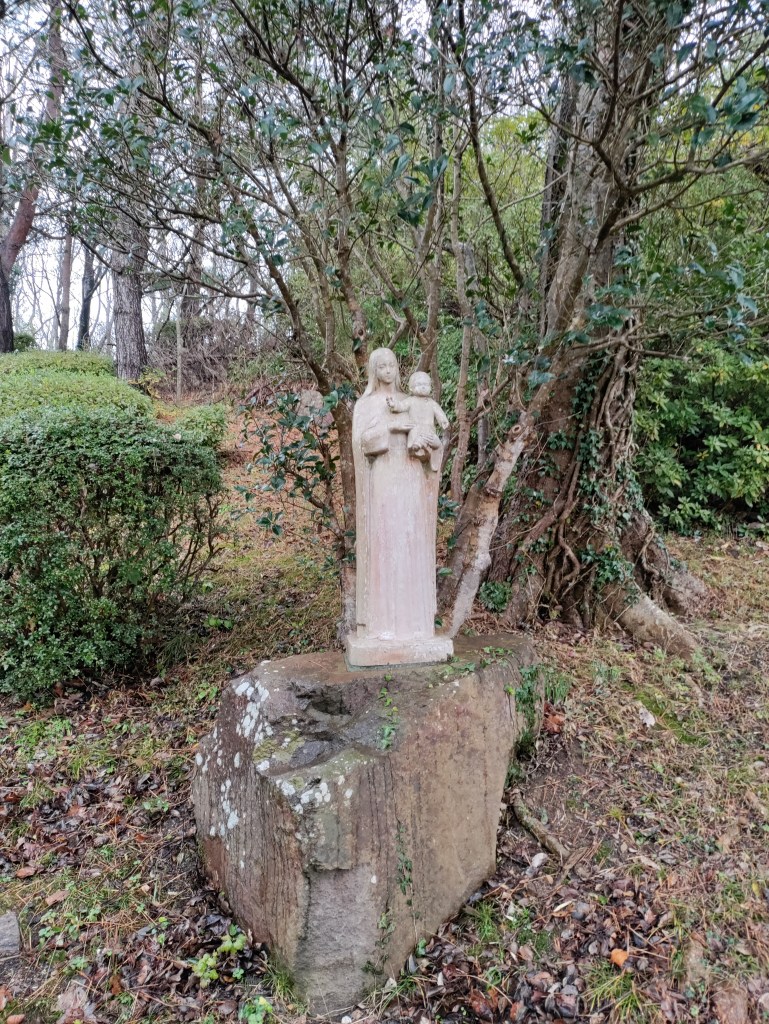
It turned out it was indeed a tomb where the early Christian followers of Sado were buried following a quelled uprising by Christians in the Southeast of Japan. Following this uprising, the Japanese government took a hardline stance and banned the practice of the religion. It remained this way until the Meiji restoration nearly 200 years later. The tomb was very peaceful. The sprinkling sound of rain created a forlorn atmosphere. I was the only person there. The grounds were well maintained though. Even though the drive was a bit frightening, it was rewarding to get to the top where I learned little bit more about Sado history.

A view from the road
Are you sure this isn’t Oregon??
This sign says this is the burial site of Sado Christians killed following a rebellion in Kyushu.
The grounds, the actual tomb was on this hill.
The tomb
Driving through some bamboo on the way back down.