I bet you didn’t expect this to be my first post in so long. Japan has along history of public bathhouses, dating back at least a thousand years. Recently, I took a trip to Aichi prefecture, about 300 miles from Niigata. Instead of paying for the bullet train or a flight, I decided to travel cheaply by taking the overnight bus. Of course, what I saved in money I had to make up in time. When I arrived in Aichi from Sado, I had amassed about 19 hours in travel time. My hotel check in was still hours off and, having been wearing the same clothes for the whole trip, I was feeling pretty dirty. Luckily, I was able to find a local bathhouse, so I walked over, paid about $3 and took a bath.
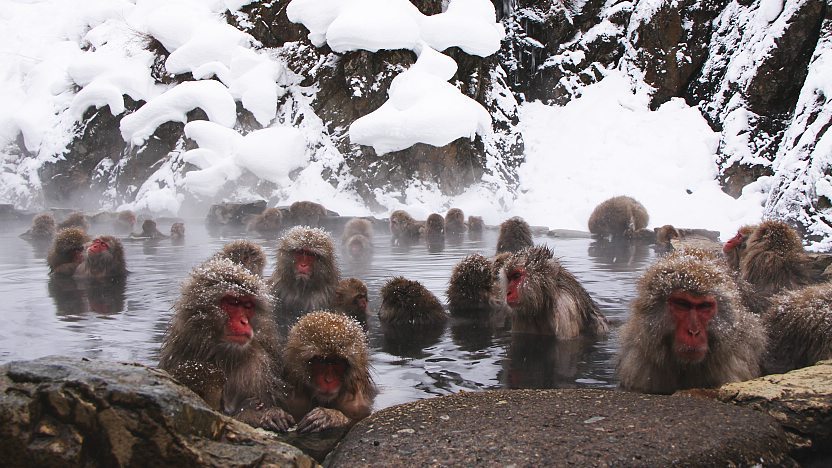
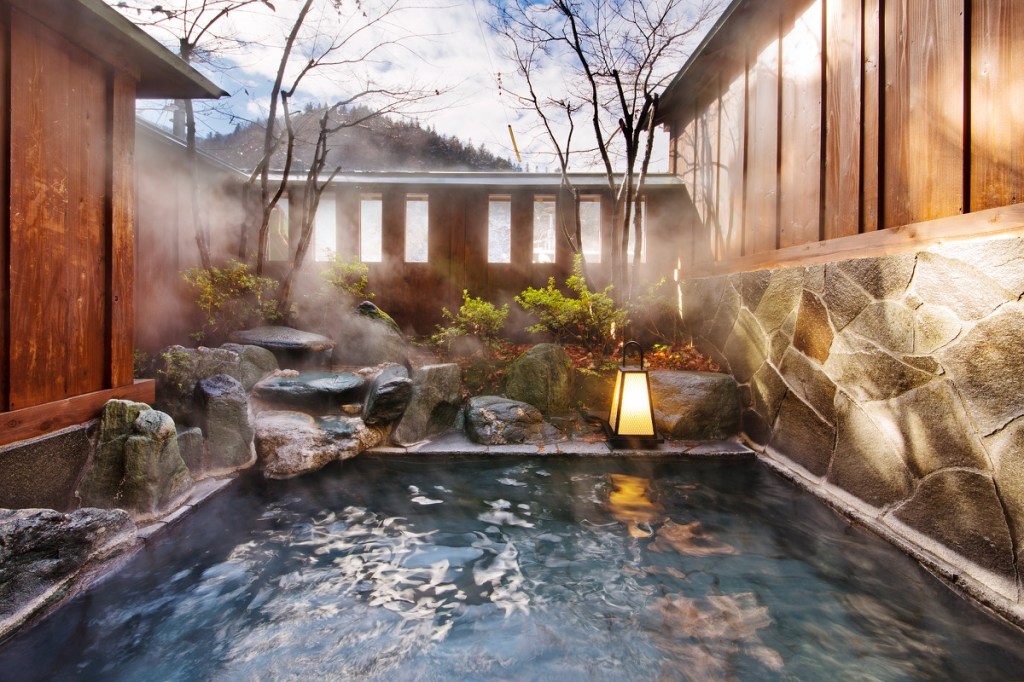
Public baths in Japan can be divided into two groups. There are sento, which are public baths, usually in urban areas. Then there are onsen, which use naturally heated spring water for their baths. Japan, being a very seismically active place, is littered with natural springs. You may have seen the popular pictures of Japanese macaques enjoying a dip in the hot springs during snowy winters. These days the line between the two has become blurred, with many ordinary sento calling themselves onsen in an attempt to attract customers who don’t know the difference, even though they are simply using piped in tapwater. While I said earlier the history of public baths in Japan goes back centuries, the beginning of their mass proliferation across the country began due to two separate incidents. First, the Great Kanto earthquake of 1923 destroyed much of the Tokyo region. Second, the allied bombing campaigns of Japan during World War II destroyed many Japanese cities. In the rebuilding efforts following both of these events, many housing developers built houses and apartment complexes without bathing facilities in an attempt to keep costs low. These houses would have built in communal baths, or a public bath would be in the vicinity to service the demand. Think of it like how many apartments in the US lack laundry facilities, leading to the use of laundromats, except instead of cleaning clothes, you’re cleaning yourself.
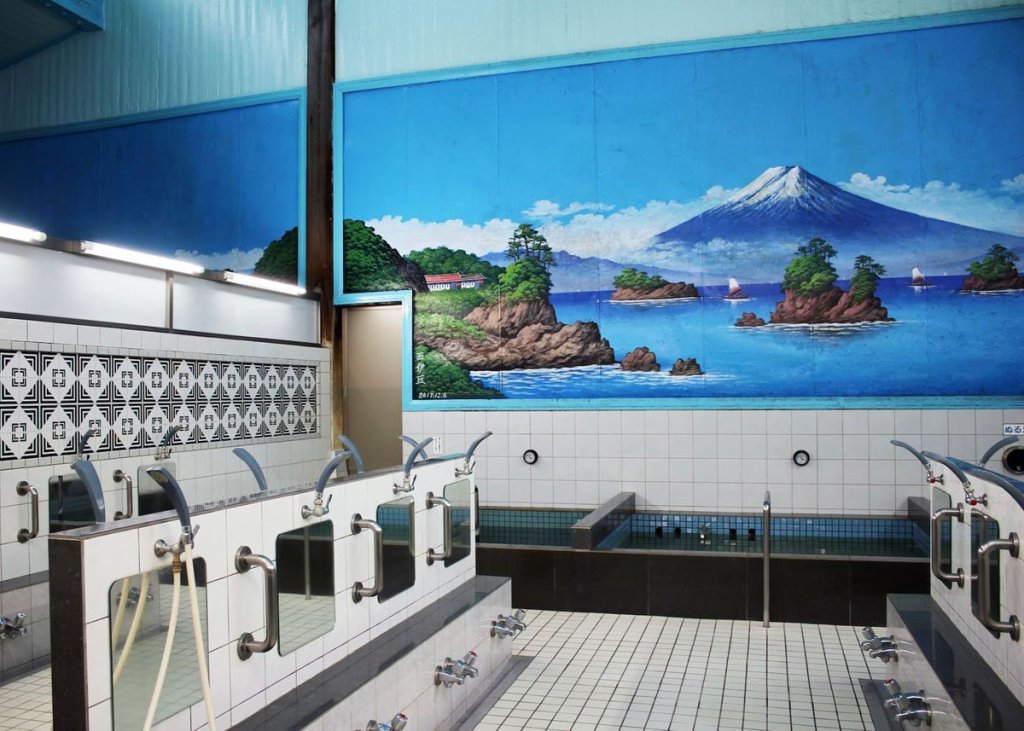
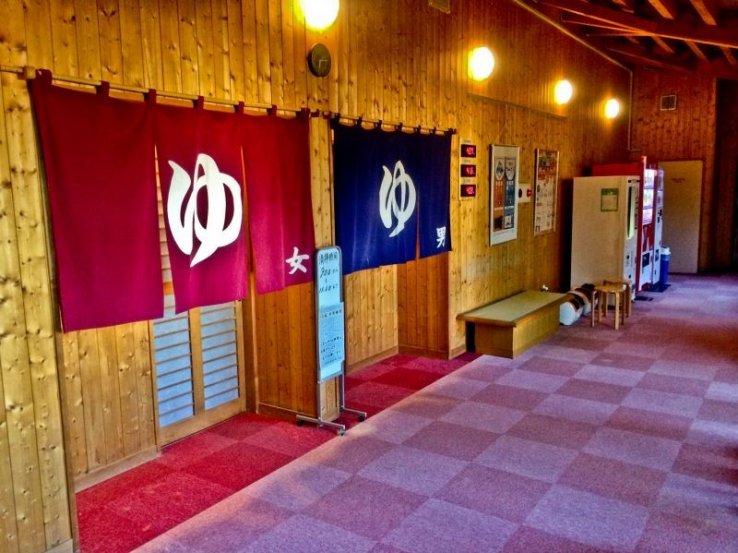
Whether they are sento or onsen, most public baths in Japan are constructed in a similar style. Generally, there will be two bathing areas separated by sex. Upon entering the designated area, you arrive to a locker room, where you remove your shoes and all your clothes. Public bathing is done completely nude and wearing swimwear would be considered a faux pas. In the next room, and usually adjacent the baths there will be several sit-down shower stalls. Many baths also offer saunas, steam rooms, and many different kinds of baths such as cold baths, baths with jets, baths for one person use, and outdoor baths.
There is a proper etiquette to bathing in public in Japan. First, at many bathhouses (as well as public pools) there is a ban on tattooed individuals. This is because in Japan tattoos are associated with the Yakuza, the Japanese mafia families. Slowly, this taboo is eroding though, both because of the decline of influence and membership of the Yakuza, and because of the growing acceptance of tattoos in Japan. As some of you may know, I have a few tattoos, so bathing in public is always a bit of a crap-shoot. However, at this bathhouse, I looked over and saw an old man with ornate, Yakuza-style tattoos covering his shoulder and back drying himself with a towel. I realized that meant my small tattoos wouldn’t be an issue. These days, a number of establishments also allow entry as long as one covers up their tattoos.
Next, before entering the bath, you must be completely clean. This is done by using the shower stalls. I’m not quite sure how long it takes someone to be seen as “clean enough” to enter the bath, but it seems to be somewhere around 20 minutes of showering. I usually just wait until everyone who was there before me is finished using the showers, and then I get in the baths after about 5 more minutes. Many places offer soap and shampoo for free or for a small price, as well as towels for rent. You must make sure you have completely cleaned the soap and shampoo off of yourself, as bringing any of it into the baths would also be considered a faux pas, and may result in being asked to leave. Also, things like talking loudly, splashing, drinking or eating, and generally making a lot of noise will reflect poorly on you, and you are expected to remain relatively quiet, although you can have a quiet conversation with someone nearby if you want. In general, time in the bath is considered a time of quiet reflection. Finally, once you are clean, you may enter the bath. I find the baths are quite hot compared to hot tubs at pools in the US. I can only stand to stay in for a few minutes at a time.
Now, there are a lot of claims about the potential health benefits of spring water, but I can tell you one thing for certain: visiting a sento or onsen in Japan will leave you feeling relaxed, recharged, and refreshed. These days, as more and more houses and apartments have built in shower and bath facilities, sentos are on the decline. There isn’t much of a demand for ordinary bathhouses. That said, I think there will always be a place for the higher end onsen. I would recommend visiting one if you ever are in Japan, if only because it is something unique to Japan and Japanese culture, even if it may be a bit out of your comfort zone. After about 30 minutes at the bathhouse in Aichi, I was able to clean myself, put on clean clothing, and leave feeling refreshed. I purchased an ice cold ginger ale from the vending machine in the lobby and left to explore the rest of the city.
Macaques at an outdoor springThe interior of a sento. The showers and baths are visible.A nicely landscaped onsen. As you can see, it is a bit higher end than the utilitarian sento.The entrance to a bath. The left is for women and the right is for men.Sorry, no tattoos allowed.
Before I came to Japan, I was not a huge fan of sake. Now that I live in Niigata, I have acquired a taste for the alcoholic beverage. Niigata is considered to be one of the capitals of sake brewing in Japan. If you are interested in the history or process behind the brewing of sake, you might want to consider taking a sake tour in Japan! I recently went on a sake tour and learned all about the process of making sake. Here is a recap of my experience:
First, we visited a sake brewery named Kanbara in the town of Aga, located in the mountains near the Fukushima prefecture. This region is known for producing some of the best sake in Japan. Our guide explained that the water in this region is particularly well-suited for making sake, due to its purity and mineral content. Our guide was the owner of the establishment and he spoke very good English and was very jovial and accomadating during the entire experience.
First, we learned about the basics of Sake production. We also learned about the polishing process, which involves removing the outer layers of the rice grain to expose the starchy center. The more the rice is polished, the higher the quality of the resulting sake. Furthermore, a type of mold is used to turn the long strings of starches into simple sugars which the yeast can ferment into alcohol.
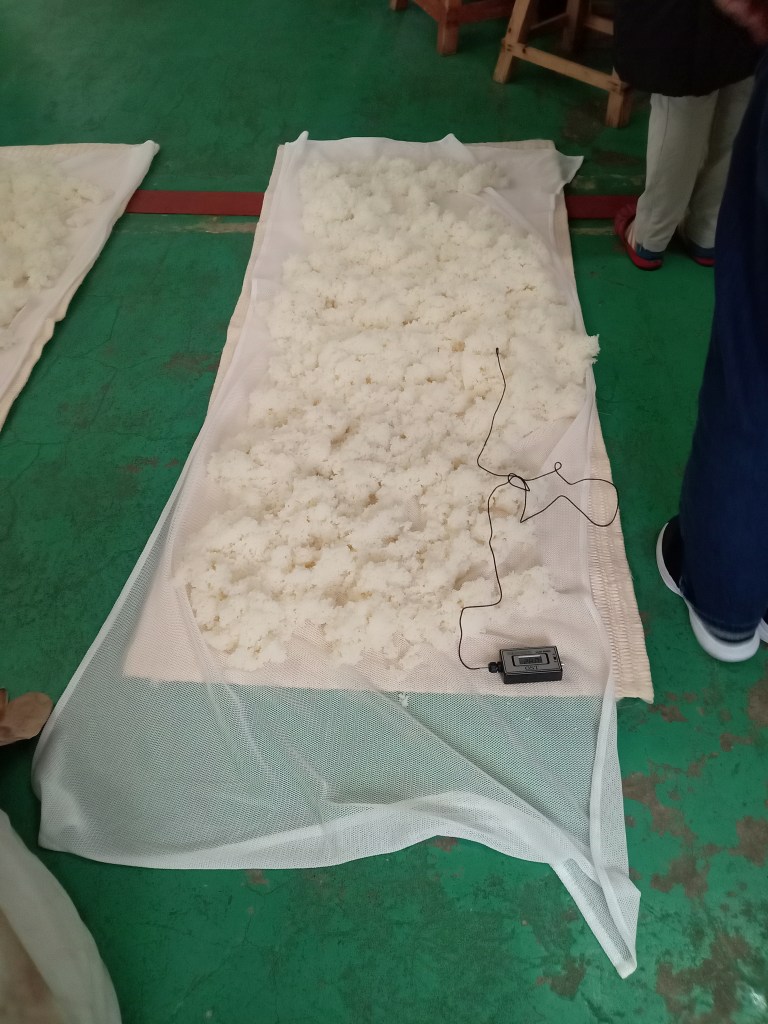
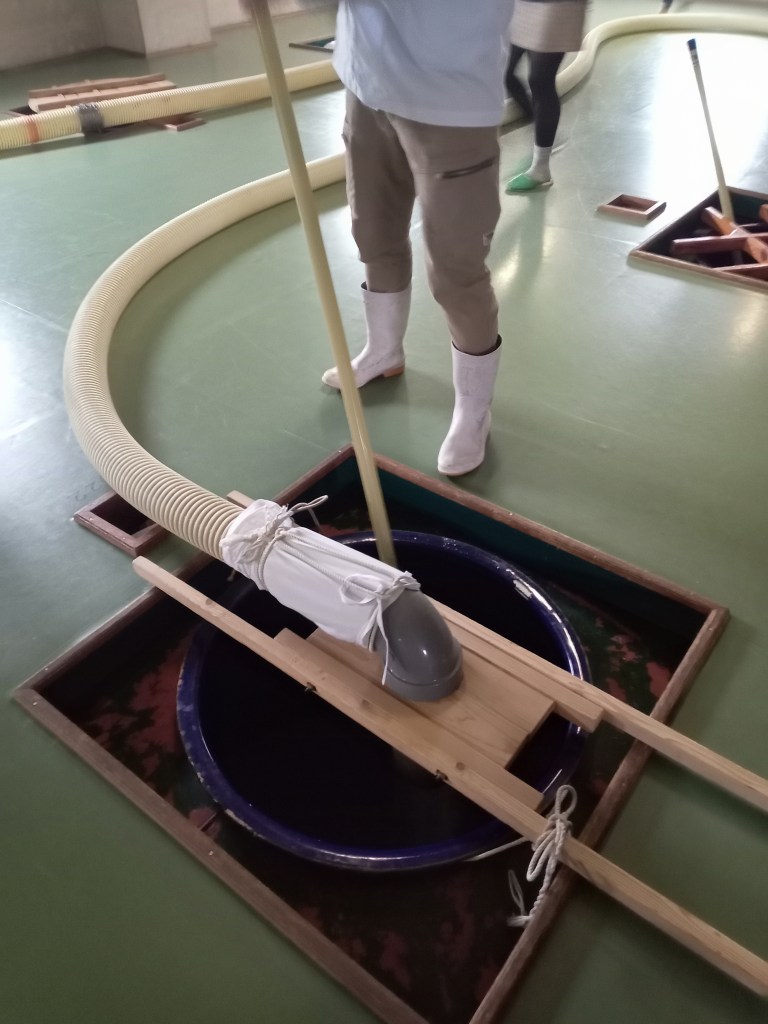
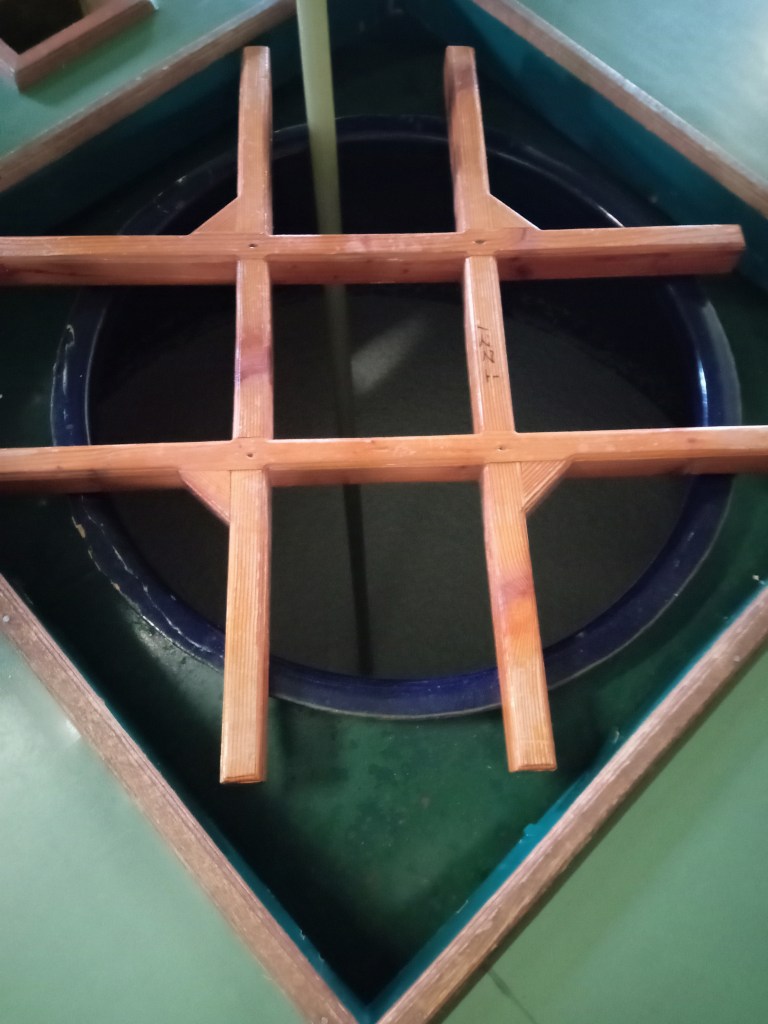
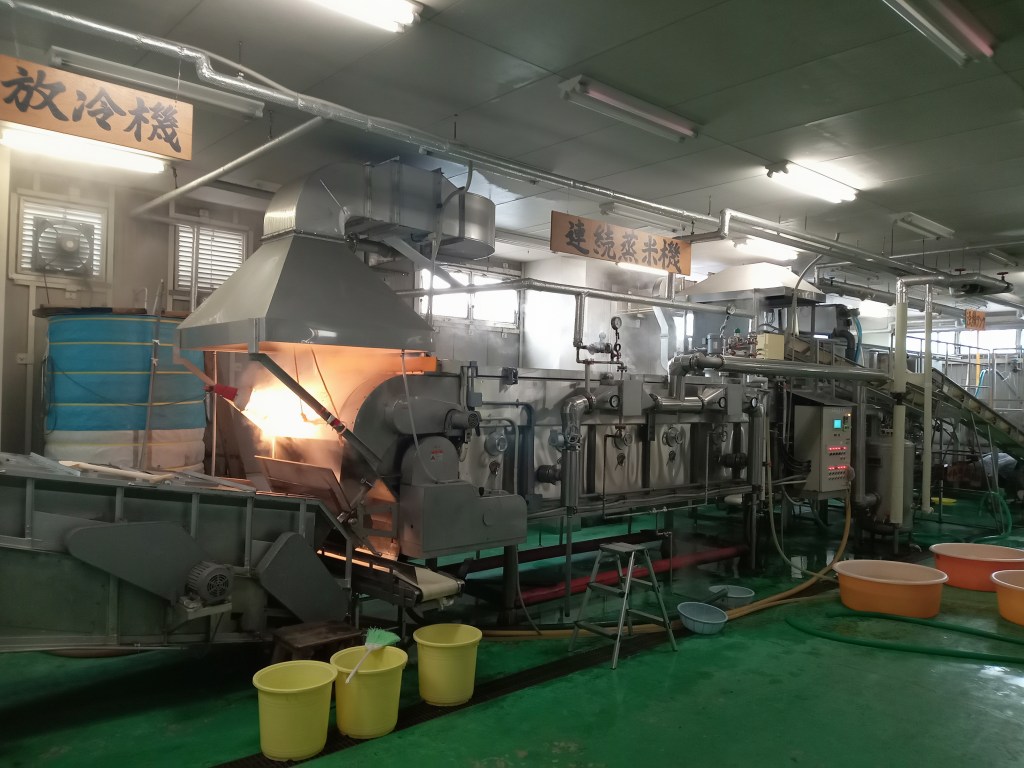
After learning about the ingredients, we were shown the brewing process. Sake production involves a complex series of steps that require precision and skill. First we saw the rice being polished and steamed. From here it is taken to be cooled on sheets. Next it is taken to a special environment where the saccharization mold thrives. We had a chance to try the rice that had the mold growing on it and I would describe the taste and texture as being like cheese rind. Next, we saw the large wooden barrels where the sake is fermented, as well as the tanks where it is filtered and pasteurized. The tanks were built into the floor and quite large. The guide even recalled a macabre tale of one of the workers falling into a tank and dying, so we had to walk around carefully.
Of course, the best part of any sake tour is the tasting! We were able to sample several different types of sake, ranging from dry to sweet. Each had its own unique flavor and aroma, and it was fascinating to compare and contrast them. My favorites were the aged sake, as well as the special “Bride of the Fox” sake which comemorates a local ritual involving a young woman being “married” to a fox spirit. Overall, I would highly recommend taking a sake tour if you are interested in learning about the process of making sake. It is a unique and educational experience that is sure to appeal to anyone who enjoys this delicious beverage.
Next, after everyone was feeling quite good, we were taken to the taken to the Tsubame Industrial Materials Museum in Tsubame, Niigata. It is a unique attraction that showcases the city’s rich history of metalworking. As a fan of crafts and traditional arts, I was excited to visit the museum and learn more about this fascinating aspect of Japanese culture.The museum is housed in a modern building that blends in seamlessly with the surrounding landscape. Inside, we were greeted by friendly staff who explained the history of the museum and gave us a brief overview of what to expect during our visit.
One of the highlights of our visit was the opportunity to try our hand at metalworking. We were given a workshop session where we learned how to hammer out a cup from copper and tin. Under the guidance of a skilled instructor, we slowly hammered designs into the metals, creating a beautiful cup that we were able to take home as a souvenir. The experience was both fun and challenging, and it gave me a newfound appreciation for the skill and artistry that goes into metalworking. It was a serious arm work out for only thirty minutes! It was also a great way to connect with the history and culture of Tsubame City, which has a long-standing reputation for its metalworking industry.
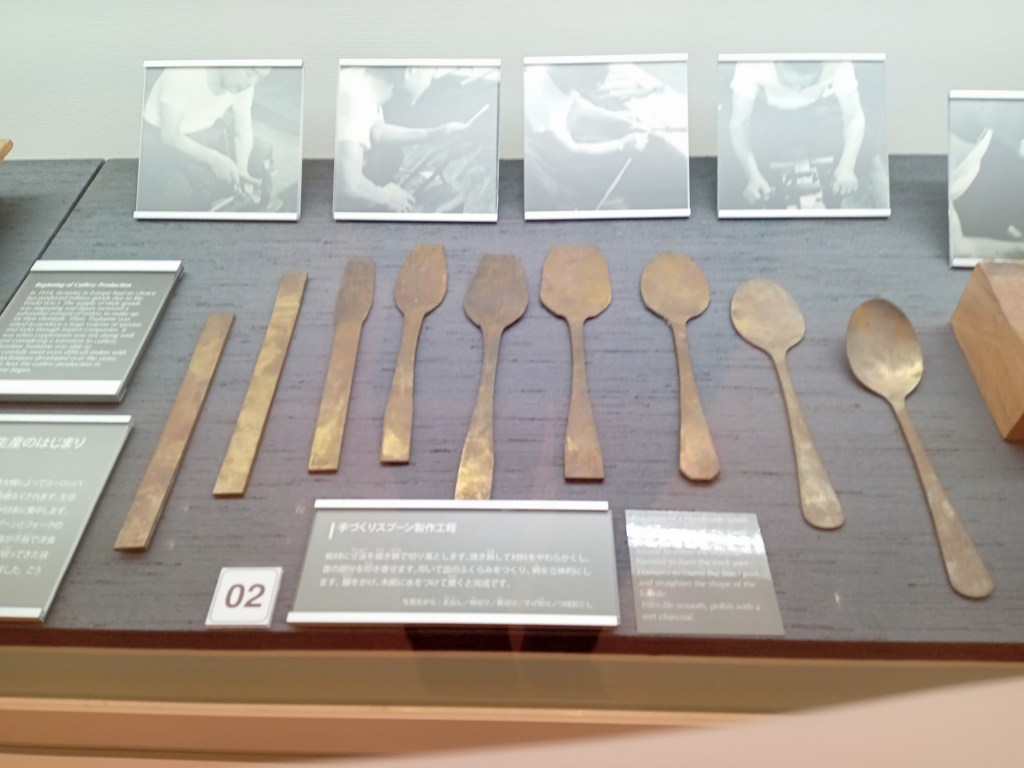
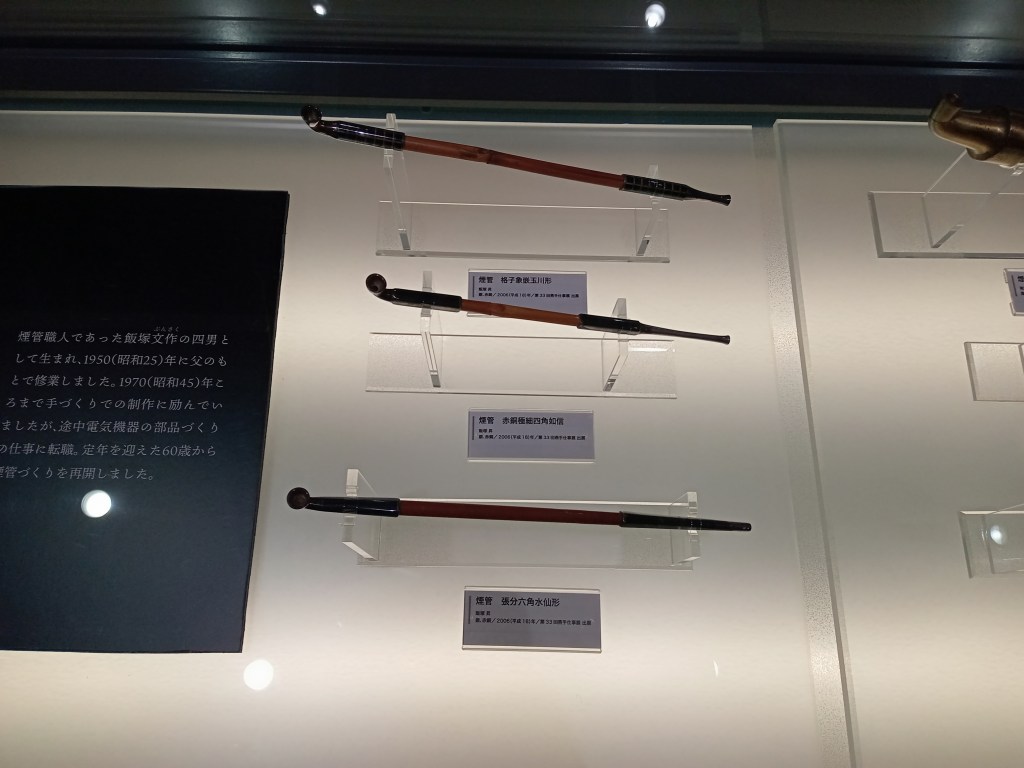
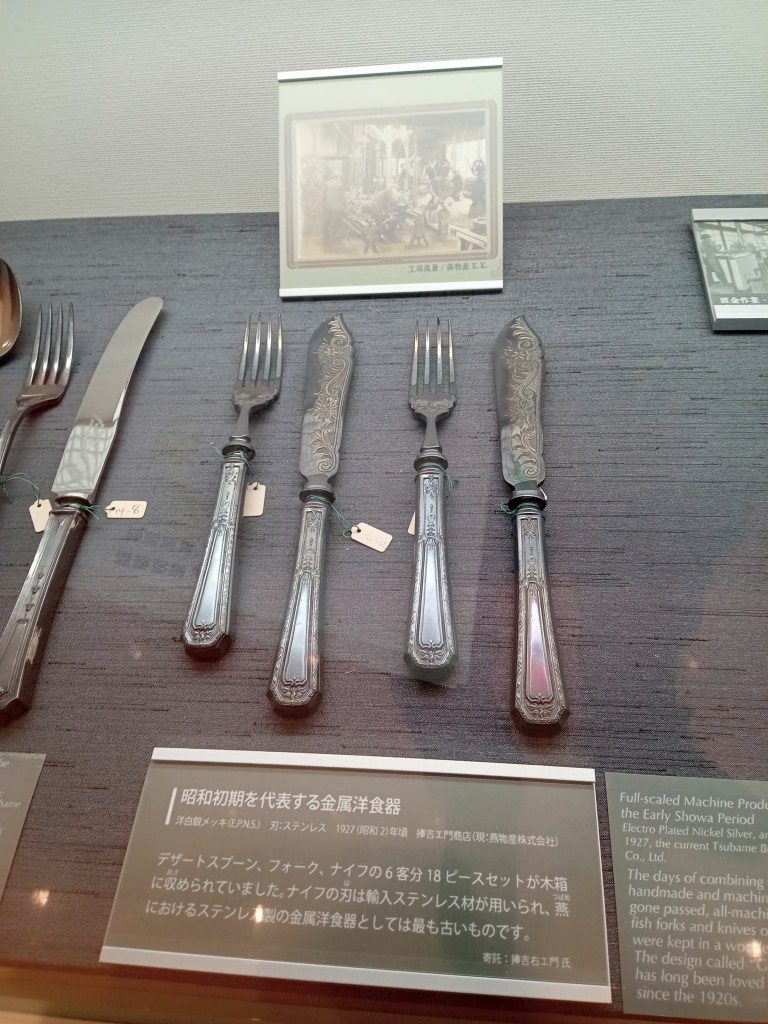
In addition to the metalworking workshop, the museum has several exhibits that showcase the various techniques and tools used in metalworking throughout history. We saw examples of ancient swords, ornamental metalwork, and modern industrial materials. The exhibits were informative and engaging, and we learned a lot about the history and culture of Tsubame City. What caught me off guard was their large exhibit on spoons. Supposedly, 90% of Japanese silverware comes from Tsubame City. I hadn’t really considered that spoons and forks are a relatively new aspect of Japanese society, having been initially imported from the west after the opening of Japan in the mid 19th century. Overall, our visit to the Tsubame Industrial Materials Museum was a unique and memorable experience. The opportunity to try our hand at metalworking and learn about the history and culture of Tsubame City was a highlight of our trip to Niigata Prefecture. I would highly recommend a visit to this museum for anyone with an interest in traditional crafts and Japanese culture.
I have been asked by some of my friends and family back home questions about the nature of Christmas in Japan. People are wondering if they celebrate it, and if so, what kind of things do they do. Well, they actually do celebrate Christmas here, in a way. Christmas is not a traditional holiday in Japan, as Christianity was never that widespread or influential enough to impact the culture much. I would say Japanese Christmas is mostly derived from pop culture depictions of Christmas in Western media.
Frankly, Japanese Christmas is very superficial. I would say most exposure the average Japanese person has to Christmas is from Western, mostly American, films. As such, many Japanese people are familiar with the aesthetics of Christmas. Holly, wreaths, and artificial Christmas trees are all displayed at businesses and homes. Many of my schools have placed Christmas trees in our lobbies, which makes it feel a bit festive. Some people decorate their homes with lights. Given that there’s no Thanksgiving and Halloween is a minor holiday people were putting up Christmas decorations in October.
Christmas music is very popular as well. Standards like “Jingle Bells” and “Silent Night”, as well as popular music like “Last Christmas” are very familiar to Japanese people. One of my Japanese English teachers told me that most Japanese people actually think “Last Christmas” is a happy song because they can’t understand the lyrics. Unfortunately, the John Lennon Christmas song is very popular here. I’ve gotten quite tired of hearing it. There is also a lot of native Japanese Christmas music that gets played a lot. This music is usually romantic with young couples being the subject matter.
Christmas is also seen as a romantic holiday in Japan. Many couples go on dates on Christmas, and buying a gift for your partner is expected. Additionally, it is kind of seen as a “party” holiday, like Halloween. For instance, my local bar hosts an annual Christmas party with DJs and they let girls wearing a Santa dress come in without paying a cover. I think this sums up the Japanese Christmas spirit. The winter holidays are kind of the opposite of how they are celebrated in the US. In America, Christmas is the family holiday while New Years is more associated with partying. In Japan, New Years is the time when people return home to visit their families, and have a quiet celebration and meal together, while Christmas is the holiday to party and celebrate the winter season.
As far as actually understanding the meaning and reasoning behind Christmas, I would say most Japanese people are unfamiliar. While most people here know who Jesus Christ is, most don’t know we are supposedly celebrating Jesus’ birthday. People get it when you point out the “Christ” in Christmas usually. There are, of course, some Christians in Japan, and I’m sure they celebrate similarly to Christians around the world by attending mass. Santa Claus is much more recognized and associated with the season. Many of my students even receive presents from Santa. When it comes to more arcane icons of Christmas like Saint Nicholas, there is little knowledge. Even Charles Dickens is obscure here.
Perhaps the most infamous traditions of Japanese Christmas is a KFC dinner. This amusing tradition actually stems from a marketing stunt by a KFC franchise owner in the 70’s. He ran a promotion depicting KFC as the “American way” to have your Christmas dinner. Today, many people across Japan eat fried chicken on Christmas. People even reserve their orders months in advance so they will be spared from waiting in the long lines that these restaurants bring every Christmas. As a result of this marketing lie, many Japanese people think it’s common to eat KFC and fried chicken on Christmas. I can’t help but find the notion that we eat fast food on our most sacred holiday a bit insulting, but I suppose part of the reason I’m here is to set the record straight on things like this. I have been incorporating Christmas lessons into my classes lately, and I have been teaching my students about the ham we traditionally eat instead of fried chicken.
As you can see, Christmas in Japan is quite different from Christmas in America. I don’t think any of this cultural adaptation is necessarily bad, I think it just reflects the globalized world we live in and the cultural influence of the United States and other Western countries. The decorations and the music definitely help me feel merrier this time of year. In order to combat homesickness, the other foreign English teachers who haven’t left for the holidays and I will be hosting a small Christmas party tomorrow. It will be nice to have this semblance of the holidays and I am looking forward to it greatly.
A crucified Santa in Japan. This image has been cited as an example of Japanese confusion over the holiday. In actuality, it’s an art installation by a Japanese artist criticizing what she saw as the rampant commercialization of the holiday. Either way, the end result is quite amusing.Some of this year’s KFC optionsChristmas lights in TokyoA restaurant in Aikawa
As of Novmber, I have officially lived on Sado for a year. Time is flying and it certainly doesn’t feel like a year has passed. Earlier in the year, when it was looking unlikely that Japan would open before 2023, two of my good friends boldly purchased airplane tickets to visit me. As the months went by and the Japanese government divulged little about the travel situation, we all became concerned that the trip would not be able to proceed. We decided to formulate a back up plan. We settled on Hawaii, as this would be the most feasible. It would be like we were meeting in the middle. I was also looking forward to coming home to the United States, in a way, even if I had never been to Hawaii before. By the time October rolled around, well after we had all booked plane tickets and a hotel, the Japanese government abruptly announced that the border would be fully opened to international travel. My friends would have been able to come after all. This was a tad demoralizing, but we all stayed excited about this trip.
In Mid-October, I took the familiar bullet train trip to Tokyo and departed Narita Airport. I arrived at Inouye Airport in Honolulu late in the morning. The weather was warm, in the 70s and 80s generally, and a bit humid, but nothing compared to the dripping Japanese summer. My friends were arriving later, so I took the opportunity to get our rental car and cast my Oregon ballot in the mail (No Postage Necessary if Mailed in the United States, as they say.) My friends arrived from Portland later that afternoon, and it was great to see them after nearly a year in Japan. We drove to our hotel in Waikiki, where we would be staying for the next nine nights.
It was all of our first times traveling to Hawaii, so there was plenty of stuff to see and explore. I think we were most interested in seeing the unique nature of Hawaii, so we hiked some of the many trails on Oahu, as well as simply driving through some backroads. We made sure to take advantage of the rental car and explored a good bit of the island, like the North Shore area. I think at the end of the trip, we spent most of our time at the beaches. We visited many, but I think the group consensus favorite was Makapu’u. We also went to Waimea Bay and saw some of the big wave surfers. Of course, I made sure to visit Pearl Harbor and the Battleship Missouri. There I saw the spot where the Japanese surrendered in World War II, as well as learned a lot about life on the ship which had been used until the Gulf War.
I was impressed with the culture of Hawaii. I have heard for a long time that it is a cosmopolitan place, but it is another thing to experience it firsthand. In some ways, it was like I had not left Japan. Japanese restaurants and chain stores operate here to serve the Japanese-American and Japanese immigrant market, which has left an indelible mark on Hawaiian culture. At the same time, it is distinctly American, as the myriad of military bases will remind you. Perhaps the vast cultural fusion of Hawaii is most evident in the food, which contains influences of American, Polynesian, Japanese, Chinese, Korean, Filipino, Portuguese, and Puerto Rican cuisines, all representative of the various communities that have lived in Hawaii. The food was also quite delicious.
We all ended up having a great time, and saying goodbye to my friends was hard. Hawaii was excellent, but simply spending time with them might have been the best part. I was greatly impressed with Hawaii and would love to visit again someday. It really is just like they say: naturally beautiful, great weather, welcoming culture, and expensive. Though, I have to say, living on Sado this long has gotten me adjusted to the quiet countryside. I found Honolulu a bit overwhelming, which is made all the more amusing when you remember it’s half the size of my hometown of Portland, which itself is no bustling metropolis. That said, it was nice to go about my day and not be the center of attention, like I am as a foreigner here in rural Japan. Finally, there was some silver lining to the border opening. One of the friends who came to Hawaii is of Japanese descent, so he was now able to visit his Japanese family. I took this opportunity to travel with him to the southern island of Kyushu and Kitakyushu, the city of his birth, which will be the topic of my next post.
I am getting tired of prefacing each of these posts with apologies for not writing more frequently. I am sorry, but finding motivation to make these posts can be difficult at times. Still, I am very happy to write to everyone who is interested in my life at the moment. August was a busy month, encompassing summer break, so let me get right to it.
Tokyo Trip
In late July, one of the departing teachers left me their old car. I have decided to park it on the mainland in Niigata. You know how everyone says Japan has advanced public transit and everyone uses it and its great? You can throw that notion out the window when it comes to Niigata. Both the city and the prefecture are lacking in public transit options, and with the exception of the bullet train to Tokyo, the rest of the trains and buses are slow and don’t reach many places. I think I remarked in my first post about Niigata city on being surprised at how much of a “car city” it was. I’m hoping to use the car to access more remote places of Niigata, and northwestern Japan in general.
Another one of my good friends and colleagues was leaving in August, and I thought it would be the perfect time for a road trip with my new car. Three of us piled into my new car and set off for Tokyo. Our first step was taking the car ferry. The fare was about $200 for the car. You can understand why it is common for Sado residents to own two cars: one for Sado driving and one for mainland driving. We boarded the ferry in an efficient manner. We had a two hour ride to Niigata city, where my friend expressed her sadness at leaving Sado for a final time, comparing it to seeing Sado from the ferry for the first time on her arrival. Truthfully, I was also upset as we had grown quite close in the last year.
After we disembarked, we headed for the highway. Something you may not know about Japan is all the highways are private, toll roads. Paying the toll was simple. You drove up to a machine that gave you a ticket, then when you left you would pay an attendant for the required amount. In any case, the roads were in excellent condition and people seemed to drive very safely, giving plenty of distance. There were also no giant trucks to contend with like driving on the American interstate. The drive was picturesque. Weaving through the mountains of Niigata we went through many offseason ski and hot spring resort towns. We took our only stop of the trip in Gunma prefecture. This is the neighboring prefecture to Niigata, and it’s where the mountains start to give way to the Kanto plain, the most populated part of Japan.
We grabbed ramen and head to Mt. Haruna. This is the setting of Initial D, one of my favorite anime series. This is a famous 1990’s Japanese cartoon about downhill street racing and Mt. Haruna is the “home course” for the protagonists in the series. Unfortunately, I made a wrong turn and we went up a smaller road to the peak and start of the famous road course. As we approached the top, we found the road was closed due to fallen trees. We found a detour, but by this point, we were dangerously low on gas. Our final, steep climb to the top was anxiety ridden, as we were out of cell service on a narrow road. As we curved around switchbacks through the dense Japanese mountain forest, we eventually made it to the peak, where we found a remote gas station. The parking lots at the top of the road were swarming with modified cars. It seems I wasn’t the only one inspired to make a pilgrimage.
I was absolutely overjoyed to be driving down this hill. It was something I had wanted to do since I arrived Japan. I was excited to be sharing the same road as “The White Ghost of Akina” Takumi Fujiwara and his legendary 1985 Toyota AE86 and recognizing some of the iconic curves of the series’ intense races. Although it took us nearly an hour to climb the hill, we reached the end of the course in a few minutes. After this nonsense, we promptly resumed our travel to Tokyo with no further detours. We traveled through Saitama prefecture, and the road continually widened from two all the way up to five lanes as we approached Tokyo around dusk. Driving on the Tokyo Expressways at night just felt cool. The roads are all elevated and wind through the tall Tokyo buildings. It feels like you are flying through a futuristic neon city. Although, I must add the courtesy and safe driving seemed to subside within Tokyo, where people seem much more cutthroat. As expected of a city, I suppose. The final toll came out to be around $100. Between that and gas, split three ways, it was significantly less than a bullet train ticket, which are around $120.
We reached our hotel at night. We were staying in the Ryogoku area of Tokyo. We were all quite tired after travel, so after pizza we all slept. The next day, one of the other teachers left to go meet his brother, who was arriving in Japan that day. My departing friend and I had her last day in Japan to spend. We started the day by visiting the Rikuguen Gardens. This was formerly a private garden belonging to the Shogun of Japan, and after Japan’s modernization, it was bought by the influential Iwasaki family that would come to create the famous Mitsubishi Company. Today, it is a public garden. Driving in Tokyo was fun but stressful. It was OK for a short trip like this, but I can’t imagine commuting every day by car in Tokyo. There is so much to watch out for, from bikes, pedestrians, double parked cars, scooters, etc. The gardens were lovely and the shade of the ample trees in the park provided a cool respite from the August Tokyo heat and humidity. The park reminded me of the Portland Chinese Garden, not in architecture but as far as being a walled tranquil space in a dense urban area. You could see the neighboring high rises above the park walls. My friend, being a New Yorker, compared it to Central Park, which might be a more apt comparison. We enjoyed a nice walk around the lake and enjoyed a traditional Summer fermented rice beverage at the tea house with views of the manicured island in the middle of the park. Being a former Shogunate holding, the park was designed to replicate some of the famous views of the Shogun’s domain. It was one of those moments where you can’t really believe you’re in one of the largest cities in the world at the time.
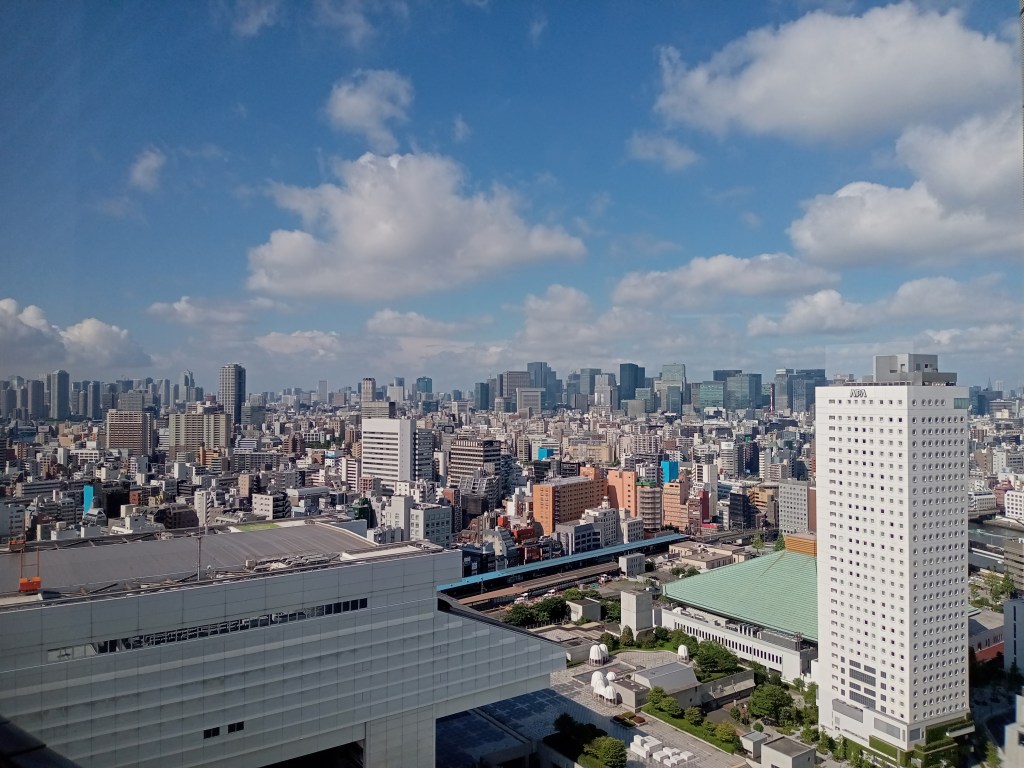
After our walk in the park, we took advantage of our car and had a road tour of Tokyo. We drove by the Imperial Gardens, Kabuki Theater, and several of the southern islands on our way back to our hotel in Ryogoku. We dropped off our car to the valet and walked to the National Sumo Arena. Ryogoku is known as the “Sumo district” in Tokyo. The arena where all the tournaments take place was within view from our hotel windows. The museum was small but informative about the ritual and practices of Sumo. While Sumo is seen as a sport in the west, and it kind of is, it actually has its origins in Shinto ritual and is seen as a quasi religious ceremony-cum-sporting event in Japan. At night we celebrated her final night with a short bar crawl through the nightlife area of Ryogoku. It was a fun send off.
The next morning we checked out and I drove her to Haneda Airport in southern Tokyo. The send off was sweet. We hugged and exchanged promises of meeting again in the vague future someday. It was a sad moment, as we all know how easy it is to merely say you will meet again, we never know what the future contains and if these promises will ever come true. Still though, I would be happy to meet her again some day. I remarked once here about this being the nature of the JET Program. It is not a career, with a maximum of five years, so everyone has different expectations and wants something different out of the program. The annual revolving door of teachers can make it hard to form long lasting friendships. Nevertheless, I was happy to spend the last year on Sado together with her and the other departed teachers. Shikata ga nai, as they say here, the Japanese version of c’est la vie.
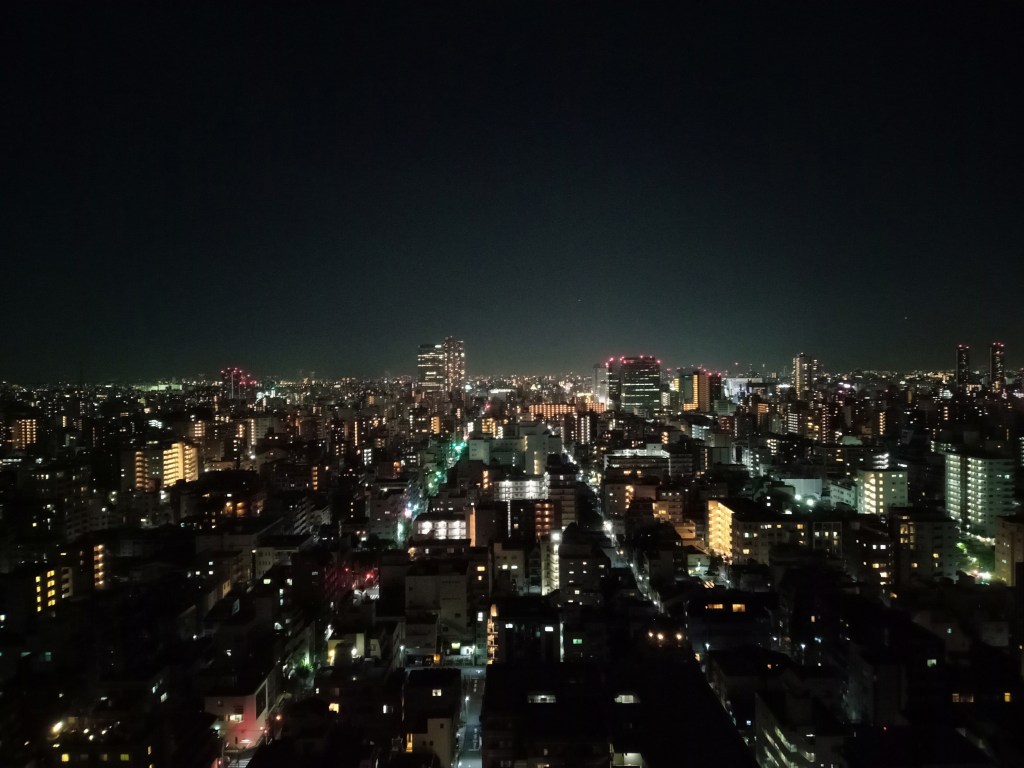
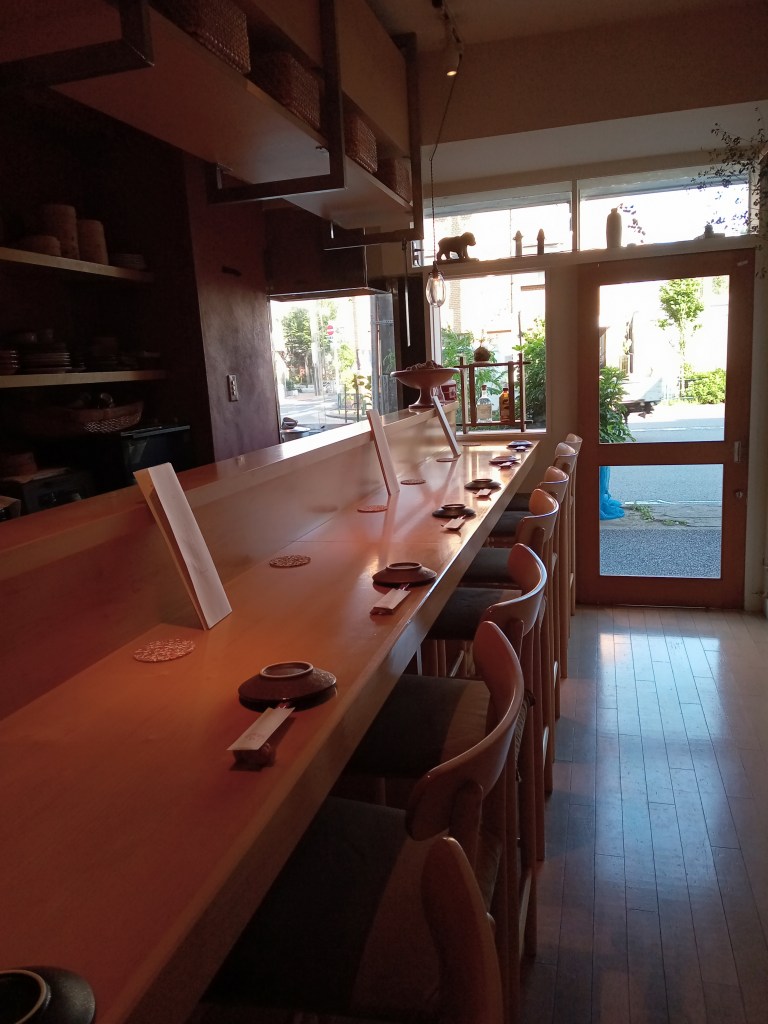
30 minutes after seeing her off, I was contacted by another Sado teacher who happened to be in Tokyo at the same time. It was summer break after all. We managed to meetup for lunch and went to the market where my friend Teppei works in an upscale part of Tokyo known as Toranomon, which means “Tiger’s gate.” I surprised Teppei at his work. I am always glad to meet him. He invited me to see his new bar that he opened this year after lunch. We had tonkatsu from a nice restaurant. After lunch, I drove to Teppei’s new bar. It was one of those cozy hole-in-the-wall places with a straight bar top, 6 or 7 stools, and a small kitchen behind the bar where they cook everything in front of you. It was a modern, wooden style bar. I think he took inspiration from Portland, as he had several craft beers available and even had cans of Breakside on display. The food was very tasty, and of course it was nice to be speaking with my old friend again. I couldn’t stay for long though, as I had my return trip to Niigata that night. I made the drive solo, spent the night in Niigata city, and finally arrived home around 10am.
Earth Celebration
The biggest event on Sado is the yearly Earth Celebration. It is a festival of taiko drumming featuring the drum troupe Kodo. Kodo is perhaps the most famous taiko drumming group in the world. Taiko drums are large drums that are played with thick wooden sticks. Taiko drumming has its origins in late antiquity, and has been used ceremoniously for religious purposes, warfare, and celebration in Japan for centuries. Kodo has helped popularize this Japanese tradition around the world. Kodo also happens to live and train on Sado. Kodo members live an ascetic lifestyle on a compound where they have a rigid schedule. They practice drumming, exercise with daily runs, cook and eat, and sleep in dormitories together. All this time they are barred from having a cellphone and romantic relationships. It all seems very strict to me, although I’ve heard it has relaxed somewhat since the 80’s and 90’s. I can’t argue with the results though. They are all very skilled instrumentalists.
The Earth Celebration is a three day festival that takes place every August. It happens around the same time as Obon, which is the Japanese holiday venerating dead ancestors, as well as being the peak travel period in Japan. There is a three day holiday period so many people return to their family homes or take the opportunity to vacation. As a result of these two events, Sado was easily the busiest I had ever seen. The Earth Celebration draws people from all over Japan and the world. It was nice to see the island so busy. The celebration was a bit muted this year as the venue was much smaller than usual due to COVID restrictions, though it was the first live show in three years.
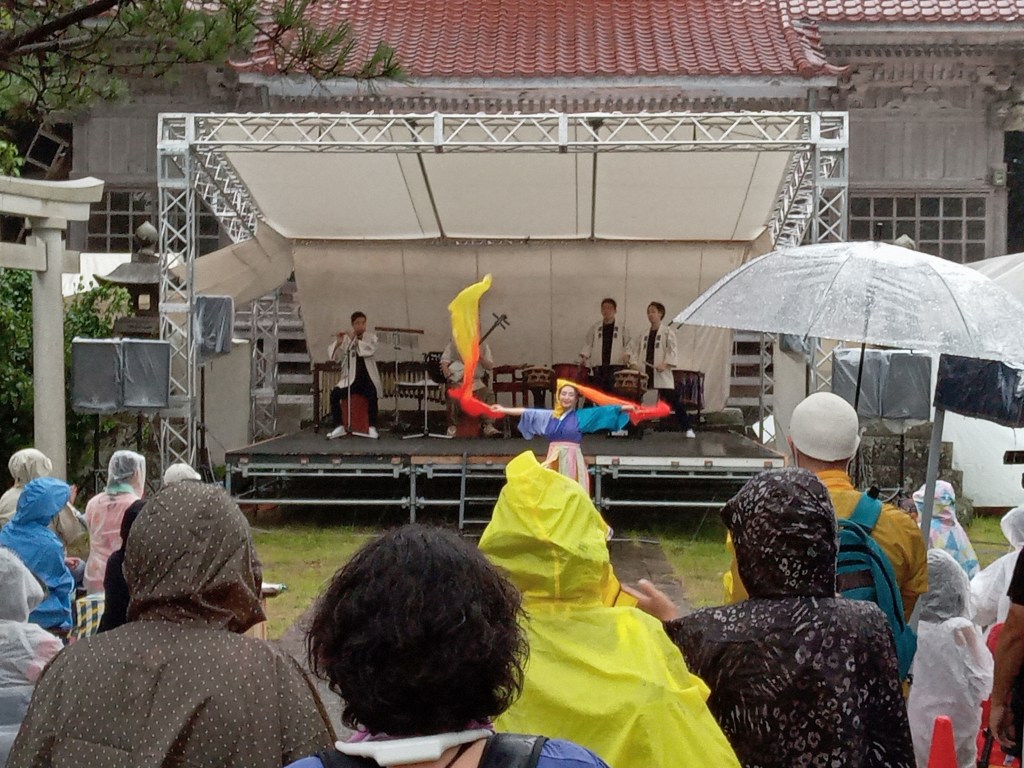
The festival took place in Ogi, a town on the southwest coast of Sado. I attended the performances on days two and three. The area centered around a park had been turned to an outdoor venue and festival. The festival had art and food stands from the mainland. There was also a second stage where some of the newer Kodo members performed before the main performance. They performed a sort of dance show with a talented artist named Chieko. It was a kind interpretive dance play. First she appeared dressed as a young woman, before a demon came and terrorized her while they danced around the stage to the drum beat. She left the stage and returned dressed as a sort of diviner, and engaged in a metaphysical battle to cast away the demon. It was a very animated and interesting performance, and it was easy to follow this story. After this warm up performance was the main event on the main stage. As soon as we sat down and the performance started, the clouds began absolutely pounding everyone with rain. It was futile to stop it and by the end of the show, I was completely soaked. Still though, I enjoyed the show. In fact, I found it somewhat appropriate that a celebration of the Earth would be marked by the presence of heavy rain. Anyway, the performance was fantastic. It isn’t just drums but also includes flutes and other traditional Japanese instruments. You really get a sense of the physical shape of these drummers. For one thing, their costumes are quite revealing of the bodies they tone through intense training. During the show they glisten with sweat from beating a drum at a sustained rate. Their coordination was excellent as well as their synchronicity. The feeling of the bass drum sound waves hitting your chest was exhilarating.
The next day was the final performance of the festival. I’ve been told that if you can only attend one, this was the one to go to. Additionally, it would be a little different than the one I had seen the previous day, as this one would be in collaboration with two guest artists. Miyavi is a Japanese rock and pop guitarist. One of my friends told me he was quite popular around 15 years ago. Furthermore Kodo would be joined by Hiromitsu Agatsuma who is a master shamisen player. The shamisen is a traditional stringed Japanese instrument that is kind of like a banjo with a distinctive twang. The final show had incredible energy. The drumming and dancing was excellent. I particularly enjoyed a section when three drummers came out with two large sticks attached to each of their backs. They were about 15-20 feet long. They would drum and then lean over with such force that the sticks would whack into the ground with a whip-like crack. It was an amusing costume, but definitely a testament to their ability to maintain the rhythm that they could even play those sticks in time to the beat. My favorite parts of the show were during songs where the two guest artists played alternate dueling call and responses that to me seemed like a challenge to the other. Both players were highly skilled and hearing the electric rock guitar in contrast with the traditional shamisen was truly amazing. The finale was a celebration with maybe 25 Kodo members on stage, drumming, playing flute, and dancing and singing with confetti flying and flags waving. The show was fantastic and I highly recommend it. I would love to return in the future.
The Germans
As I mentioned earlier, August was the peak of Sado tourism. I had the pleasure of meeting a kind group of Germans. Actually, they weren’t all German. Three were, one was Austrian, one was Korean, and one was German by nationality but originally from Russia. Still though, I found it easier to just refer to the group as the Germans rather than spell it out. In any case, they were all visiting from Tokyo. Most worked at a lab at a university in the Tokyo area. I ended up coming with them to do a lot of the touristy things I had yet to do in Sado. Despite living here for 9 months now, I still hadn’t seen a lot of the requisite tourist sites. It reminds me of how when I lived in Oakland I would rarely visit San Francisco to see the tourist sites, but when I moved to Portland and returned to visit I felt like I usually made time to see the things in San Francisco that I neglected to before.
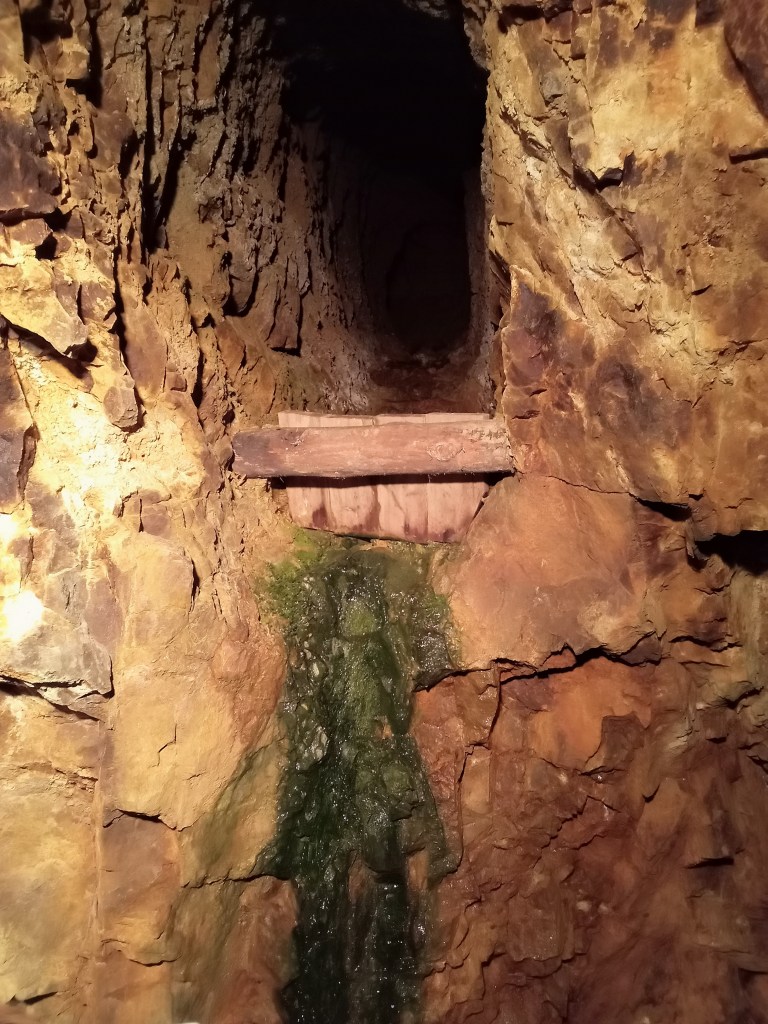
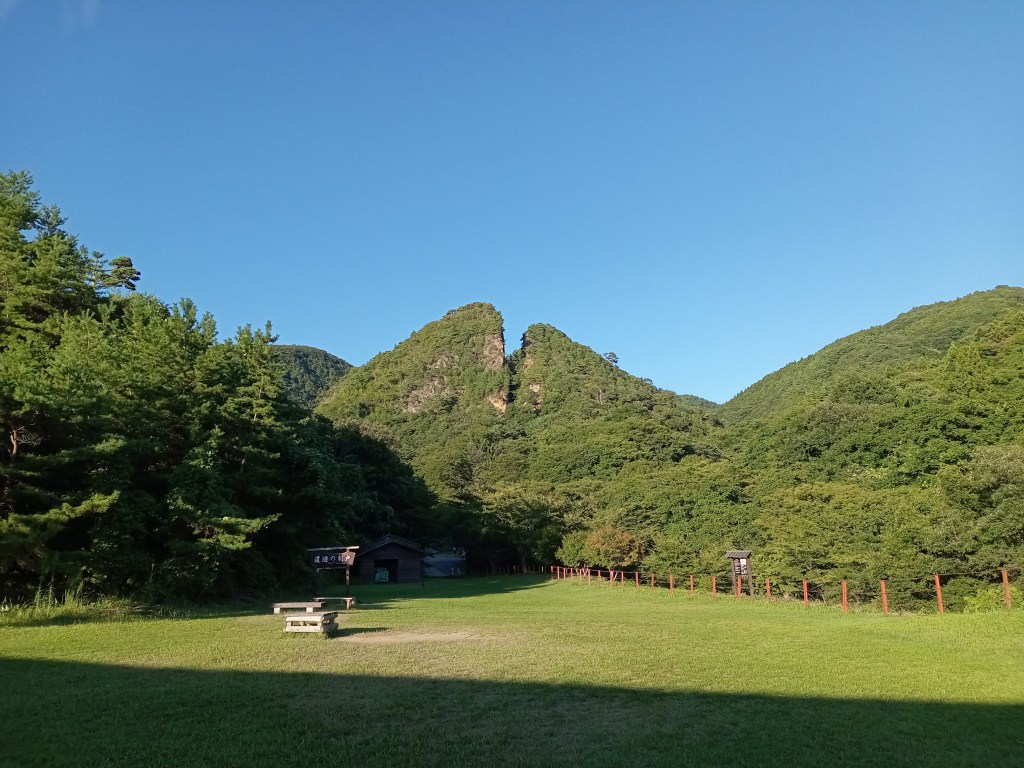
The first thing we visited was the Gold Mine. While the Earth Celebration is the biggest event in Sado, the Gold Mine is the most important monument. I have discussed the Gold Mine here a bit before. Indeed, when discussing Sado the Gold Mine is bound to come up at some point. When I was telling my friend Megumi that I was to be placed in Sado when I first learned, her first response was about gold. This is kind of how Sado exists in the Japanese popular belief. We opted for a short route through an old tunnel. The cold subterranean air of the mines were a welcome respite from the August humidity and heat of the outside. It got as low as 50° and the cool, dank atmosphere allows parts of the mine complex to be leased out to age sake. Inside there are several plaques that document the history of the mine. The Shogun era mining was absolutely brutal work. Homeless people and criminals were sent to work in slave like conditions. The life expectancy of a miner was not very long. An interesting aspect of the mine is the sheer length of its operation. It was an active mine from the early 1600’s all the way until 1989. You can imagine how much the technology and working conditions changed in that span. At the end of the short walk there is a building containing a lot of artifacts from the 300 year long operation of the mine. I did enjoy the walk but I would like to return at some point. I was told by a friend later that the route we opted for was the shortest as well as being the least interesting. Maybe some day soon I can have a post dedicated to the mine itself.
We spent a lot of time at the beaches around Sado. Being an island, Sado has plenty of opportunities for swimming. We mostly went to Tassha Beach and Sobama Beach. Tassha is a beautiful beach popular with tourists and locals alike. The beach is adjacent to several volcanic cliffs and small islands. There is also a lot of wildlife in the area. It is a very popular snorkeling spot. Sobama is perhaps the “best beach” of the island. It is the biggest sandy beach on Sado. Unfortunately, most Sado beaches are quite rocky or only have small sandy strips. Sobama on the other hand is a few miles of soft sand. Likewise, it is a very popular beach on Sado.
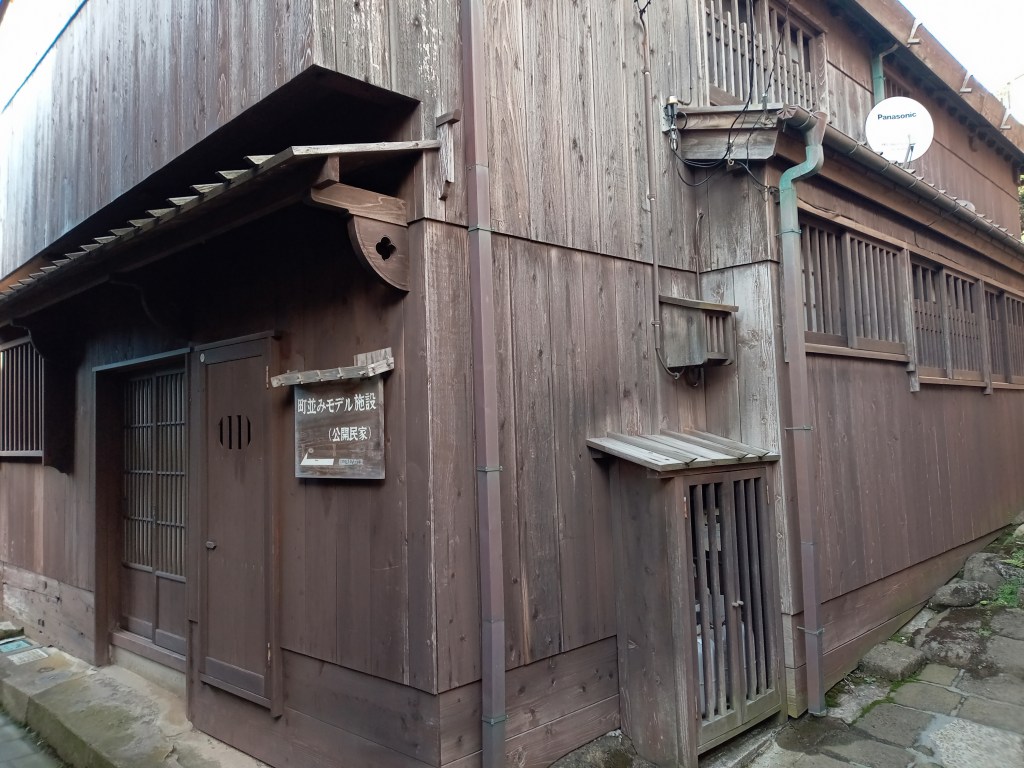
After a day at Sobama Beach, I went to Shukunegi with one of the Germans. Shukunegi is another famous tourist attraction on Sado. It is a preserved wooden village originally constructed in the 16th Century. It was built in a valley and a natural harbor so it is very protected from the wind and weather. Its rustic buildings and historic charm is a popular spot for photographs. Interestingly, people still live in Shukunegi. I feel like living in a tourist attraction would be a bit strange. It is also important to keep it mind when visiting and to be respectful of peoples homes. The wooden homes, narrow streets, and deep drainage canals hearken back to medieval Japan. The oldest home in the area was nearly as old as the US Constitution, which put it into perspective for me. We tried to book a ride in the taraibune, the traditional barrel-like boats of Sado, but unfortunately we were too late and they were all booked. I will definitely have to come back and try it again.
After our walk through Shukunegi, we met up with another German and headed for the onsen at Hotel Osado. Onsen are hot spring water baths and are very popular in Japan. Being a volcanic island, Sado is home to several hot springs. I had always been recommended the baths here and wanted to go, but I was too worried. If you didn’t know, I have a tattoo and Japan is very strict about tattoos. While it isn’t visible when I am clothed, the bathing at onsen is nude and not in a bathing suits. Several onsen have been known to not allow entry to tattooed individuals. This policy has its roots in organized crime, as tattoos are considered a mark of being a Yakuza affiliate. In any case, with the Germans I was motivated to try it anyway. Thankfully, no one bothered me! In fact, the German lady told me in the women’s bath area, there were two other Japanese women with prominent tattoos. I suppose the hotel’s policy was permissive. I have heard the stigma is slowly going away in Japan. I have seen several Japanese people here with tattoos. Maybe Sado is just different and more accepting. I have my theories. Anyway, the bath was nice and soothing. The onsen was outdoors and overlooking a cliff and the sea. We missed the sunset, but it was still nice to see the boats on the water and the Aikawa townscape. If you are ever in Japan, I recommend visiting the hot springs.
After about five days, I bid the Germans farewell. They were actually biking back home to Tokyo over three days. They were all very nice and expressed their enjoyment of Sado and desire to return someday and appreciated my recommendations and willingness to show them around. I feel as though Sado is my home now, so it made me happy to see them enjoy it. Truly, I enjoyed seeing some of the famous sites I had not yet seen. In any case, I hope to see them again someday. I think one of them is planning on visiting this winter. Perhaps next month when I am in Tokyo.
Goodbye Kanai
Finally I would like to discuss my job. I have moved from teaching in Kanai to Aikawa. This was always the plan, scheduling was just screwed up due to COVID restrictions on entering Japan forcing other teachers to cover different schools. Now everyone who was set to arrive has arrived and everyone who was to leave has left and we are all where we are supposed to be. I feel like we are beginning a new year. All the new arrivals are kind and very enthusiastic. Honestly, some of the people who left had been here multiple years and were kind of “over” and burned out on the whole experience. They didn’t share the same excitement as us new people. It is nice to have new teachers who are happy to be here again. Additionally, with the departures, we lost nearly everyone who had stayed multiple years on Sado. I feel as though there has been a sort of reset with all these new people here. About this, I am excited.
I was told not to mention my departure until shortly before it occurs. I waited until my last week to let all my elementary schoolers know that I would be leaving. During my last elementary class, my students all sang a sentimental song of thanks for me. It was a bittersweet moment. On my final day, my former middle school had a farewell ceremony for me. I gave a short speech in the gym in front of all the students and teachers. I was then presented a photo album and bouquet from the student council. It was a very kind and unexpected gesture. At the end of the work day, I said goodbye to all my coworkers, who followed me out of the building and waved to me as I drove away. I will miss my former students and colleagues. They were all very nice. The Kanai students have the reputation for being the “well behaved” kids of the island. In any case, it wasn’t like I was leaving the island for good, merely changing schools. I have already run into some of my former colleagues. On an island, it is unavoidable.
Now I am working much more close to home. I no longer have to commute 50 minutes a day to my two schools. Now I cover six schools, and go to a different one every day. I am much busier now. On three of my workdays, I teach all six class periods, which rarely happened before. I was at two of the biggest schools on the island. I had over 400 students at just two schools. Now I’m not sure I have that many between all six. Teaching at smaller schools can be nice. I feel like I have more time to help individual students than I did at Kanai. I can also devise more complicated activities that wouldn’t have been feasible in classes of 30 students. I did enjoy having only two schools though. Being at the same school every day makes you feel like a bigger part of that school. I might not have had classes with them every day, but just walking through the halls together, eating lunch, helping out with clubs, playing sports, etc. makes you feel closer to the students and teachers. Going to each school once a week makes me feel more like a “guest” teacher, rather than an integral part of the school.
It has been nice to kind of have a “start over” here though. I feel much more confident in my teaching now than when I arrived. I now know some tested activities that the students enjoy and I can avoid some of the mistakes I made when I first got here. Additionally, it was fun to have my self introduction classes at all my schools again. It made me feel like a brand new teacher again. All the students are very curious about you and excited to meet you. It was just a fun first week. The students are all kind as well, if a bit less studious than my Kanai kids. I am now about 3 weeks into my new schedule. September has been somewhat unremarkable. I have been focused on getting used to my new schools. Furthermore, Summer is over, and while it has still been warm, it seems like the string of fun public events has largely ended. Jellyfish have colonized the local beaches, making swimming uncomfortable. The rice fields across the island have started to be harvested.
If you’ve read this far, thank you. I know it is quite a lengthy post this time. Truthfully, each of these topics could have been a separate post. I wanted to finish this in early September, but now it is already September 20th. I have written this over the course of multiple days while I have had free time, so I’m sure the tone is somewhat inconsistent. October is going to be a busy month for me. I am going camping, taking the Japanese driving test, and have a trip to Hawai’i planned, which I am very, very excited for. As always, I will do my best to keep you all updated.
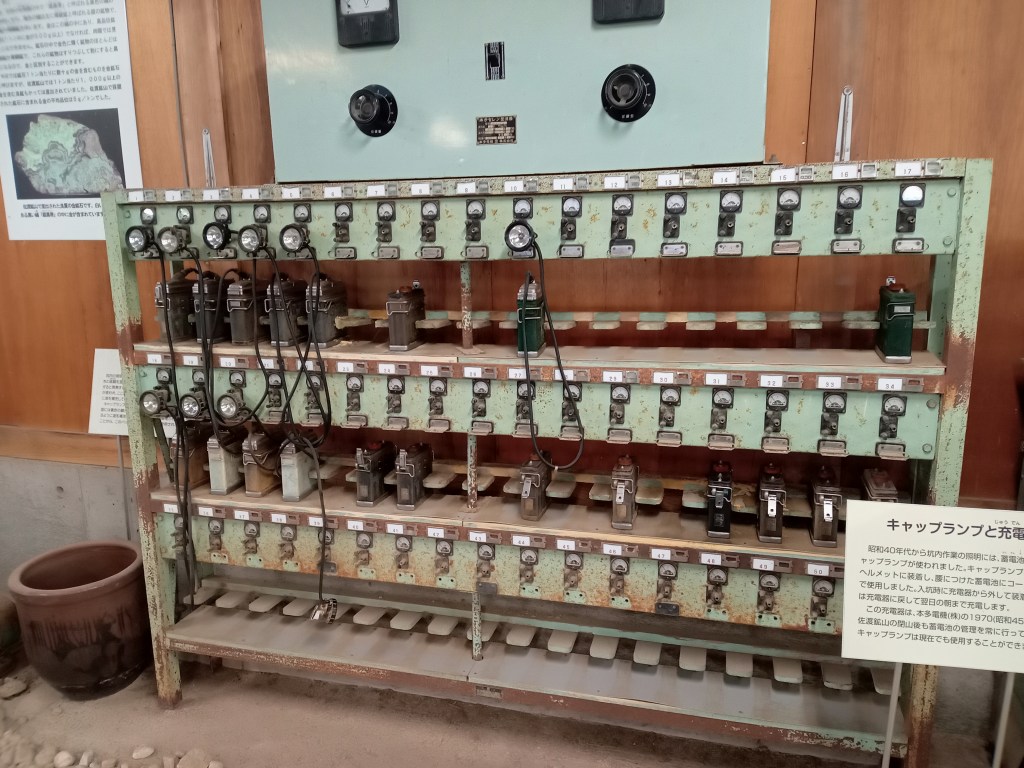
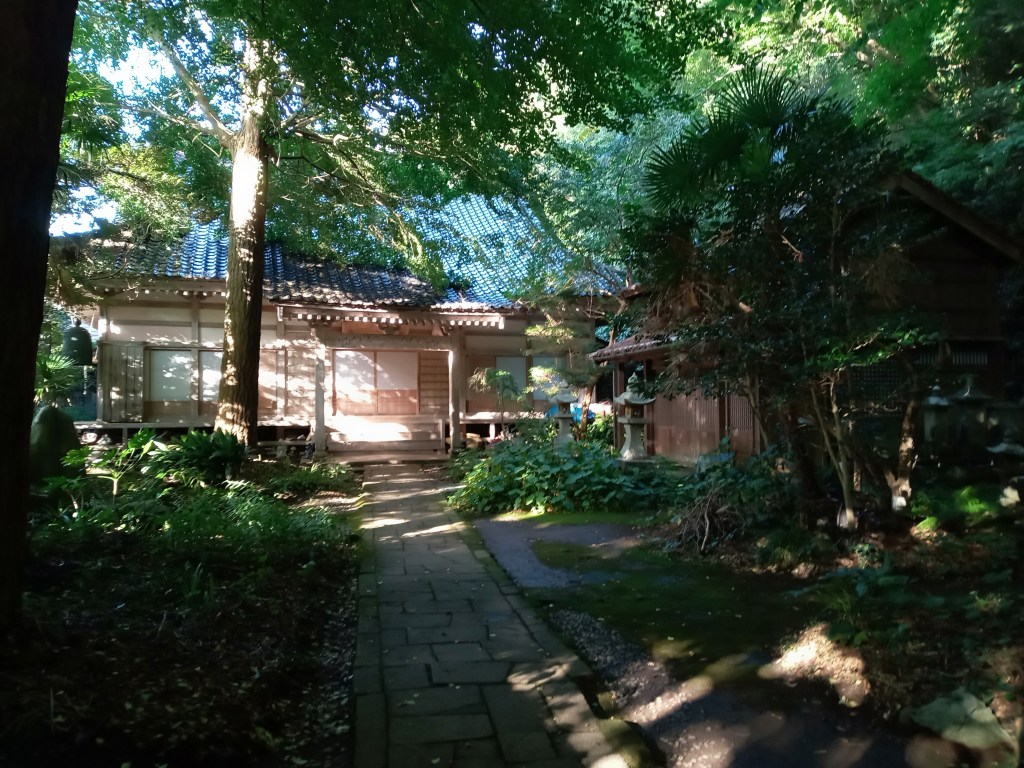
View from our Tokyo hotel room. That building with the green roof is the national Sumo arena.Rikuguen GardensI like to call this one “pulling up with the squad”Tokyo at nightTeppei’s barReminds me of home.Sado Gold MineA dank ventilation shaftView of the Gold Mine. Formerly it was a complete hill, but it was cleaved in two by miners over the years.This sat atop the entrance to the mine. Recognize that corporate logo?This device charged the batteries for miners headlamps in the 1960s.Chieko dancing at the side stage. Unfortunately the main show had a strict no photography policy, so I only have photos of this performance.Buddhist temple at ShukunegiThe old post officeThe oldest building in Shukunegi dates back to the 1790’s. Note the satellite dish.Shukunegi home belonging to a former shipping boat owner.Shukunegi harborCoast by Tassha Beach
Hello, everyone. I apologize for my recent lack of updates. July has been a whirlwind as it is the last month for all of the English teachers who are returning home at the end of their contracts. Everyone is in a last minute rush to plan fun things together before we say goodbye. I even hosted a 4th of July barbecue for all us home sick Americans. In any case, a few weeks ago I took a trip up to Hokkaido, the northern island of Japan. One of my good friends on the island was visiting and asked me to join. She is one of the people leaving this month, and knowing that this could be the last time I see her for at least a very long time, I agreed. I was apprehensive before the trip though, wondering if it was worth the short time I would be spending there. I would only be up for a few days after all. I ended up having a great time and discovering a new part of the country I probably wouldn’t have visited otherwise.
As I mentioned earlier, Hokkaido is the northernmost major island of Japan. Owing to this, the island receives heavy snowfall in the winter. The island has a fascinating history. It was not really considered a part of Japan until recently. Before the 19th Century, most of the inhabitants belonged to the Ainu ethnic group. The Ainu are actually unrelated to the Japanese people, instead they are closer to native Siberians, and they could be found in Hokkaido, northern Honshu, and Siberia. As such, their language is unrelated to Japanese, but there are numerous loanwords of Ainu origin in Japanese as well as many place-names in Hokkaido. I believe their religion is also close to Shintoism, the religion of Japan, as it is also animist spirit worship. Starting in the 19th Century, the Japanese government decided to settle the island when it became formally part of Japan. As a result, today Hokkaido kind of has a “frontier” feel, which is similar to the American west.
My trip began with a flight from Niigata Airport. The airport was nice and new looking but very small. While there are usually a smattering of international flights available to Asian cities like Seoul and Shanghai, amidst the COVID pandemic all international flights are routed through Tokyo, rendering Niigata a domestic airport. The scale of the airport reminded me of Sacramento International. You could walk from one end of the terminal to the other in about 10 minutes. From there, I boarded my flight for the hour long flight to New Chitose Airport in Hokkaido. I was to meet my friend who left a few days earlier on the sea ferry from Niigata. The first thing I noticed when I got off the plane was the coolness. The humidity of Japanese summer has fully set in on Sado, but I suppose the northerliness of Hokkaido prevents, or at least delays, this. It was a nice break from the weather. From there, I took an express train down the southern coast of Hokkaido and Uchiura Bay to the town of Date. The trip was picturesque and from it you can notice that the natural landscape of Hokkaido is unlike that of the rest of Japan. While most of Japan is littered with mountains, Hokkaido is somewhat an exception. While it is hilly and there are mountains, Hokkaido also has vast stretches of plains. As such, Hokkaido is known for pasture animal farming and wheat growing, which explains why Japanese bread and dairy products often feature a map of the prefecture on their packaging prominently.
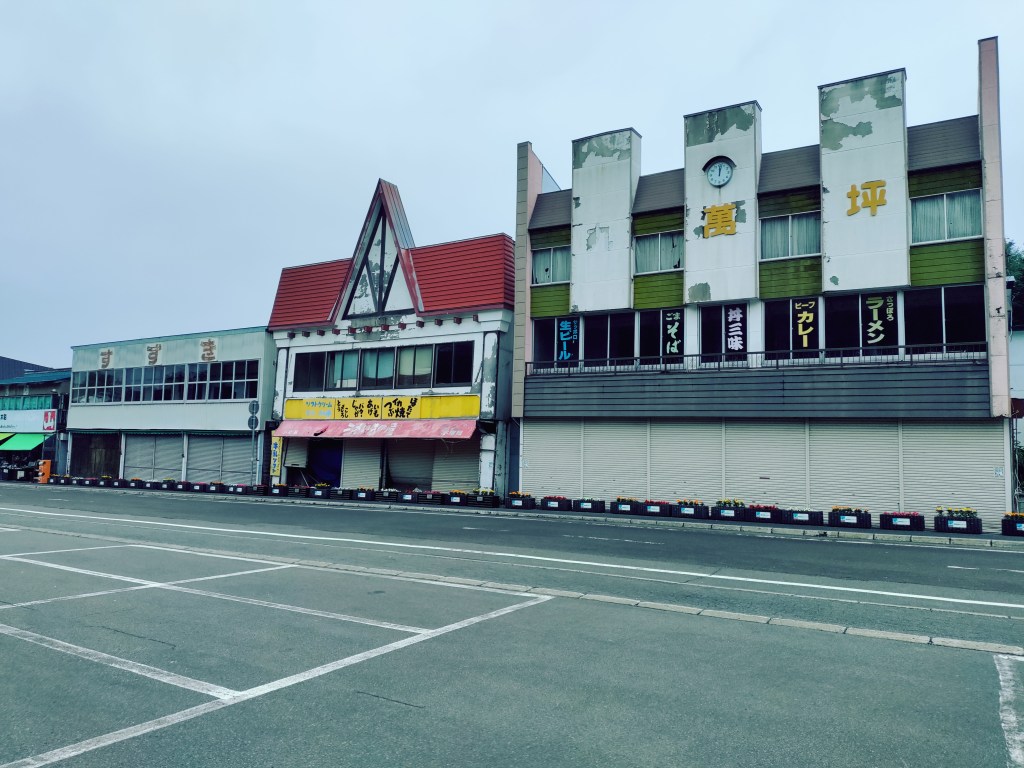
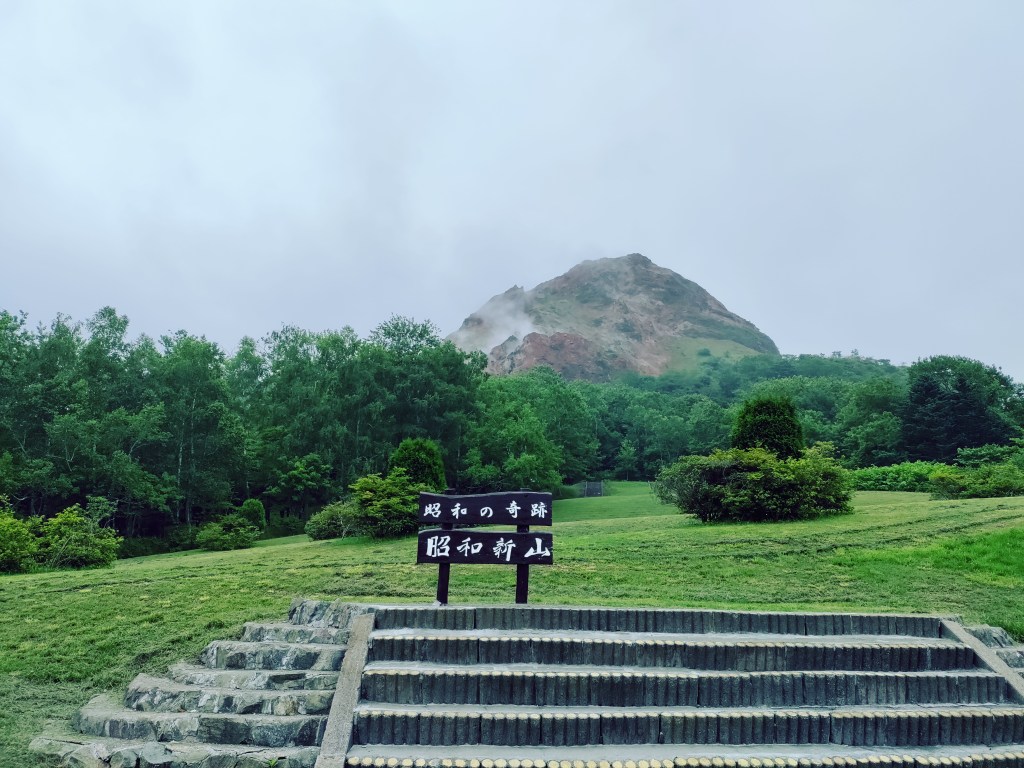
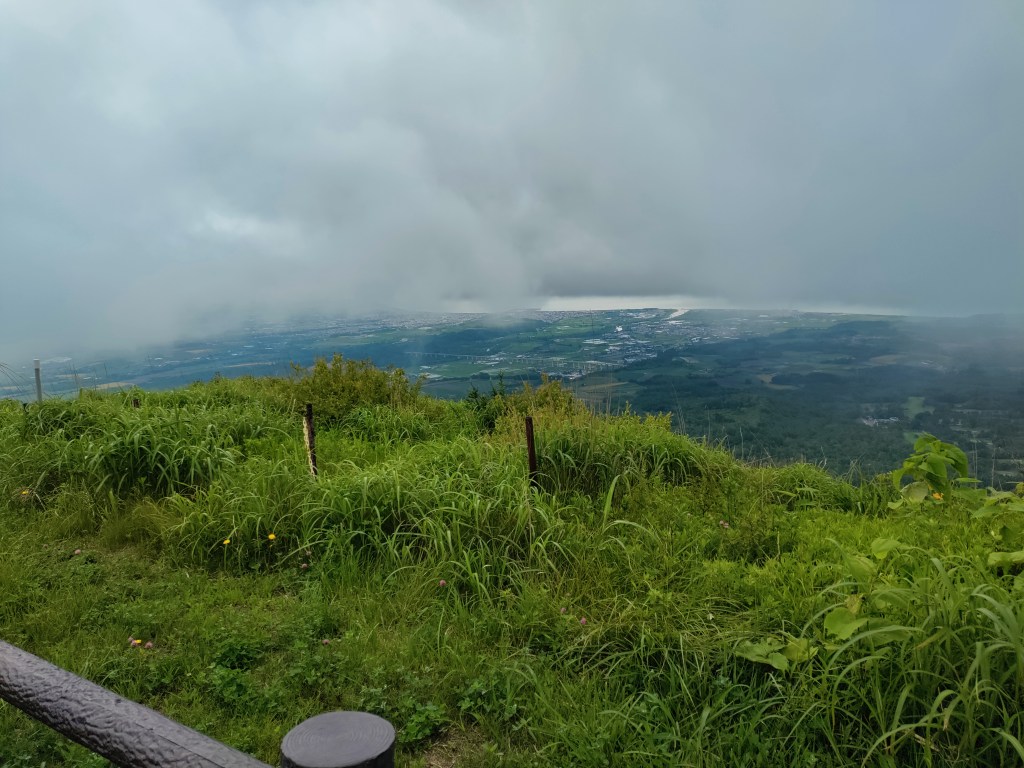
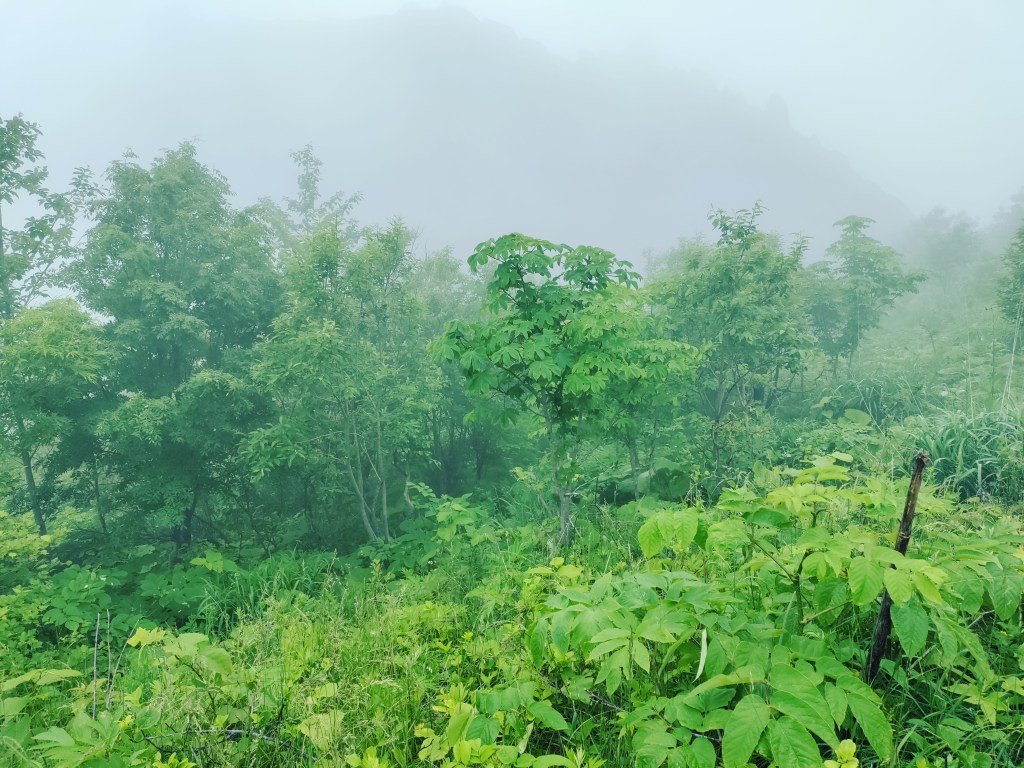
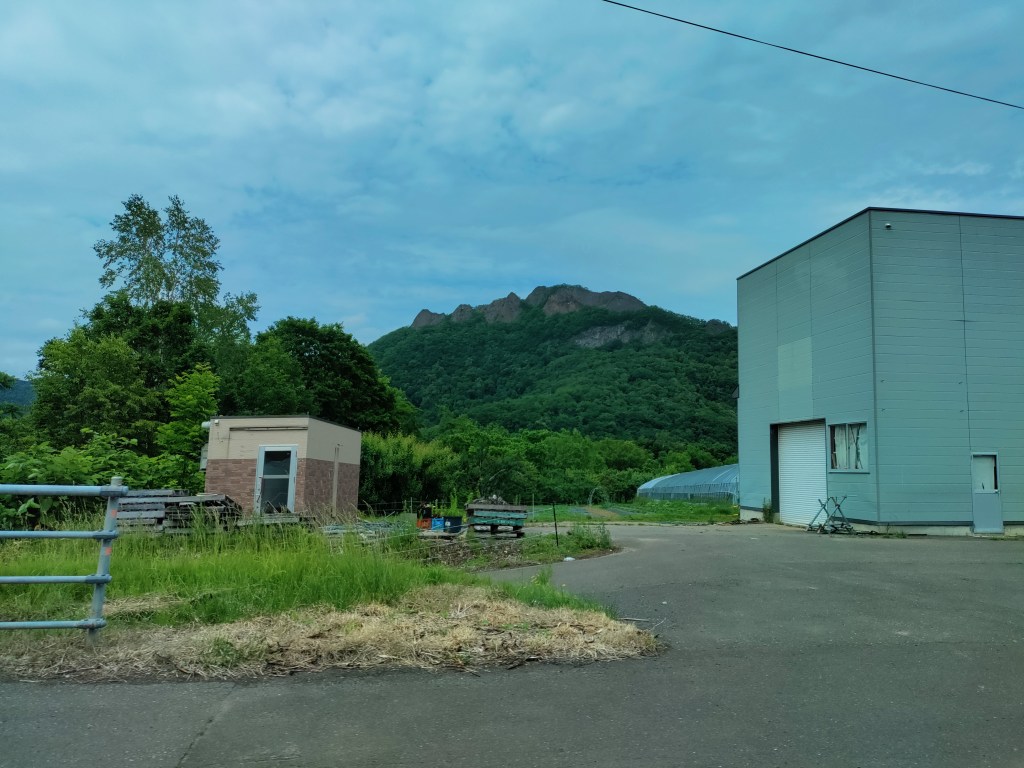
I arrived in Date around 6 PM, where I met my friend. We went to a restaurant to try miso ramen, a hearty local variety of the region designed to keep you energized in the harsh winters. We then drove to our accommodation for the night. We stayed at a guesthouse run by a kind Japanese woman. The next day we set out for exploring Hokkaido. Our trip was short so we had to make the most of our time. We started by visiting Lake Toya and Mt. Usu. Lake Toya is a big caldera lake with a forested island right in the middle. You can take a boat to the island and there is a museum and several hiking trails, but we didn’t have time so we hiked around the mountain instead. Mt. Usu is a volcano which last erupted in the year 2000. Around the base of the mountain there is a small tourist town and information center. We took a rope way most of the way up the mountain. From there, it’s about a 45 minute hike to the caldera. The air was cool and clouds and fogged settled in around the mountain below us, creating a cool “above the cloud” feeling. Occasionally the clouds would break, and we would be able to see clear to the coast and the cities I had ridden through on the train the previous day. Afterwards, we drove around Lake Toya and through the Shikotsu-Toya National Park. We passed through several resort towns and the air was somewhat tinged with the smell of sulfur from the hot springs.
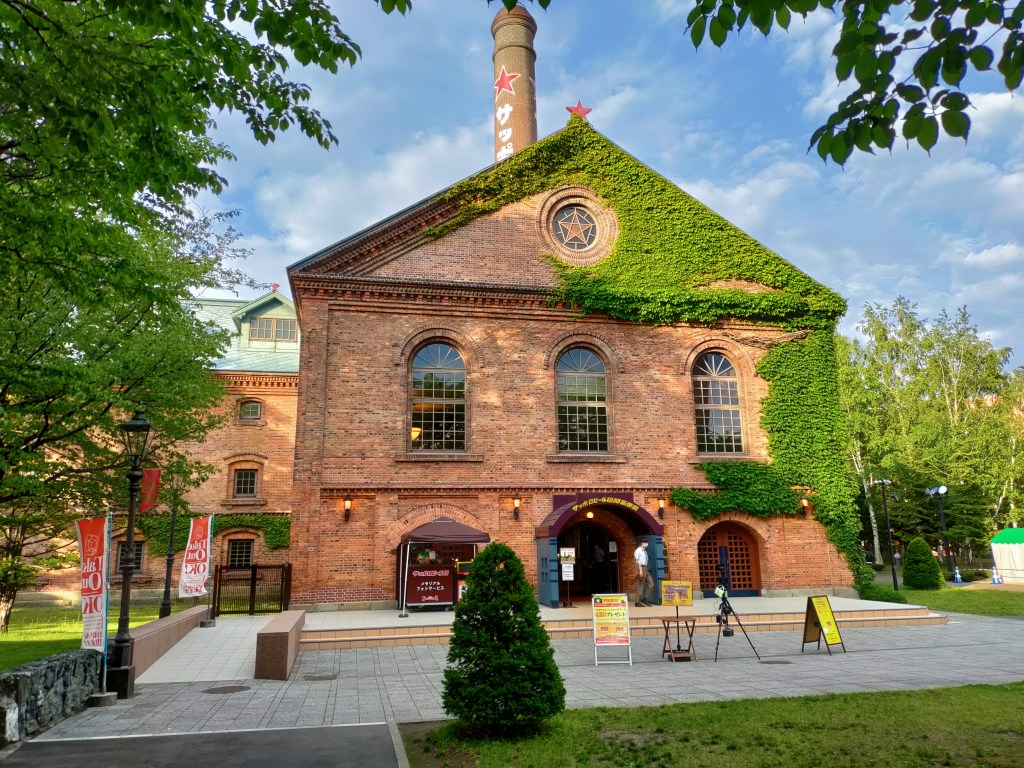
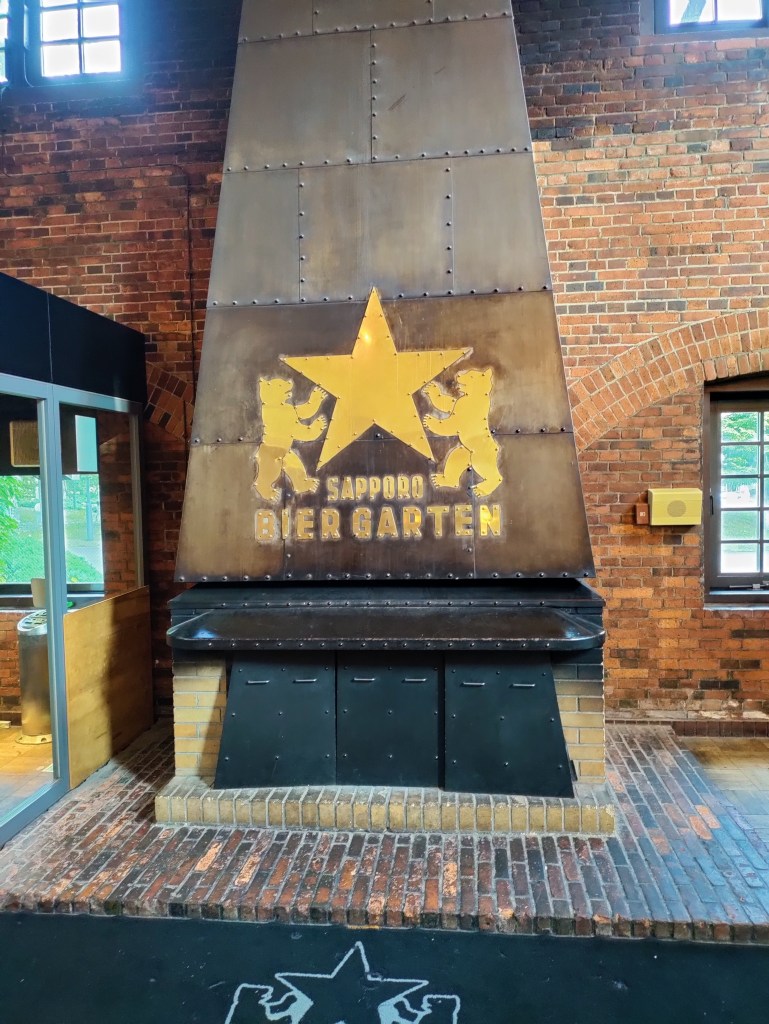
After a few hours driving through the meandering tunnels and canyons of the National Park, we arrived in Sapporo. Sapporo is the largest city of Hokkaido and one of the largest in all of Japan. Just arriving in the city I could tell that we were in a much larger place than Niigata. Indeed, Sapporo has more than double the people of Niigata. My friend had to catch the ferry that afternoon, so we quickly got some Hokkaido beef for lunch before I saw her off at Sapporo Station. From then on, I was on my own in the city. Time was still short though, as I was scheduled to fly out the next day. First I visited the Beer Museum. As you’d expect, Sapporo Beer is brewed in Sapporo. The beer connection is actually one of the reasons why Sapporo is sister cities with Portland. Sapporo Beer has been brewed since the 1870’s and they have turned their original brewery into a museum with a whole campus of various bars, souvenir shops, restaurants, and tasting rooms around it. Unfortunately, I arrived a bit late for a tour of the original factory, but I was able to walk around and check out some of the campus and, most importantly, try some beer.
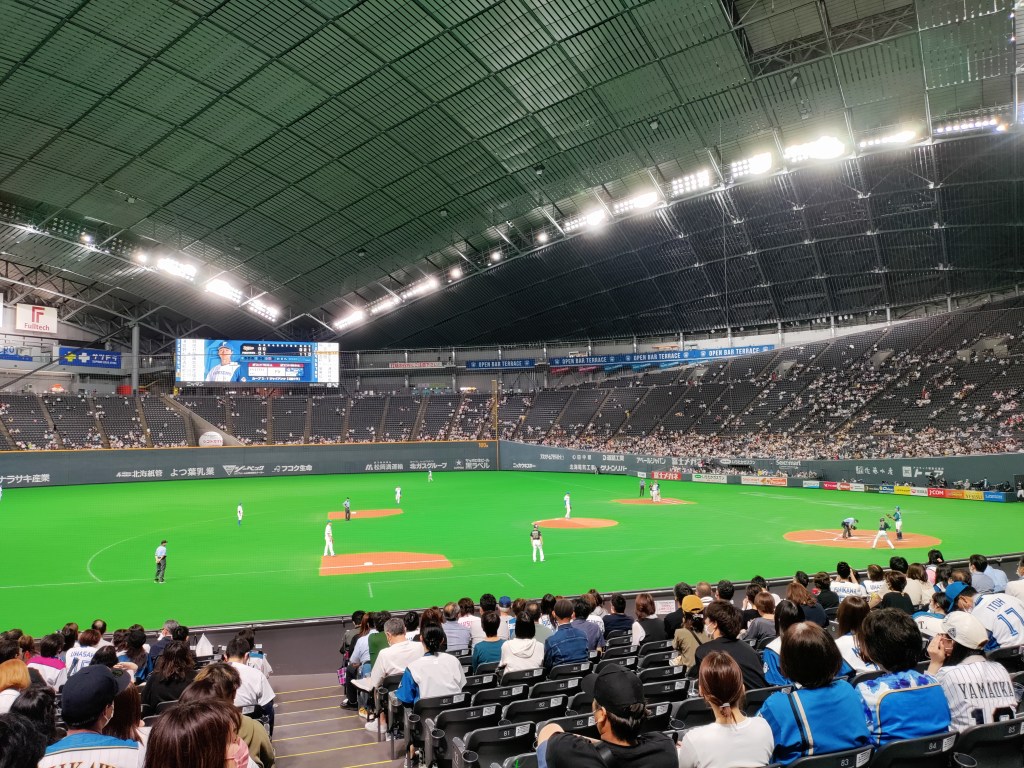
After this, I went to the Sapporo Dome. Sapporo is home to the Hokkaido Nippon Ham Fighters of Nippon Professional Baseball, the top league of Japan. They are currently having a down year so attendance wasn’t too high and tickets were cheap. I sat about 10 rows back behind the home dugout. Japanese baseball atmosphere is not like American. It is more reminiscent of European soccer games. People chant and sing songs for various players and game situations. It is very energetic and fun. Even with the somewhat sparse attendance, the fans were loud and supported their team. It was nice to be watching professional baseball in person again. The game was close too, with Hokkaido scratching out a win over the Orix Buffaloes by a score of 2-1. An error by the Orix 2nd baseman on a groundball allowed the winning run to score.
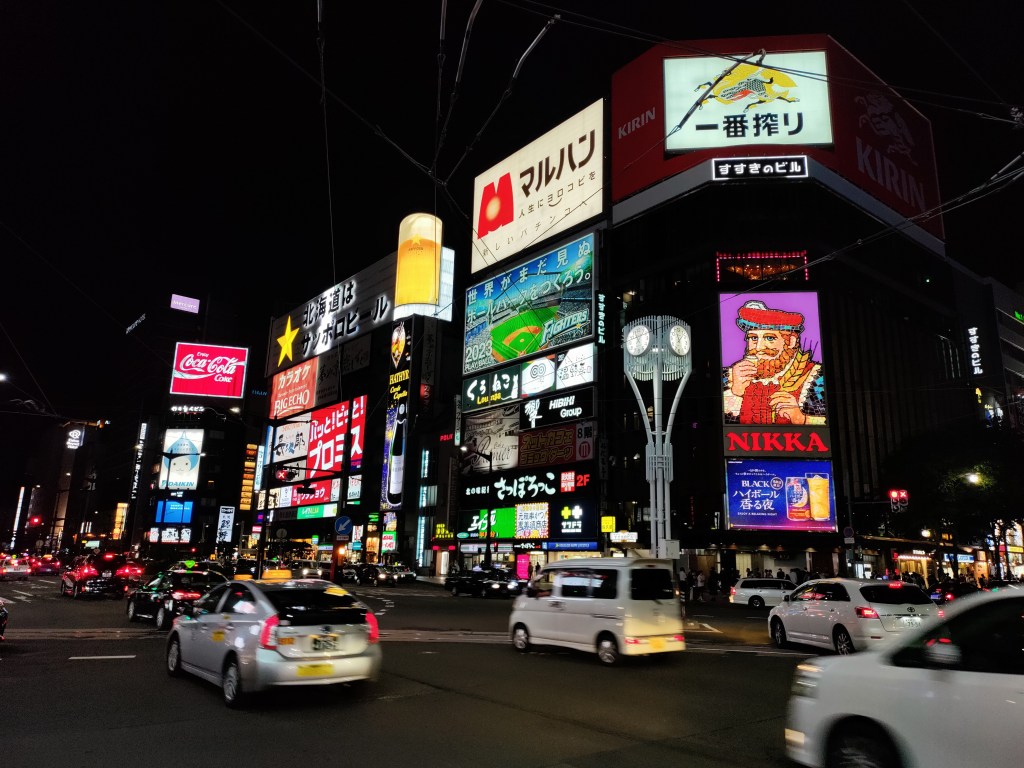
Finally, after the game, I was exhausted, but I managed to pull myself out of the hotel bed around 10PM and onto the streets of downtown Sapporo. The city was absolutely buzzing with people on this cool Friday night. I walked for a few miles down the main street and saw bars, restaurants, and food stalls all packed with customers. I found a nice bar for myself that reminded me of what would be considered a dive bar in America, so I decided to check it out. I ended up having a long conversation with a few people including a man from Tokyo who lived in New York and Boston for 10 years and his wife from Germany. He also wandered in the bar because it reminded him of a “western bar” so I guess I was onto something. I also met a man who worked as a trainer for the Japanese national ski team, who had been to Sado. Overall, I left feeling very fondly of Sapporo people. Everyone was very friendly. I imagine the summer in Sapporo is a bit like the summer in Portland, where everyone is friendly and happy and enjoying a respite from the usual crummy weather. I remember thinking a few times about how the city is so nice and the people so accommodating that it would be nice to live here, before remembering how it is covered with snow for the greater part of the year.
The next day, I woke up and took the plane back to Niigata. The first thing I noticed was the sticky wet air. I hopped on the ferry and I made it back home by the evening. In the end, I was very glad I ended up taking up my friends plan to visit Hokkaido. Though the trip was rushed, I had a great time seeing this unique part of Japan. I would love to go back someday for a longer time. This week marks the beginning of summer break. Even though I still have to go to work, it will be nice to have this time with no classes to prepare for my transition to another set of schools, say goodbye to all my departing friends, as well as welcome the new replacements coming to the island. Finally, I would like to thank a family friend, whose generous gift helped me make this trip happen. As always, thank you for reading.
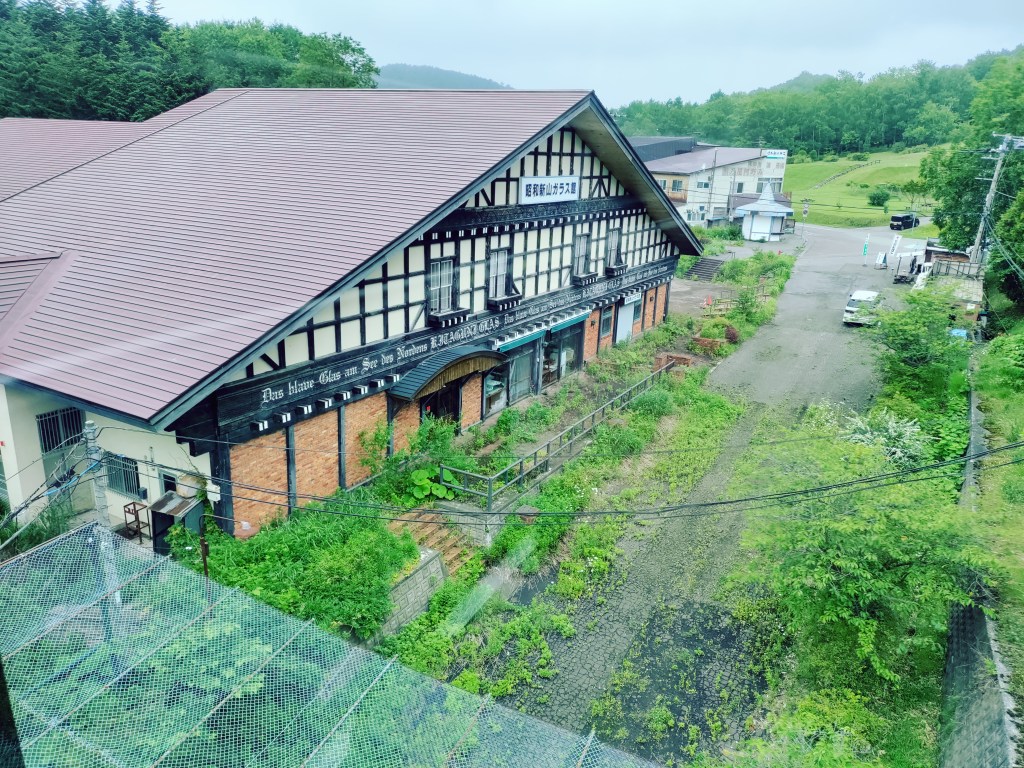
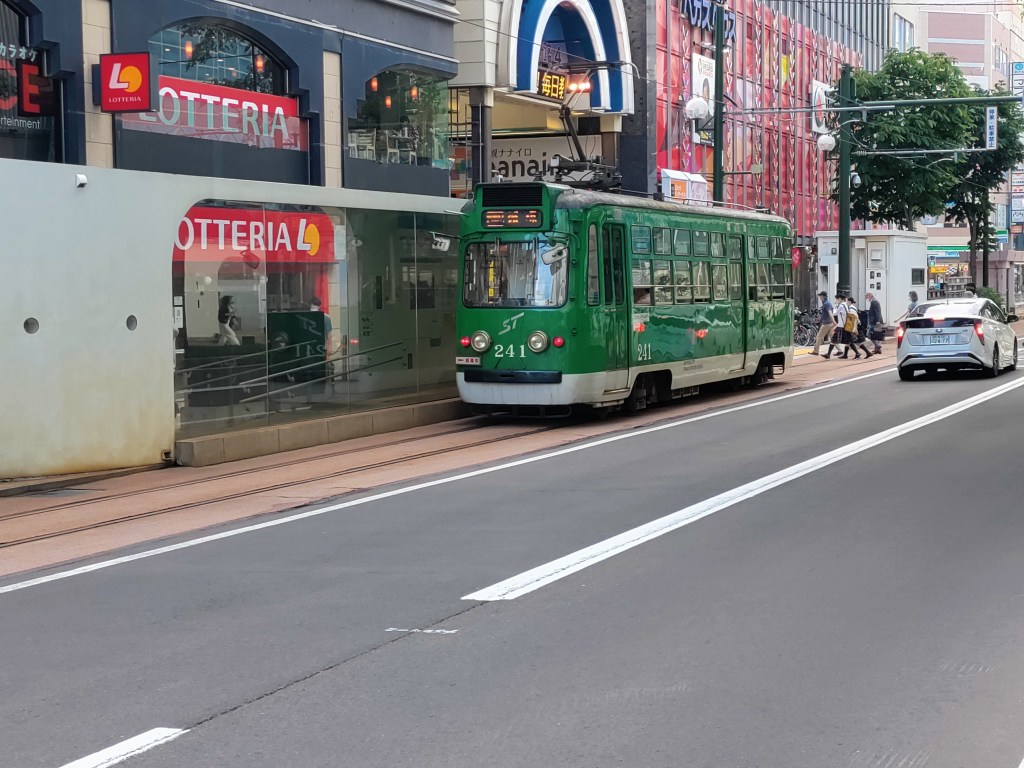
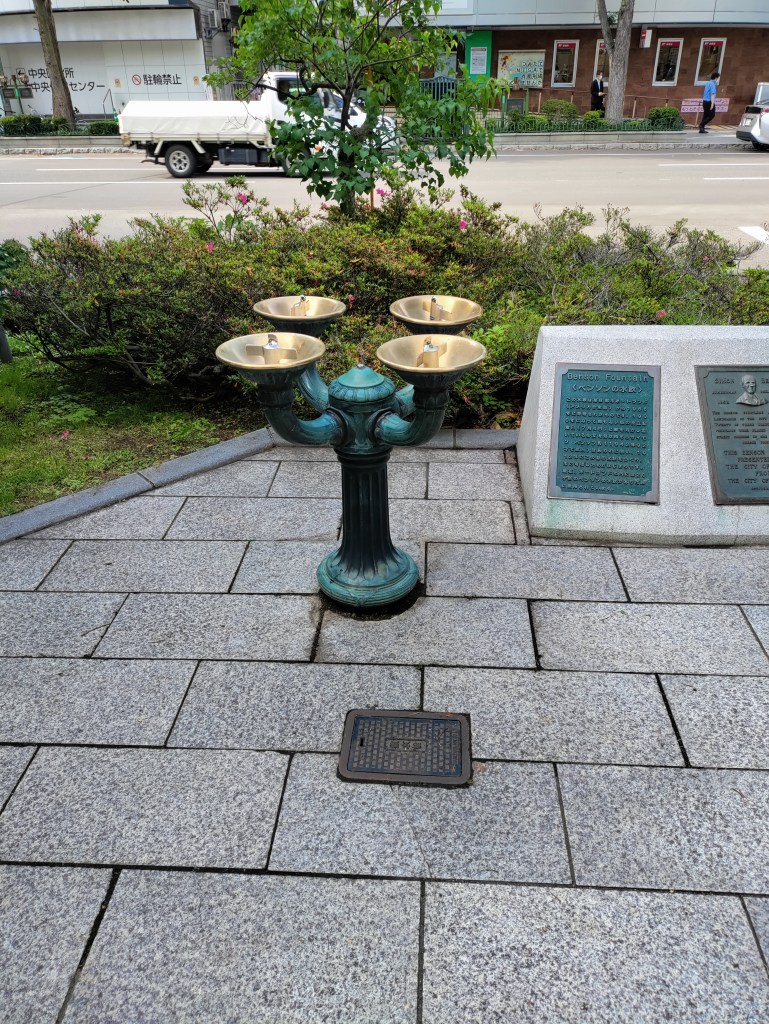
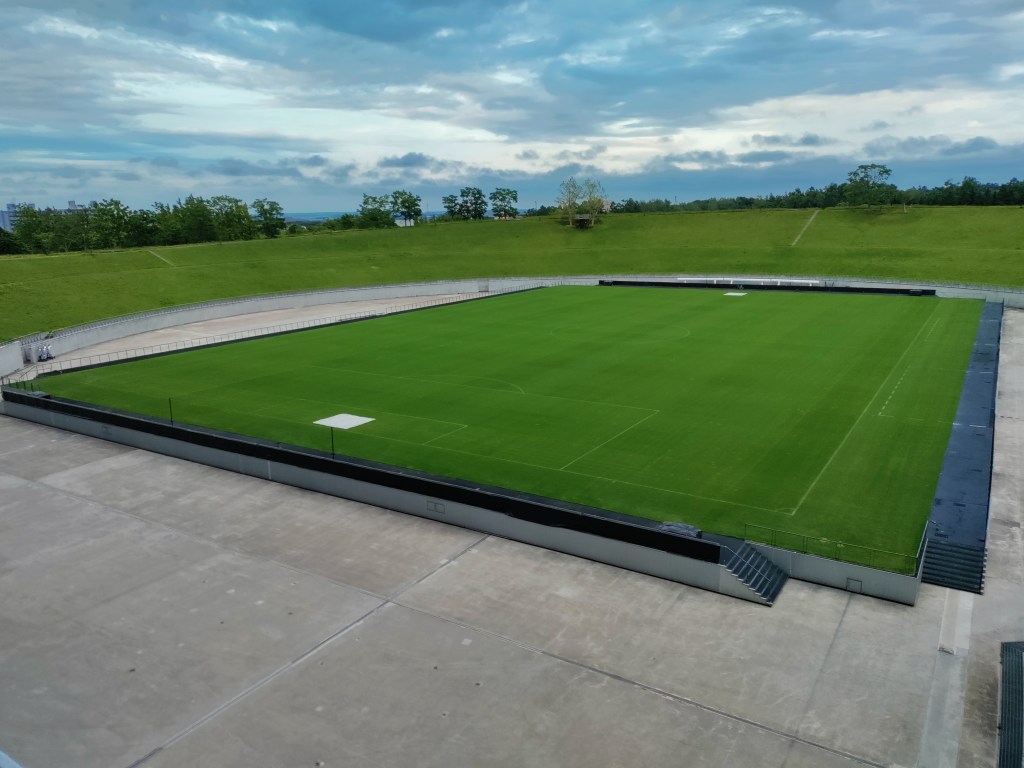
Shuttered buildings which usually cater to tourists at Mt. UsuMt. Showa, nearby Mt. Usu. It’s actually venting volcanic gas.Some sort of abandoned German style hall.View from Mt. UsuMt. Usu trailI couldn’t get a great photo of it but those stone outcroppings were very visible in the National Park.Sapporo StreetcarHas anyone seen one of these before? Must be some kind of Japanese drinking fountain.Sapporo Beer Museum Sapporo Dome actually has two different fields for baseball and soccer. When the soccer team plays they’ll move this field in and the baseball field out.Downtown Sapporo
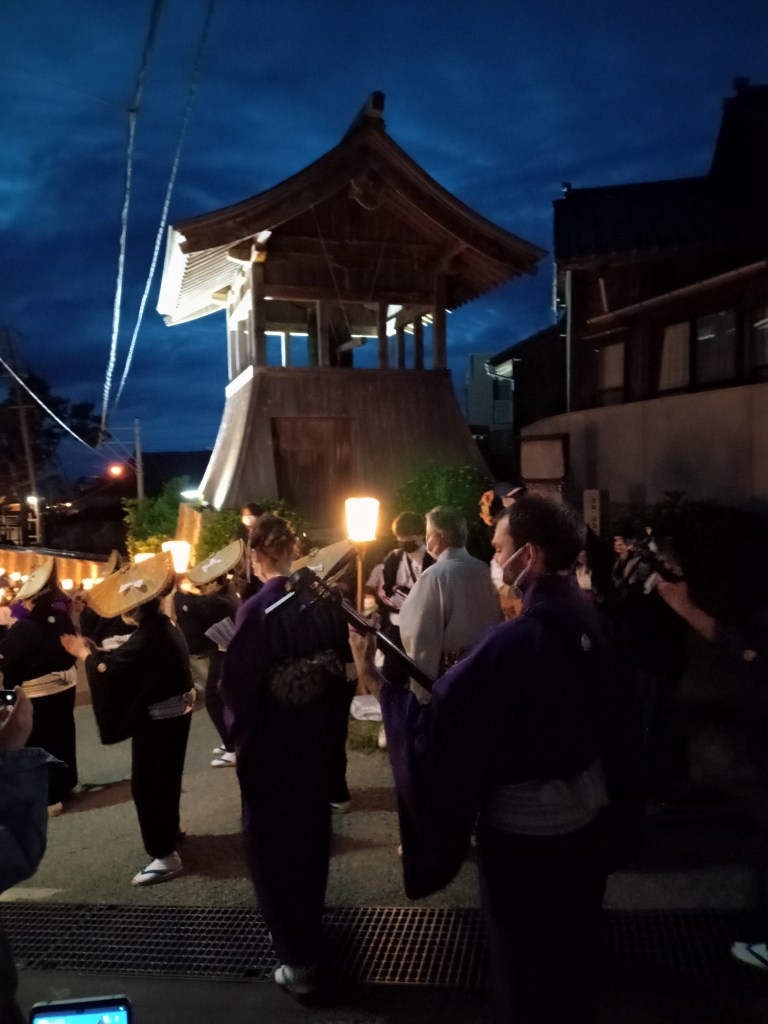
The Okesa dance is perhaps one of the most recognized and strongest of the traditions of Sado island. The incantation-like singing and twang of the stringed Shamisen accompaniment is the first thing you hear over a loudspeaker when you disembark the ferry on arrival here. There are also silhouettes of the dancers in their kimono and traditional straw hats lining the sidewalk of Ryotsu’s business district. It is a traditional dance with origins in the Edo period. Every town and village on the island has their own unique variation of the Okesa. Saturday was Aikawa’s Yoi no Mai festival. This translates to “Evening of Dance” in the local dialect. It attracts visitors from all over the island and even some from the mainland.
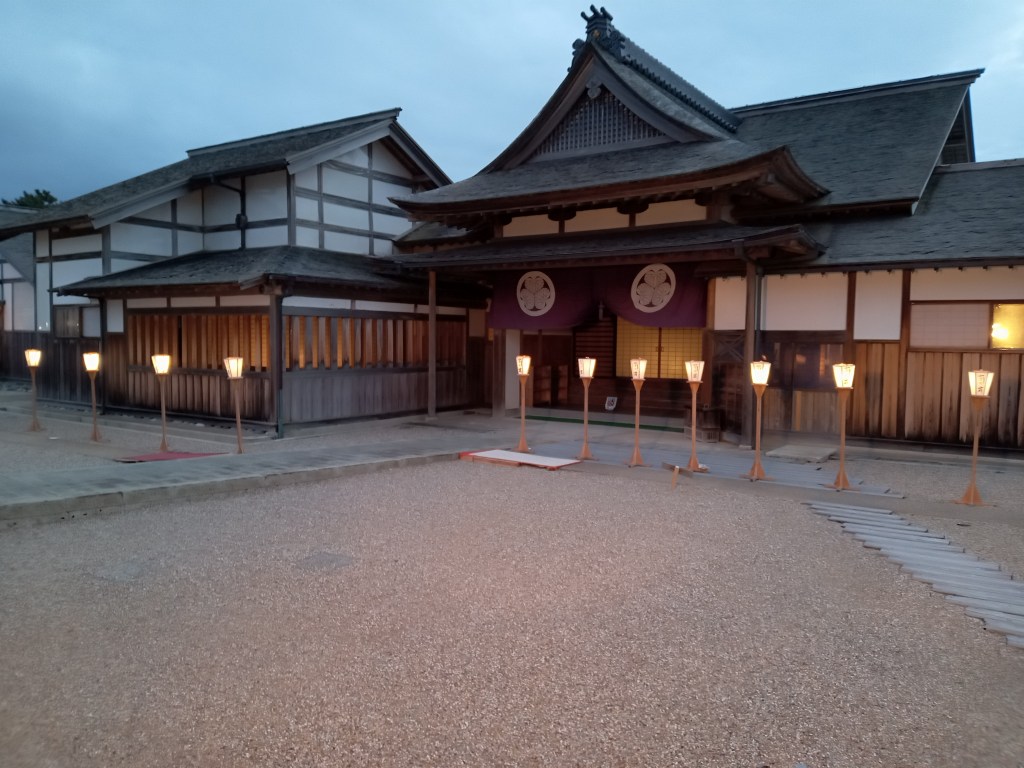
Being that my house is walking distance from the festival, I decided to host some of the other English teachers for dinner. Then we headed up the hill to Kyomachi Street in the old part of Aikawa. I think I’ve mentioned this before here, but the Aikawa of today is a shell of its old self. When the gold mine was very active in the Edo period, Aikawa was the largest town and political center of the island. They say as many as 50,000 people lived here then. That’s roughly the population of all of Sado today. Kyomachi Street was the center of the town back then. It runs from the former administrative center of Sado to the gold mine and was dotted with wooden buildings containing shops and restaurants servicing miners and the related industries. Today, only a few of these shops are open, and the street is mostly residential, as the commercial center of town has moved to the coastal, lower section of Aikawa. That said, Kyomachi Street may still be seen as the cultural and historical center of the town. It was beautifully lit by lanterns and the street was lined with tourists. Snack vendors in stalls were selling street food and drinks. A few of the onlookers were dressed in traditional kimono. It was an exciting time and the busiest I’ve seen Aikawa thus far.
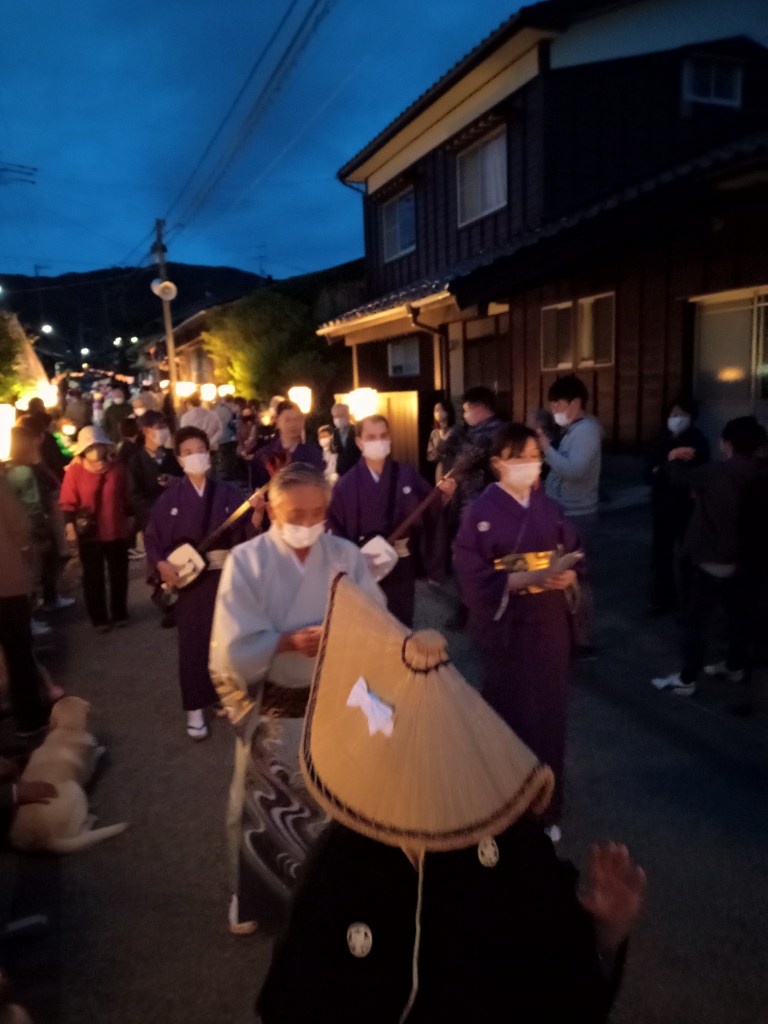
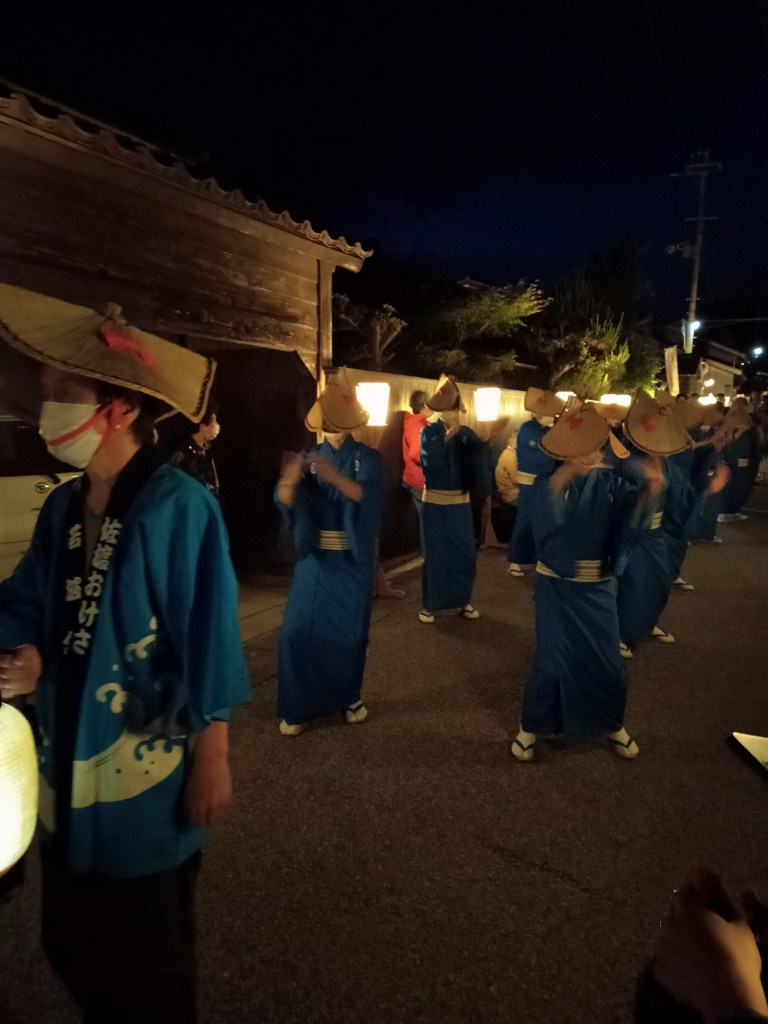
The actual dances started shortly after we arrived. I suppose it was somewhat like a parade. Various troupes of dancers slowly dance in procession, starting at the top of the hill, near the road to the gold mine and ending in front of the administrative building. The groups were organized with a lantern bearer in front, followed by the dancers, with chanters and musicians in the back. Every troupe had their own uniform of vibrant kimono, and the dancers also wore the traditional straw hat which obscured their faces from most angles. The dance is synchronized and the choreography contains a lot of very flowing, water-like movements, punctuated by a synchronized clap every few measures. There is an accompaniment by two shamisen players, a traditional Japanese stringed instrument that sounds a bit like a banjo. In the back there are a few singers, who chant a call and response song. I ran into some friends and coworkers and tried asking them what the meaning of the song could be. From most, I was unable to get a response as I was only told that it is in very old language and hard to understand or translate. I did meet a kind older woman who studied Sado history in college before moving and raising a family here. She was very helpful in explaining some of the traditions and history of the Aikawa Okesa. She told me the tradition is “only” about 400 years old. Supposedly, the lyrics were originally about all the rumors of the town: who was in a relationship with whom, who was having an affair, who was on deaths door, and so on. The governor of Sado didn’t like this gossip so he decided to have it changed to the modern iteration, where the chants are for things like asking for a bountiful harvest and success in war.
It was nice to see this famous, traditional festival in Aikawa. People in Sado are very proud of their local villages and towns and living here makes me feel as though Aikawa is my home, so it makes me proud in a way, even if I don’t have the years or generations long connection to this place like some. It makes me glad to have gotten placed in a particular part of Japan that has such a rich culture and unique history. Finally, here is a link to a video of the festival. You can get a good sense for what it is like here. I think I even recognize some of the dance troupes from this year. In any case, I’m sorry for the poor quality of the photos. I haven’t been in the habit of taking my American phone with me recently, so I’ve been using my Japanese phone which has a much worse camera. Anyway, until next time and thank you for reading.
Kyomachi Street before the festivalThe old administrative center of Sado
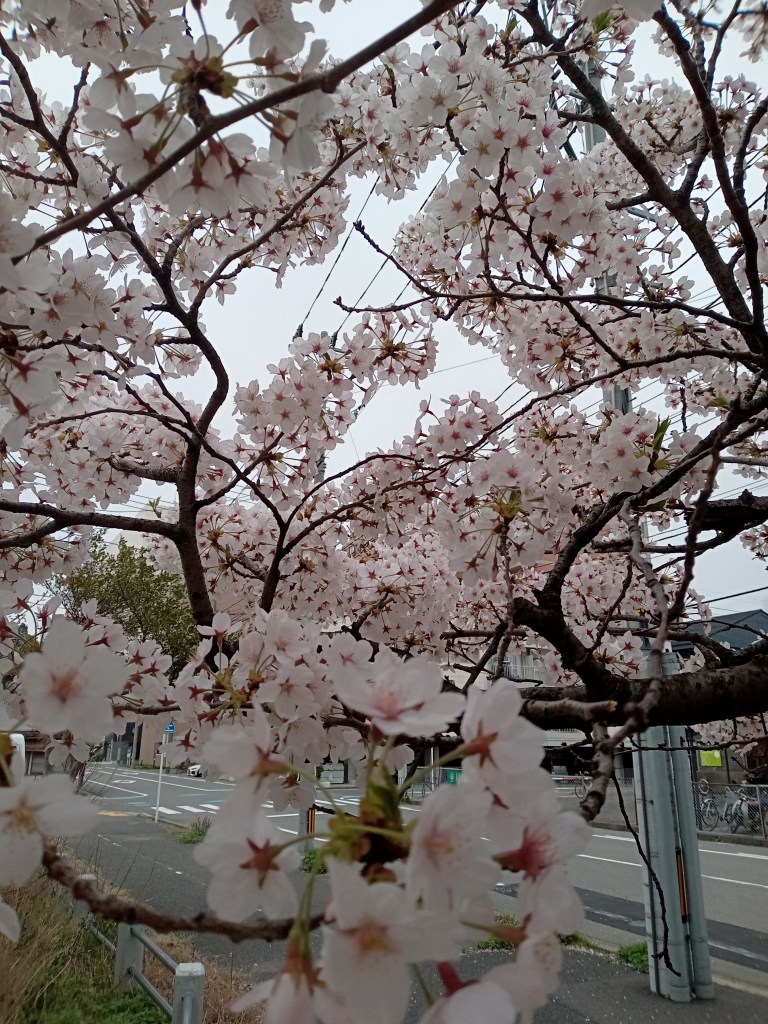
Hello, everyone. I am sorry I haven’t been posting much lately. I have been a bit busy and I haven’t been happy with the quality of my writing recently. It is hard to believe, but May 15th marked my 6th month since arriving in Sado. Already half a year here, I have celebrated my birthday and I have seen it transition from fall to nearly summer. The weather has been great recently: warm and sunny but before the hot and uncomfortably humid days of summer. Anyway, since it has been a while since I last made a post here, I have skipped over posting about one of Japan’s most famous “seasons.” Cherry Blossoms (known as Sakura in Japanese) are a symbol of Japan and the season lasts for, at best, two weeks. The bright pink trees start blooming in late March in Southern, temperate Japan, and slowly make their way up north, with Tokyo in full bloom in early April. Sado, being a bit further north than Tokyo, usually sees its trees blossom in mid April. It is a very important time in Japanese culture and is associated with the beginning of spring. Unfortunately, I was in Saitama at the beginning of Sado’s blooming. Saitama was mostly finished with the Sakura season so I was worried that I missed my chance. The previous two times I had visited Japan happened to be in the spring and I narrowly missed seeing the Cherry Blossom season then. I was worried I missed it again and that I would have to wait until next year to see them in their full glory. My fears were misplaced though, and I was finally able to enjoy the Cherry Blossom season in Sado.
It is traditional in Japan to have a picnic, known as a hanami (flower viewing), during the Cherry Blossom season. People and their families will spend a weekend afternoon under the pink trees enjoying a meal and drinks. Some of the other teachers had a picnic, but unfortunately I was busy and could not attend. I did take the opportunity to see many of the local temples and shrines which are adorned with the trees and the site was breathtaking. One trick employed by the landscapers of these religious sites and parks is to plant clones. By doing so, the trees all flower in sync with each other and the end result is a bright, uniformly pink landscape. I have to think the temporary nature of the blossoming fits perfectly with the Buddhist faith of Japan professing impermanence and ephemerality. If you’re not quick and on the ball with your hanami, you might miss out on viewing the Cherries for a whole year.
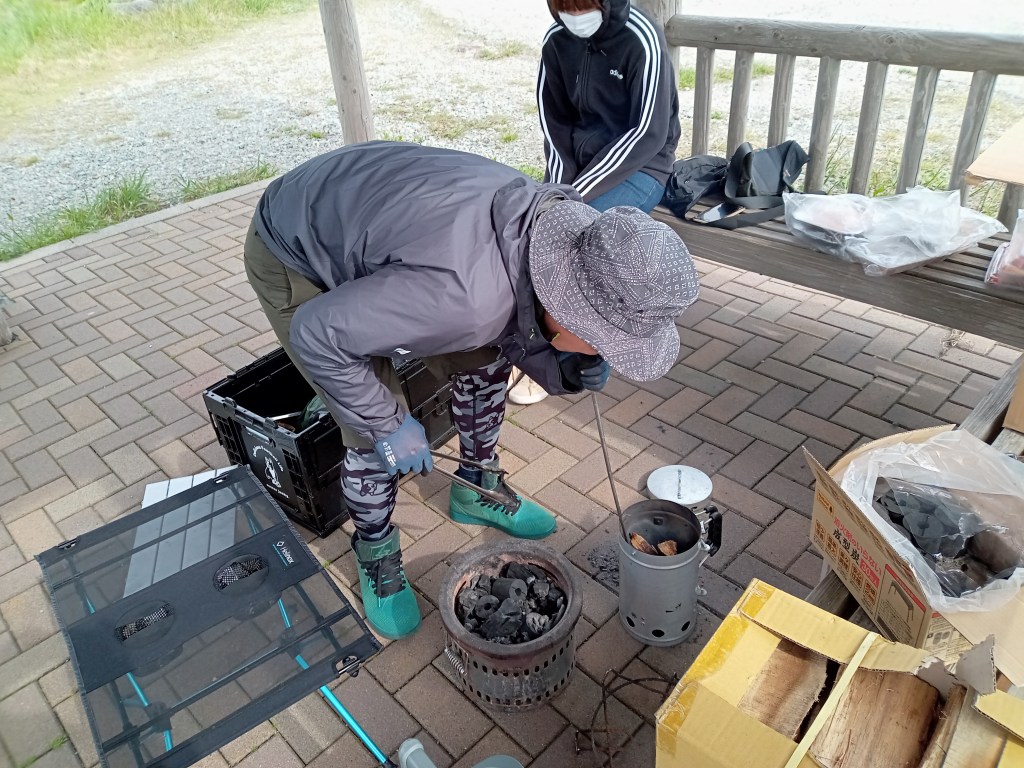
After the Cherry Blossoms finished and turned green, the first week of May is what is called Golden Week. This isn’t really a traditional holiday season in Japan, but is one of the most common times to travel in Japan. Since the 1940’s, Japan has designated 3 holidays in a row the first week of May. In addition, the former Emperor Hirohito’s Birthday of April 29th was also a holiday during his reign, and was formally made a public holiday after his death. As a result, the first week of May has a string of holidays, and has become a common time to travel and enjoy the time off. I think it is somewhat similar to the Memorial Day weekend in America. There’s even a famous yearly race, like the American Indianapolis 500. Common activities include grilling and camping. Many people also take the time to visit family. The highlight of my Golden Week though was being invited to a barbecue by some of my local friends. We went to the parking lot of an abandoned hotel overlooking the ocean here in Aikawa and had a nice afternoon grilling a wide variety of meat and vegetables. There was chicken, beef, pork, bell pepper, mushrooms, cheese, and more. It was all very delicious but I was most excited to try fugu for the first time. Fugu is somewhat infamous in the US as the toxic pufferfish. I was warned by the others at the barbecue that this could very well be the last thing I ate. This was merely being dramatic. This fugu was bought at a grocery store, and was already rigorously screened for toxins. You really only need to be worried when eating fresh fugu at a restaurant, especially fresh fugu sushi. Here, it needs to be prepared by an expert chef who can rid the fish of all its toxic sections. That said, the fugu was very delicious. I now understand why people risk their lives to eat it. It is a white fish and the buttery taste and very flaky texture reminded me a lot of lobster. I highly recommend it if you ever have the chance to try it. Just… be careful.
I apologize for my lack of recent posts here. I will start posting again with more frequency. The mild spring is quickly becoming the humid summer. The pink April Cherries gave way to the purple wisterias of May. The warm weather has brought a bit of tourism to this island. Already I see the hotel outside my house filling up with people from the mainland. This will continue through the warm months. Next weekend will be the famous “Yoi no Mai” of Aikawa. This dance festival has been happening here for the roughly the last 500 years. I will be there of course, and I am excited to document it and share it with you all.
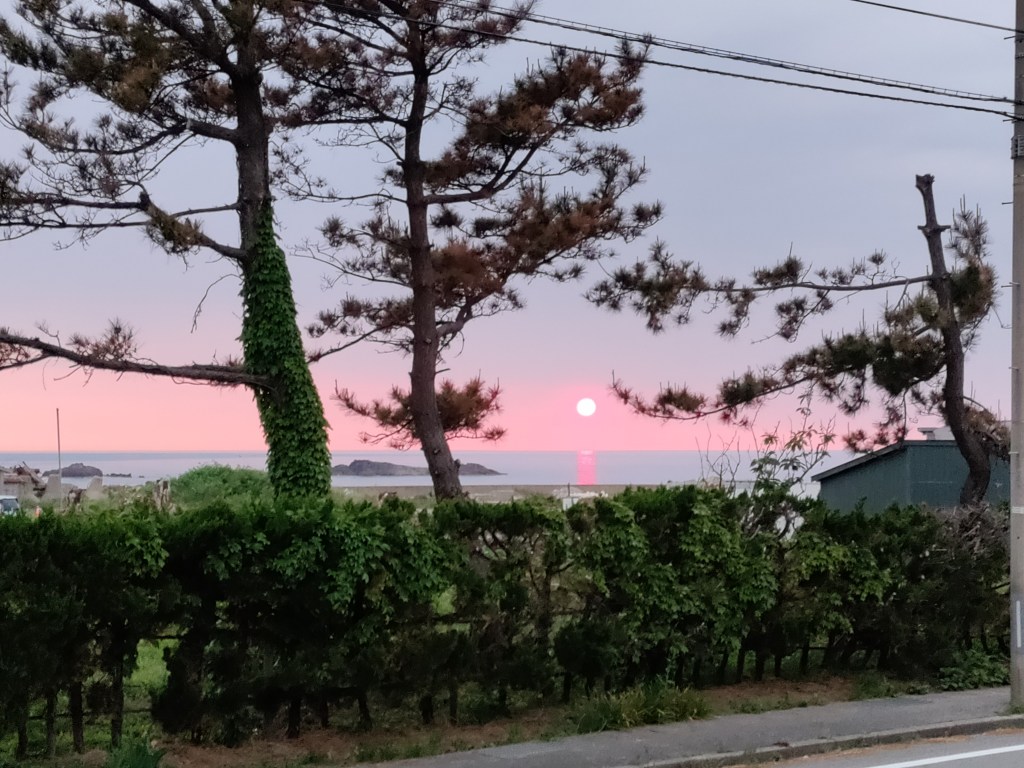
Some whitish pink blossomsThe abandoned hotelMy friend Hikaru getting the coals lit.Outside of an abandoned school on the south of the island.The gym of the old school.This stubborn cherry was still pink in mid May.Sunset outside my apartment
Here’s something not a lot of people know about me: I’m a bit of a boxing fan. I wasn’t interested in the sport for most of my life but, on a whim, I decided to tune into the Anthony Joshua-Wladimir Klitschko heavyweight title fight about 5 years ago. It was an epic, back and forth battle between a rising star in Joshua and Klitschko, a boxing legend. More than 90,000 people crammed into Wembley Stadium in London, both fighters were knocked to the canvas at different points, and it was decided by Joshua in an 11th round technical knockout. I am convinced anyone who watched that fight would have become a fan of the sport and since then I’ve been hooked. Likewise, combat sports are hugely popular in Japan. Boxing, kickboxing, MMA, and, of course, sumo wrestling all command a lot of interest from sports fans, especially when Japanese fighters are involved. Having never been to a live match before, I thought it would be fun to visit Saitama this last weekend and attend the fight between Gennadiy Golovkin and Ryota Murata along with my friend Teppei.
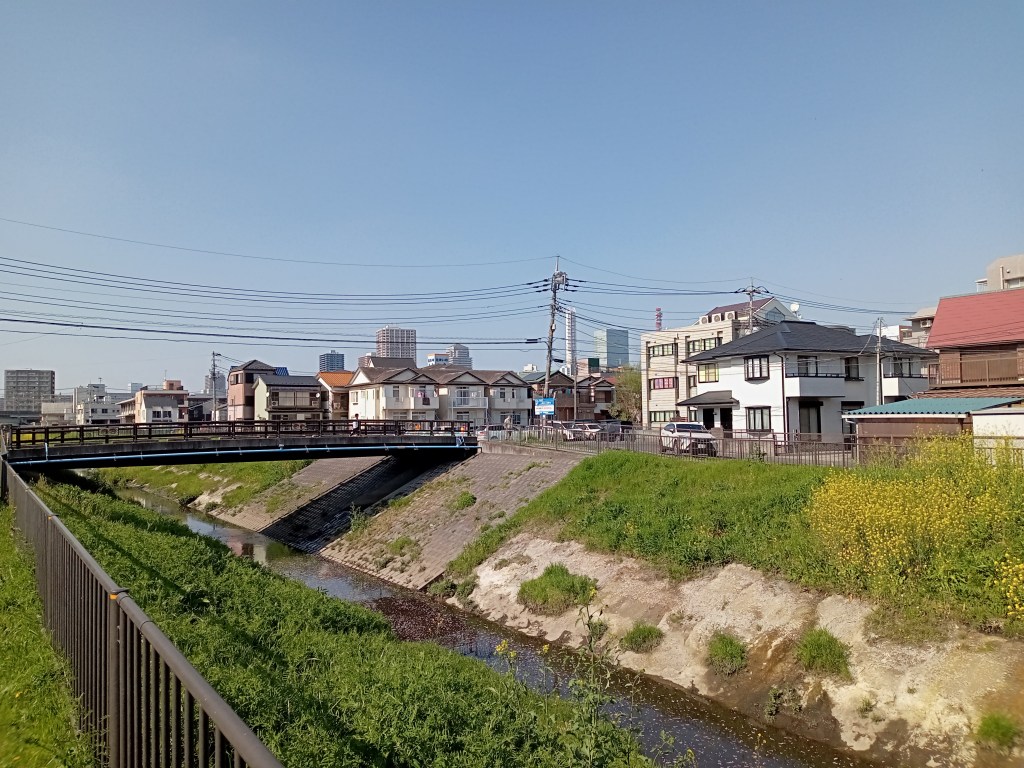
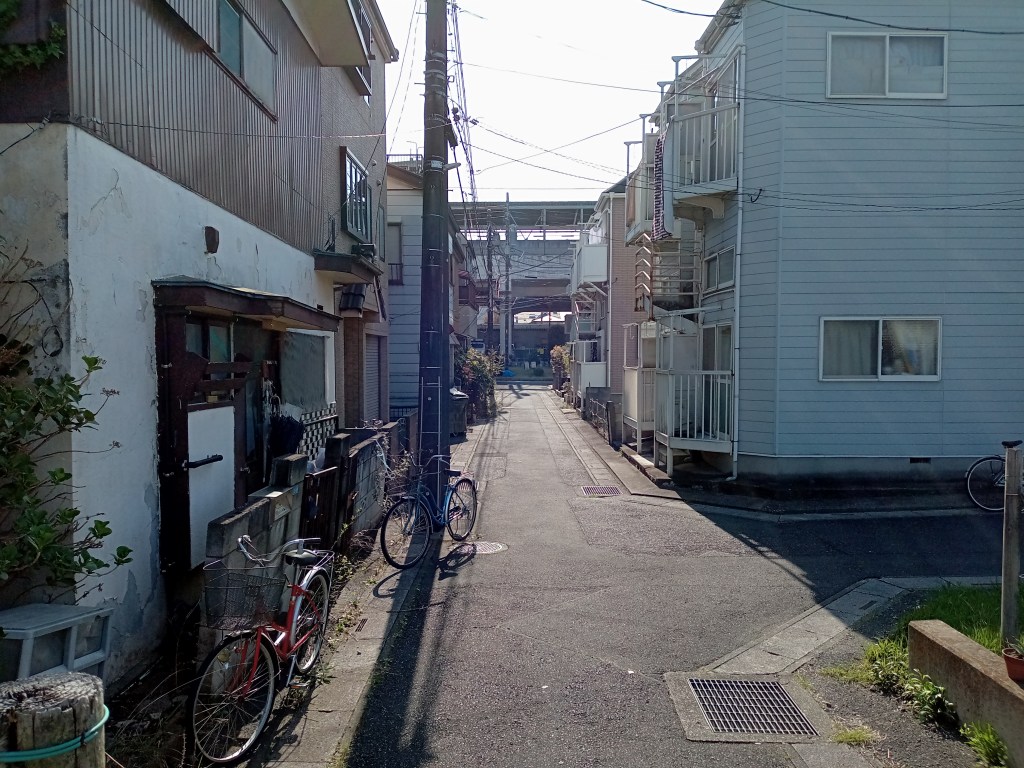
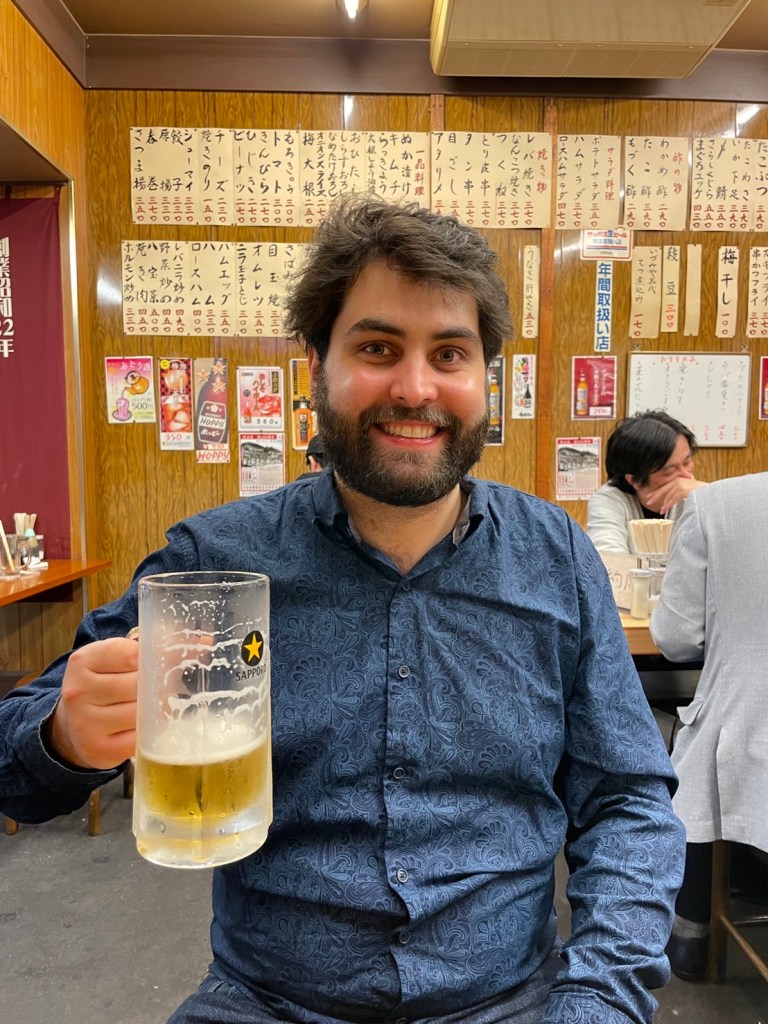
Saitama is a city immediately to the north of Tokyo. About 1.3 million people live there, making it a bit bigger than Niigata. It has a reputation for being a commuter city and a quiet place to start a family though. “Dasai” is a Japanese slang word that means lame, uncool, or, as my Japanese friend put it, (excuse his language) “fucking boring.” As a result, the city of Saitama has received the nickname “dasaitama,” much to the dismay of the residents. Did Saitama live up to it’s reputation of being a sleepy residential city? Well, I wasn’t there very long, only a weekend, but yes it would seem. There wasn’t a whole lot going on from my point of view. There was one nice area filled with shops and restaurants called Omiya, but it was pretty small and somewhat sparse compared to cities of a similar size. Here in Omiya, we were able to find an izakaya, a traditional style Japanese bar, where Teppei introduced me to some of the staples of Japanese bar food before the match. I tried octopus cured in vinegar, a sort of gravy and meat dish, and fried squid along with a few beers. It was nice catching up with Teppei, whom I hadn’t seen since January. It turns out, he recently bought a bar in Tokyo, and is currently running that along with his previous job distilling gin. After, we made our way to the venue: Saitama Super Arena, the largest indoor arena in the Tokyo area, which recently hosted events in the 2020 Tokyo Olympics.
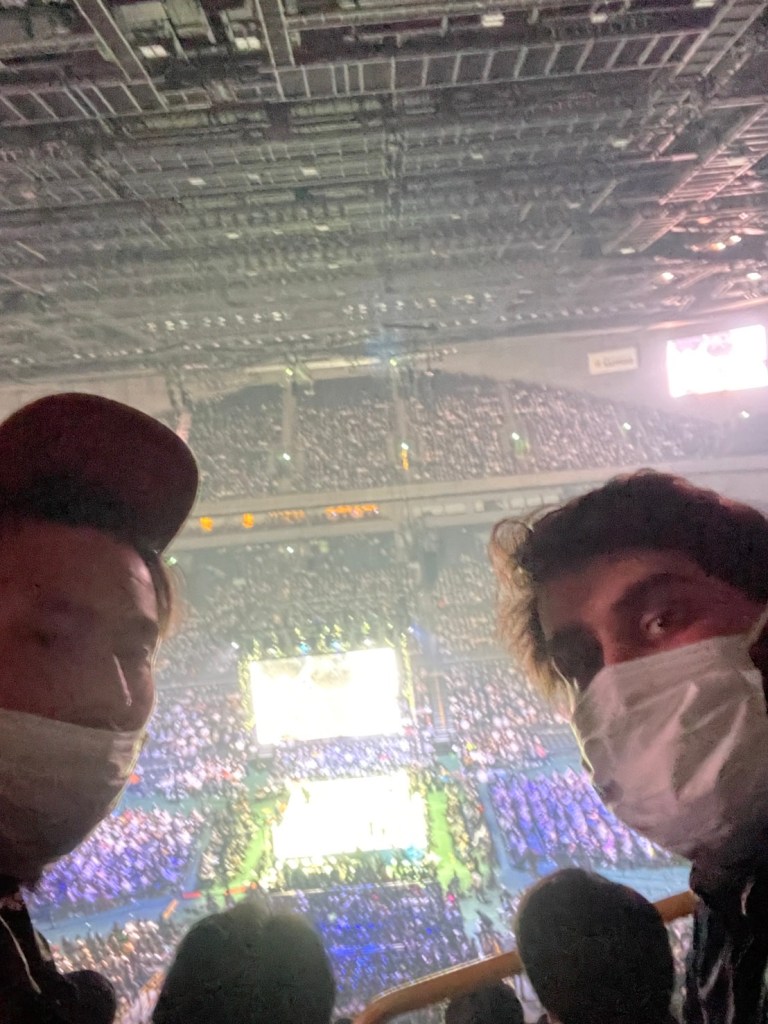
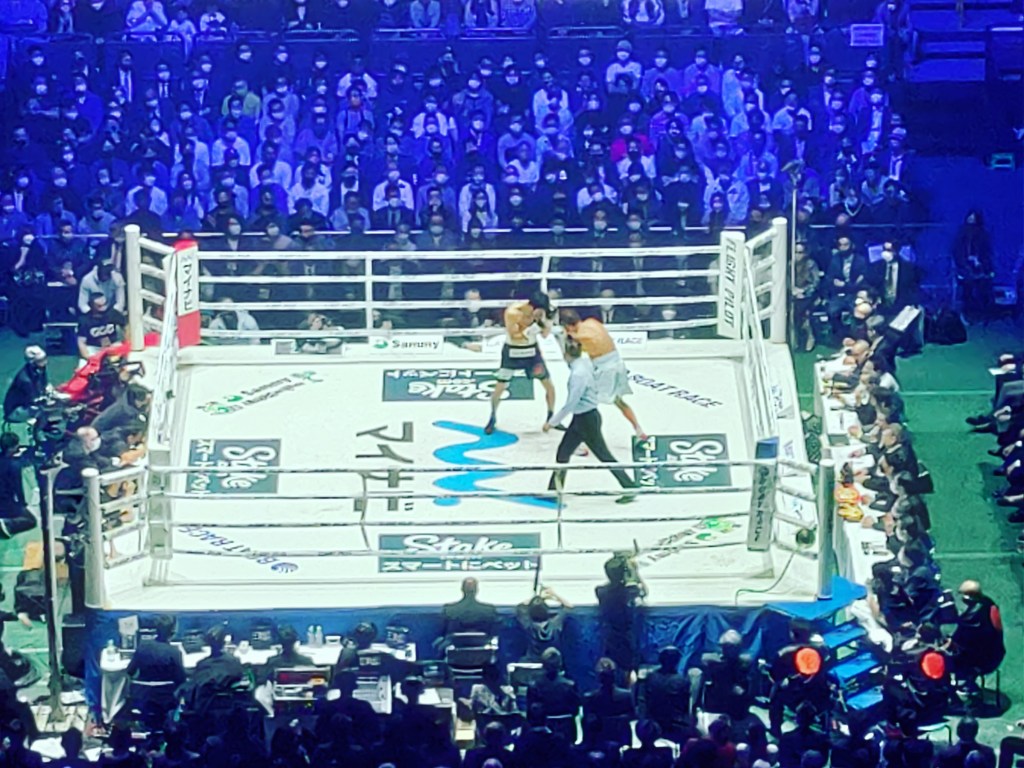
The venue was sold out and we were lucky to acquire the tickets through a lottery. The atmosphere inside was absolutely electric and the tension before the fight was palpable. For those of you unfamiliar with boxing, Gennadiy Golovkin is one of the greatest middleweights of all time. The Kazakh fighter turned 40 the day before the fight and was bringing in an impressive 41-1-1 record, with 37 of his wins being knockouts. Ryota Murata is a Japanese fighter from Nara, Japan and is a highly ranked fighter in the weight class as well. Of course, most of the crowd was cheering for him, but there was a sizable contingent of Golovkin fans waving Kazakhstan flags. The fight was entertaining and filled with action. There were a lot of good exchanges from both fighters. Murata started out strong and won most of the early rounds. He was forcing Golovkin back and was delivering some powerful shots to Golovkin’s body. Golovkin though, known for his ability to absorb punishment, was able to adapt by round 5 and he began to wear down Murata with his powerful punches. The later rounds turned for Golovkin before a big right hand sent Murata stumbling to his knees in the 9th round, when, with his nose pouring blood and his face bruised purple, the towel flew in from his corner, stopping the fight and giving Golovkin a win via TKO.
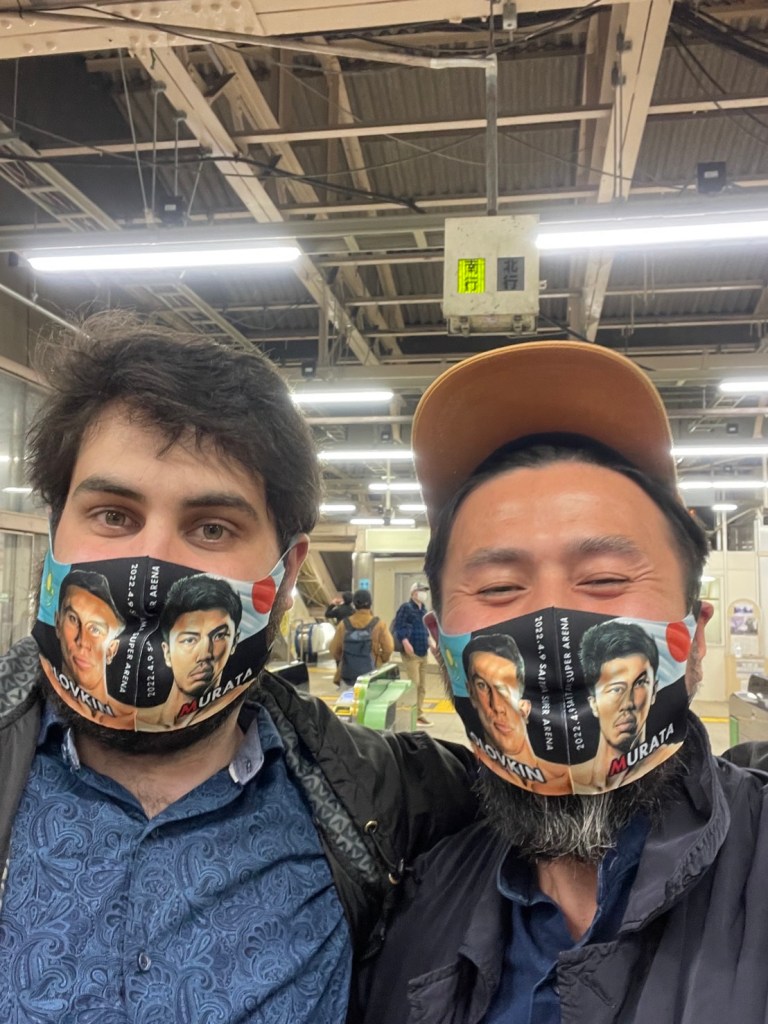
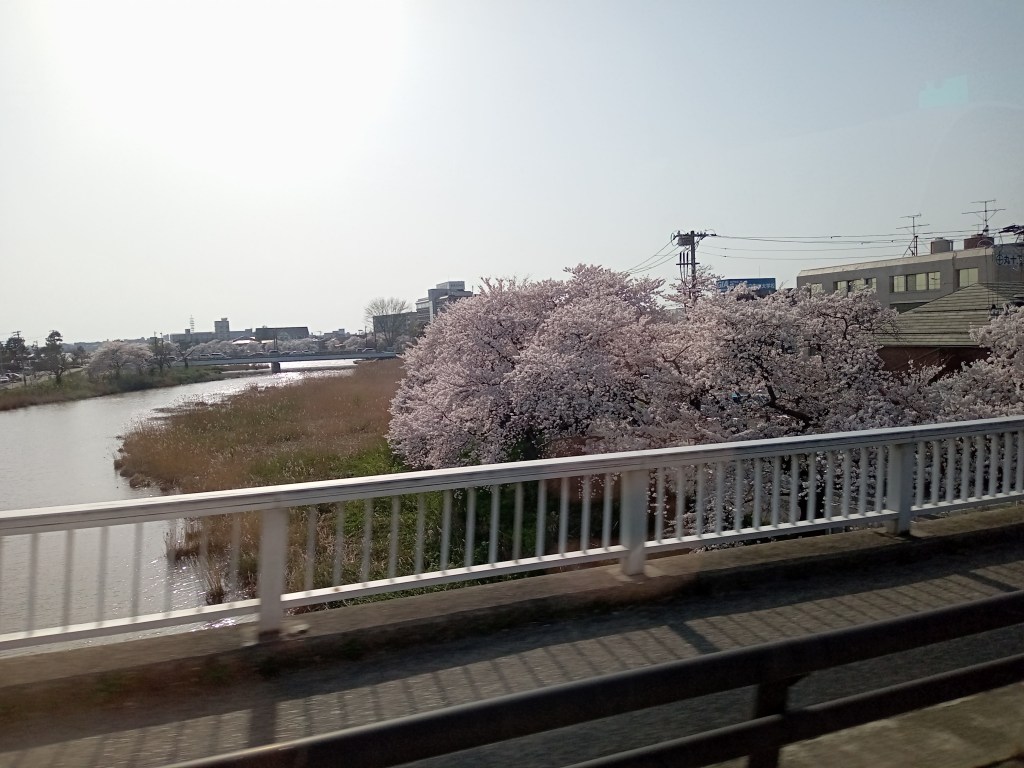
The Japanese fans were definitely disappointed with the result, but they were respectful the entire time. I never heard anyone boo Golovkin, like you would hear at a fight in the US or Europe and they applauded both his entrance and victory announcement at the end. Golovkin is something of a fan favorite in boxing, known for being an upstanding sportsman and it was on display here. Golovkin and Murata embraced after the fight and exchanged kind words which was nice to see. Golovkin gave Murata his ornate Kazakh robe that he wears before every match. In the end, though Murata tried his best, the superior boxer won, and it is no shame for Murata to have lost to one of the greatest fighters of the current day. After the match, Teppei and I walked through the streets of Saitama to the train station. It was so quiet that it was easy to forget you are only a few kilometers from one of the busiest and largest cities in the world. Teppei is so busy now between his two jobs that he had to return home shortly after the match. It was good to see him, and I look forward to visiting his bar the next time I am in Tokyo. After we parted, I went back to my hotel. Today, after a train ride, taxi, bus, ferry, and hour long drive, I am finally back to my home in Sado and ready for my first day of classes of the new school year tomorrow. The cherry blossoms have turned pink and many people are out to enjoy the sight and the warm weather.
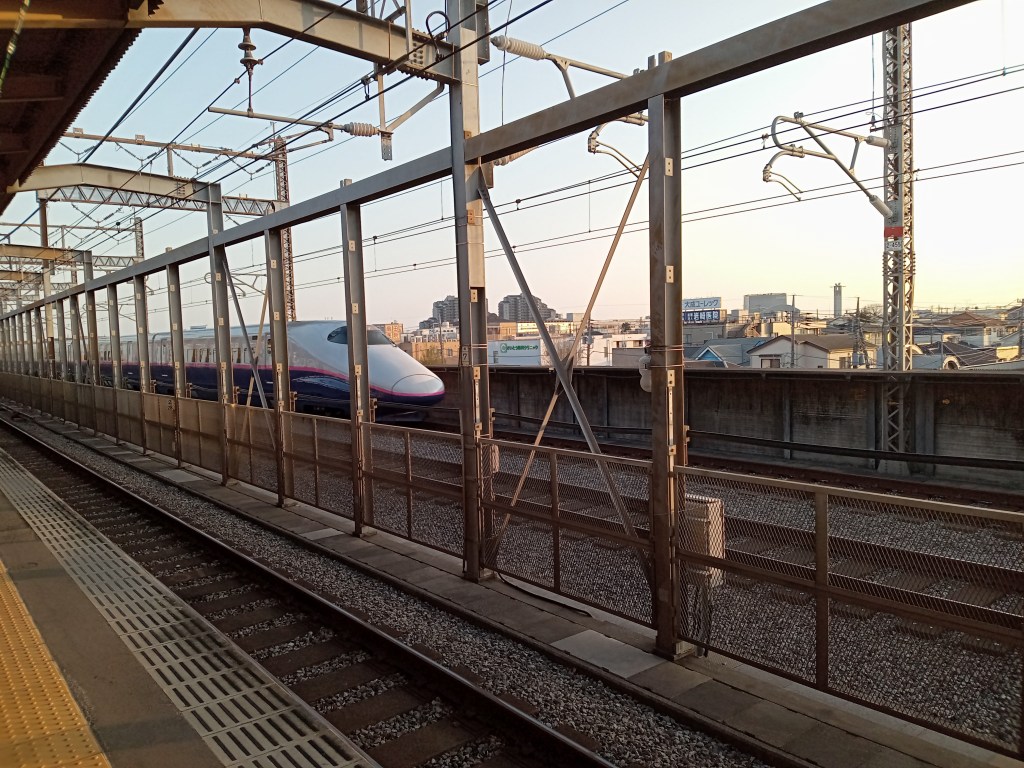
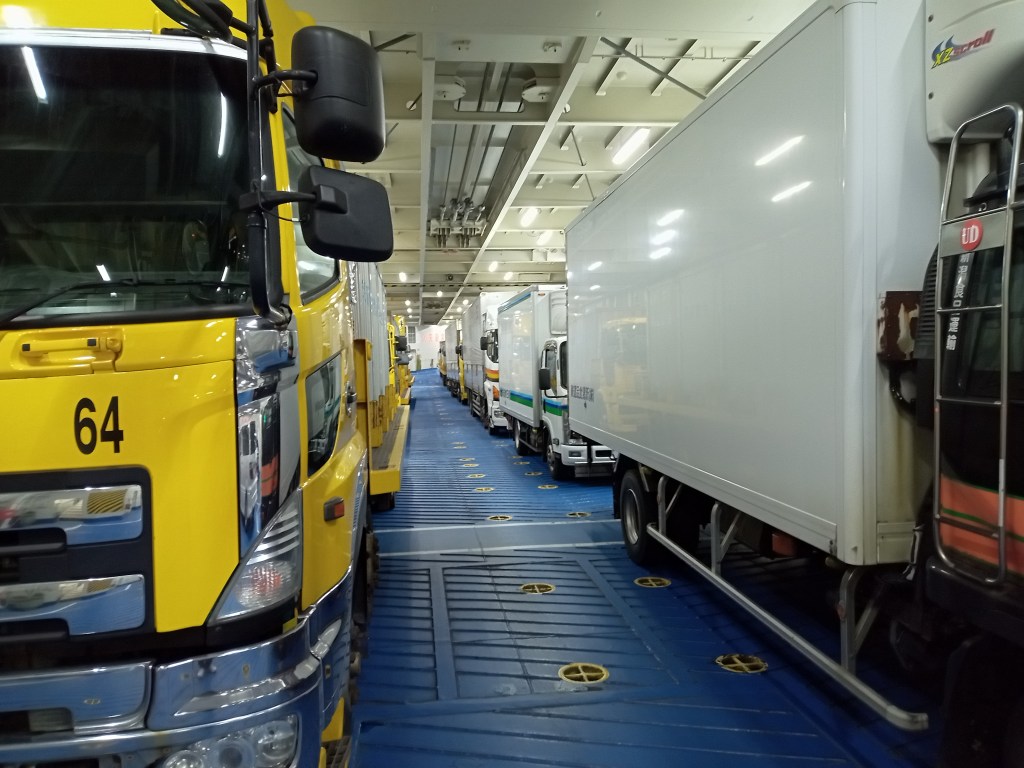
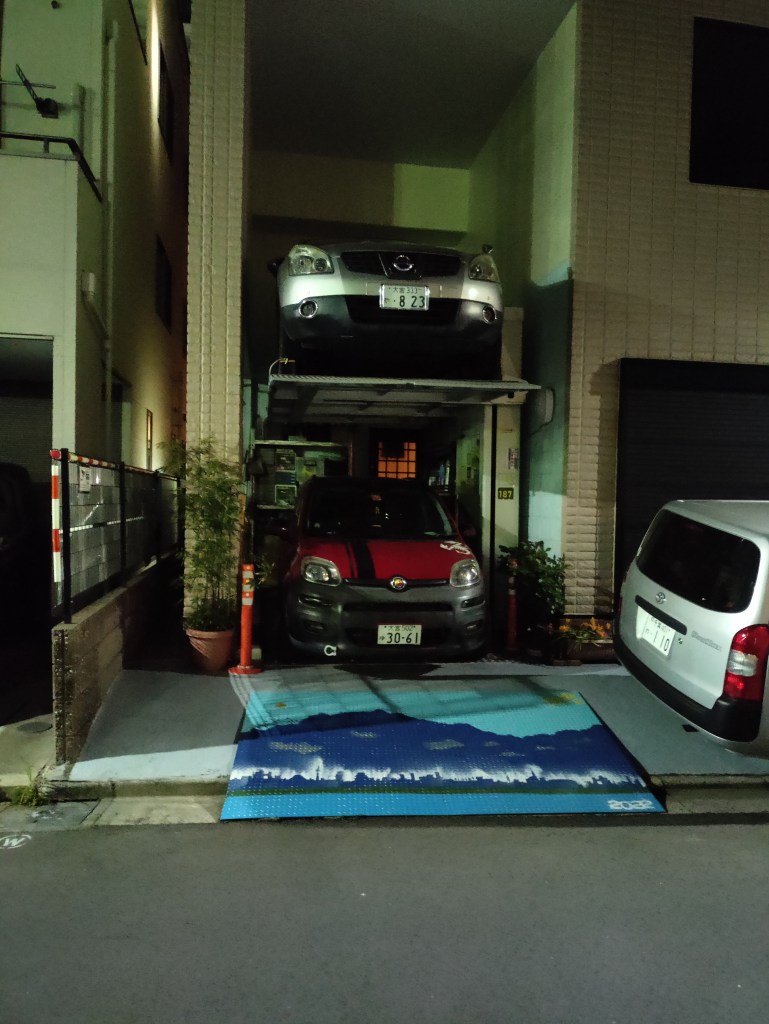
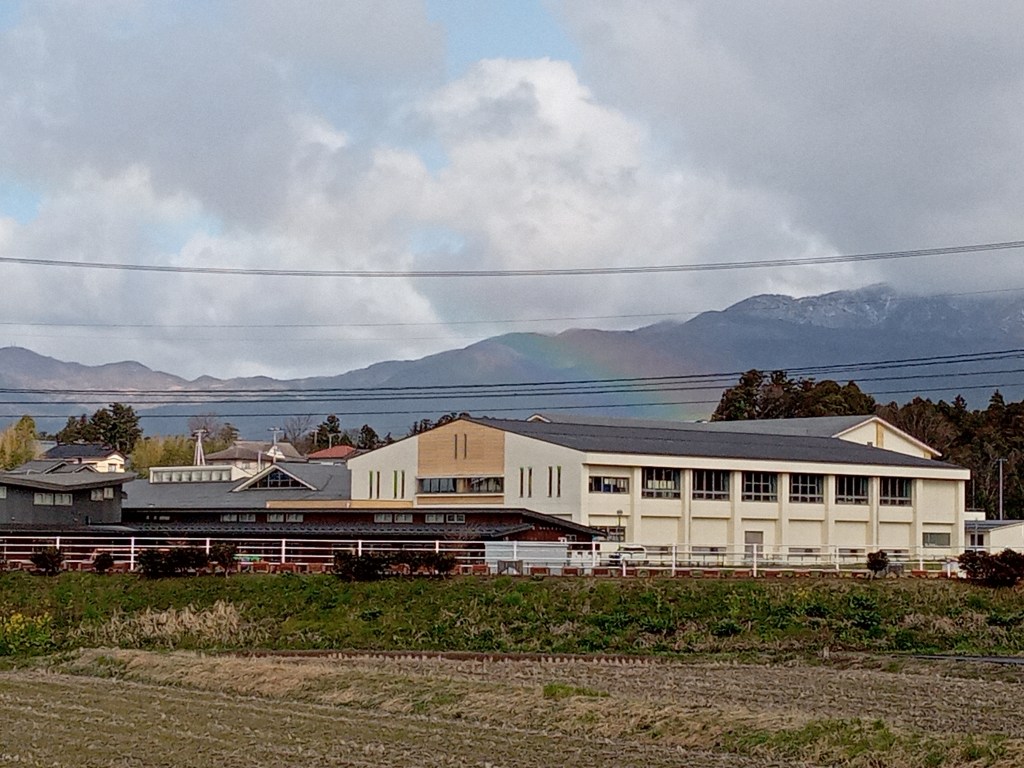
Looking towards downtown Saitama over a canal.A typical residential street in Saitama.The bullet train coming through.IzakayaThe lighting wasn’t great but you can see the ring.The matchSaying goodbye in our complementary masks after the fight.Cherry blossoms in NiigataTrucks lined up on the ferry from Sado to Niigata.Interesting parking arrangementRainbow above my elementary school
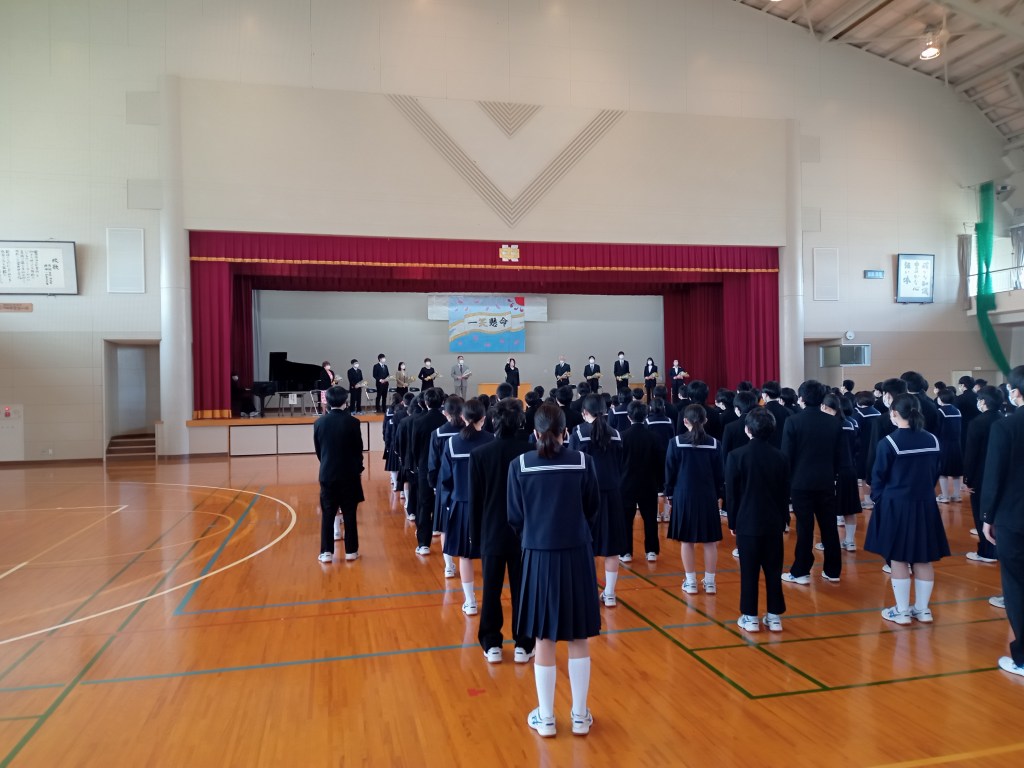
Today, the Japanese 2021-2022 school year officially came to an end. Even though graduation was about three weeks ago, classes continued until two days ago, while preparations were made for the final two days of ceremonies. Yesterday was the official Closing Ceremony. The students and teachers all gathered in the gym, while there were some speeches from the students who will return next year as well as the principal and some other teachers. This was all standard stuff, it seems to happen before every school break. Today, however, was the “Farewell Ceremony.” Seeing this on my schedule, I assumed it was some sort of goodbye for the students who are leaving. Actually, it was a goodbye ceremony for all the teachers and faculty who are leaving.
Japan has quite a different public school system when it comes to where teachers are assigned than the US. Before I explain what I mean, I want to say I don’t entirely understand how this process works. This is all from what I’ve gleaned talking with the faculty out here. Basically, in Japan, public school staff are assigned to a work location in the prefecture that employs them. That might be a particular school or a few schools for teachers of subjects like music. Newly graduated teachers might work 2 or 3 years at a school and then be required to move to a new location. Over time, your tenure at a particular school may be longer but you may still be asked to move by the prefectural Ministry of Education at any year. I’m not sure exactly how they choose who will move in a given year. I’m pretty sure you can request to be moved or stay or ask for a specific location, but of course not all these requests can be honored as every school needs certain staff. I am also not sure if there is any way to avoid a move. I think the Government’s word is essentially final.
I can see the merits of such a system. It requires staff to work with a diverse range of kids across the prefecture. It probably helps rural schools as well and keeps the labor pool from favoring any one area in particular. At the same time, it seems like it would be hard to suddenly be asked to move on a whim. The teachers and staff who were moving only found out last week. Could you imagine getting a job teaching in Portland, then two years later being asked to move to Baker City? The comparison kind of breaks down when you realize that Japan is smaller than California, but still I feel like that is a big thing of your employer to demand from you. Also many of them seem to be intracity moves, at least out here on Sado. But not all, and it is entirely possible that you could be asked to leave the island, or perhaps worse for mainlanders, being assigned to the island. Nonetheless, it is a recognized and accepted fact for working in public education here. This year, 11 of our faculty were leaving. This was about 1/4-1/3 of our entire school faculty. A few of them were being assigned to schools on the mainland or leaving the education entirely, but most of them were being transferred within Sado.
The actual ceremony was a bit like graduation, even down to being an emotional affair for some of the staff and the students. First, all the departing faculty were introduced by the Principal. Next, each gave a short speech about their time at the school, nice memories, messages for remaining students and the like. Then, pairs of students walked to the stage, read each departing staff member a personal speech and handed them a bouquet of flowers. After, some students donning red headbands performed a sort of drumming act involving clapping and rhythmically chanting each departing faculty member’s name to a beat. This was my favorite part and apparently it is tradition at every school Farewell Ceremony. Finally, the students formed two lines and the staff departed between them to applause and some tears as well. It was a nice send off. Following the ceremony, all the students left for spring vacation and all of us staff had a big bento lunch. The atmosphere was very relaxed and partylike. I had not really experienced anything like it in the school teachers office, which is generally quiet and busy with working teachers. I have been told that in the past, schools usually held boisterous party with a lot of drinking at a hotel in town. These have been indefinitely postponed due to coronavirus.
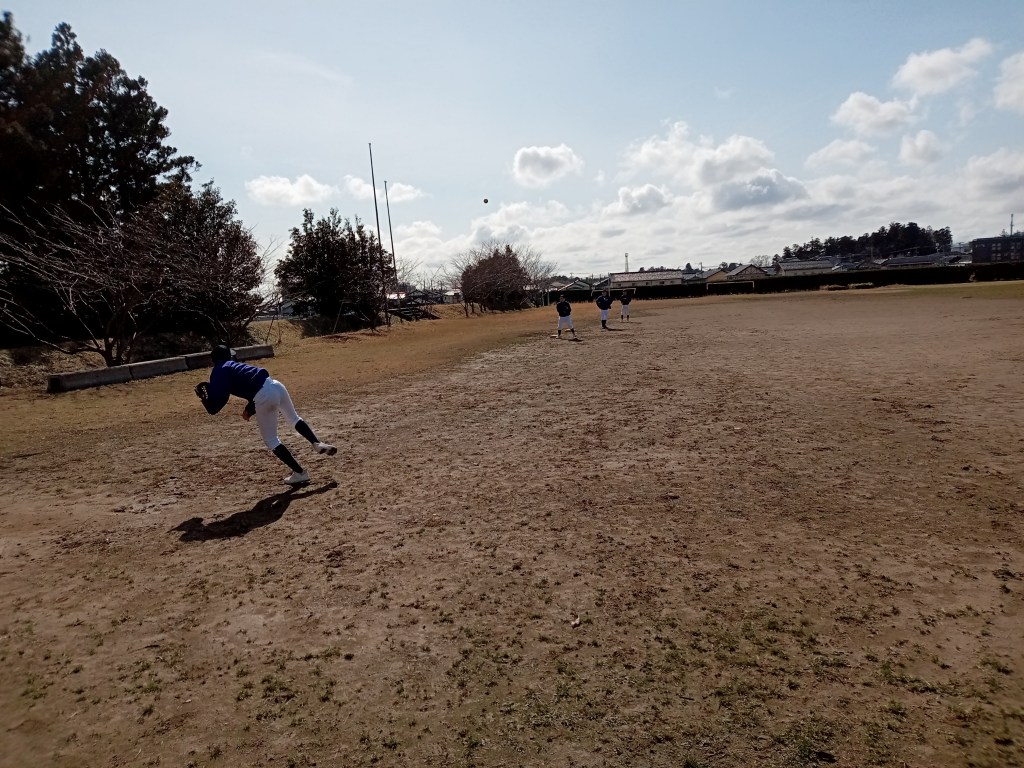
I have to say, even though I have only known my colleagues for four months, I was a bit sad today, just knowing that it would be the last time I’d ever see most of them. Of course, with their departure there will be new teachers coming in to meet. Next week is spring vacation. Unfortunately, that doesn’t mean I have any time off. Teachers and staff are still required to come into work, and school club activities continue like normal. I have been recruited to help with the baseball club and it has been fun to help out practice with them. The days are getting longer and warmer, and the famous cherry blossom season is almost here. School starts again on April 1st, and I will continue with much the same schedule as I had before. My students will mostly be the same, but I will be getting two new 3rd grade classes. I am excited to meet them all and, of course, all the new teachers and staff next year.
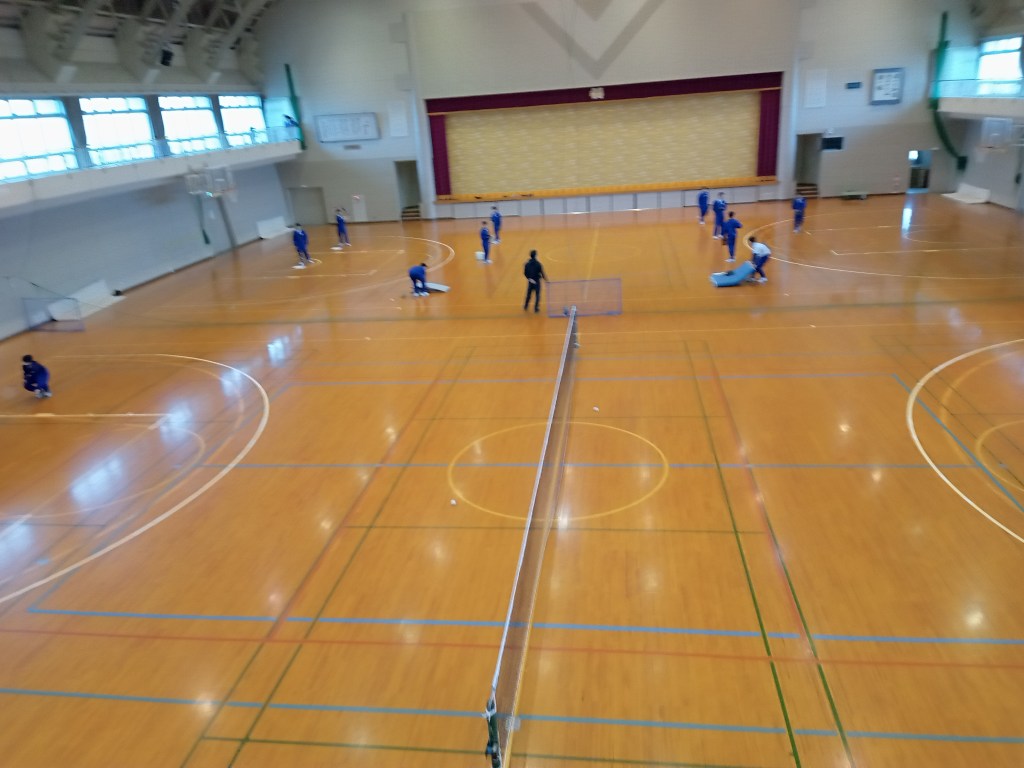
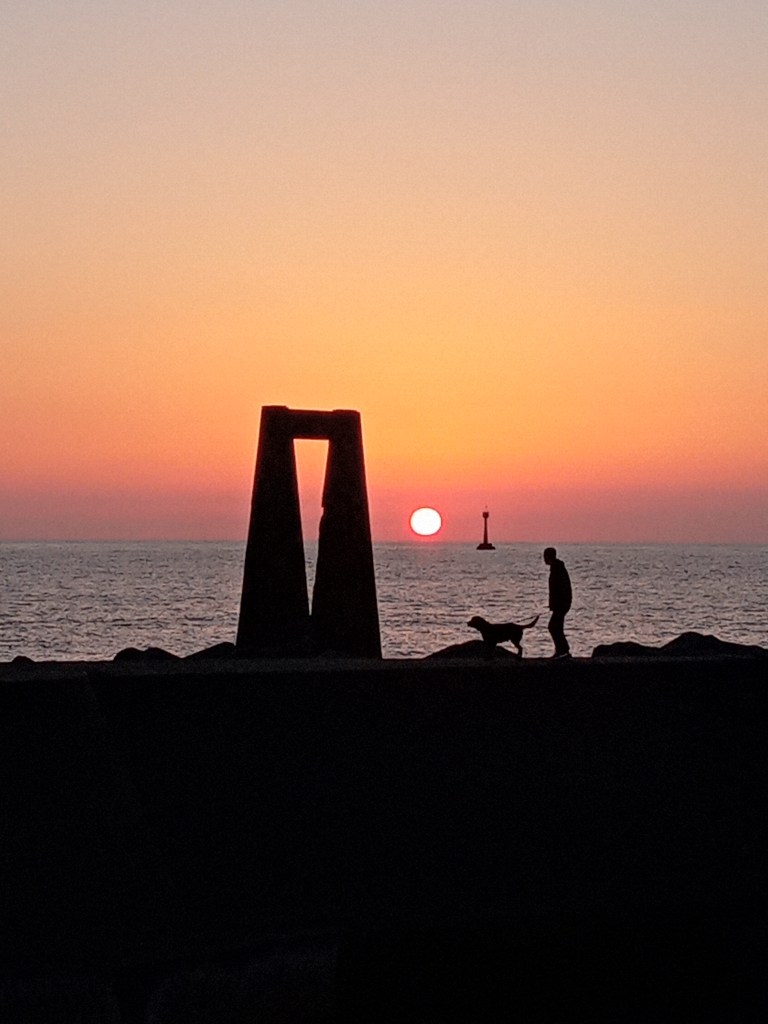
The departing staff serenaded the school song2nd baseball practice of the yearOn rainy days, the clubs have to share the gym. Tennis club has the foreground, and baseball club in back. Volleyball club was actually practicing behind the stage. Badminton club was running the indoor track and basketball club was doing exercises behind me.Rainbow in RyotsuSado sunset





















 Sam in Japan