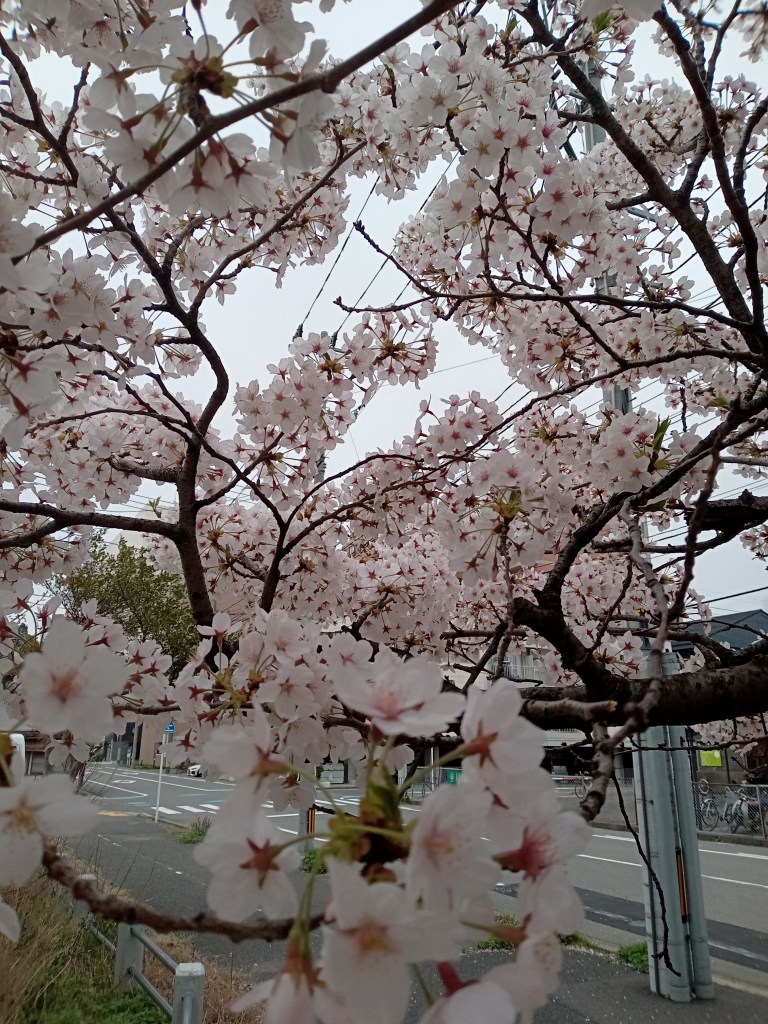
Hello, everyone. I am sorry I haven’t been posting much lately. I have been a bit busy and I haven’t been happy with the quality of my writing recently. It is hard to believe, but May 15th marked my 6th month since arriving in Sado. Already half a year here, I have celebrated my birthday and I have seen it transition from fall to nearly summer. The weather has been great recently: warm and sunny but before the hot and uncomfortably humid days of summer. Anyway, since it has been a while since I last made a post here, I have skipped over posting about one of Japan’s most famous “seasons.” Cherry Blossoms (known as Sakura in Japanese) are a symbol of Japan and the season lasts for, at best, two weeks. The bright pink trees start blooming in late March in Southern, temperate Japan, and slowly make their way up north, with Tokyo in full bloom in early April. Sado, being a bit further north than Tokyo, usually sees its trees blossom in mid April. It is a very important time in Japanese culture and is associated with the beginning of spring. Unfortunately, I was in Saitama at the beginning of Sado’s blooming. Saitama was mostly finished with the Sakura season so I was worried that I missed my chance. The previous two times I had visited Japan happened to be in the spring and I narrowly missed seeing the Cherry Blossom season then. I was worried I missed it again and that I would have to wait until next year to see them in their full glory. My fears were misplaced though, and I was finally able to enjoy the Cherry Blossom season in Sado.
It is traditional in Japan to have a picnic, known as a hanami (flower viewing), during the Cherry Blossom season. People and their families will spend a weekend afternoon under the pink trees enjoying a meal and drinks. Some of the other teachers had a picnic, but unfortunately I was busy and could not attend. I did take the opportunity to see many of the local temples and shrines which are adorned with the trees and the site was breathtaking. One trick employed by the landscapers of these religious sites and parks is to plant clones. By doing so, the trees all flower in sync with each other and the end result is a bright, uniformly pink landscape. I have to think the temporary nature of the blossoming fits perfectly with the Buddhist faith of Japan professing impermanence and ephemerality. If you’re not quick and on the ball with your hanami, you might miss out on viewing the Cherries for a whole year.
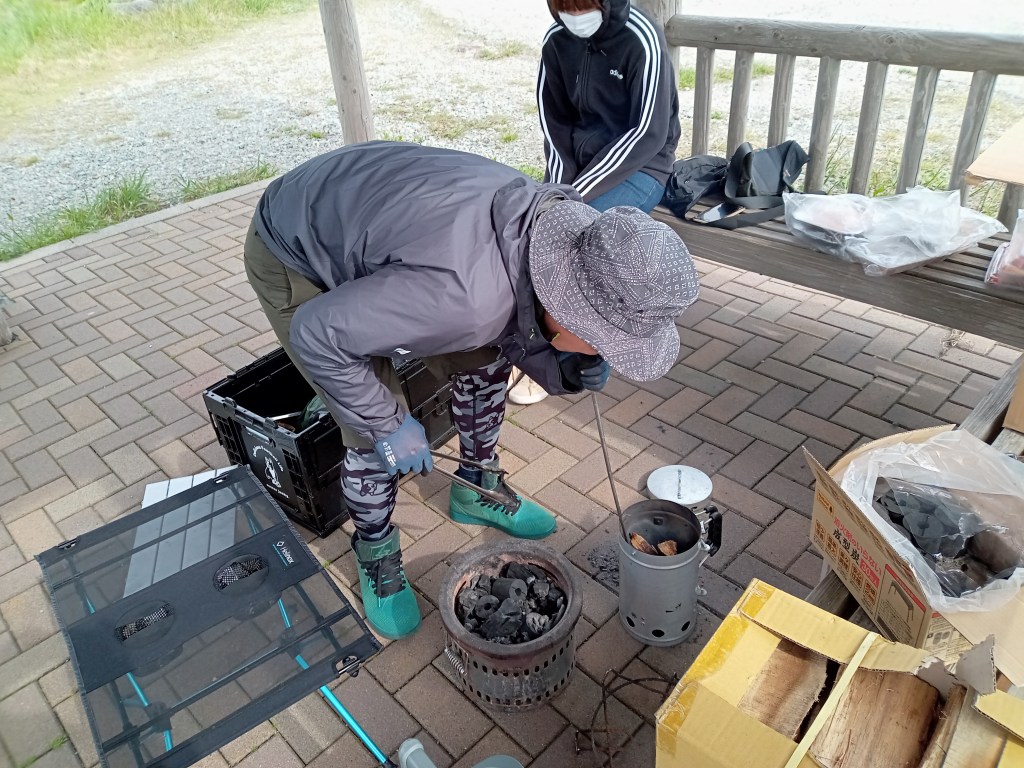
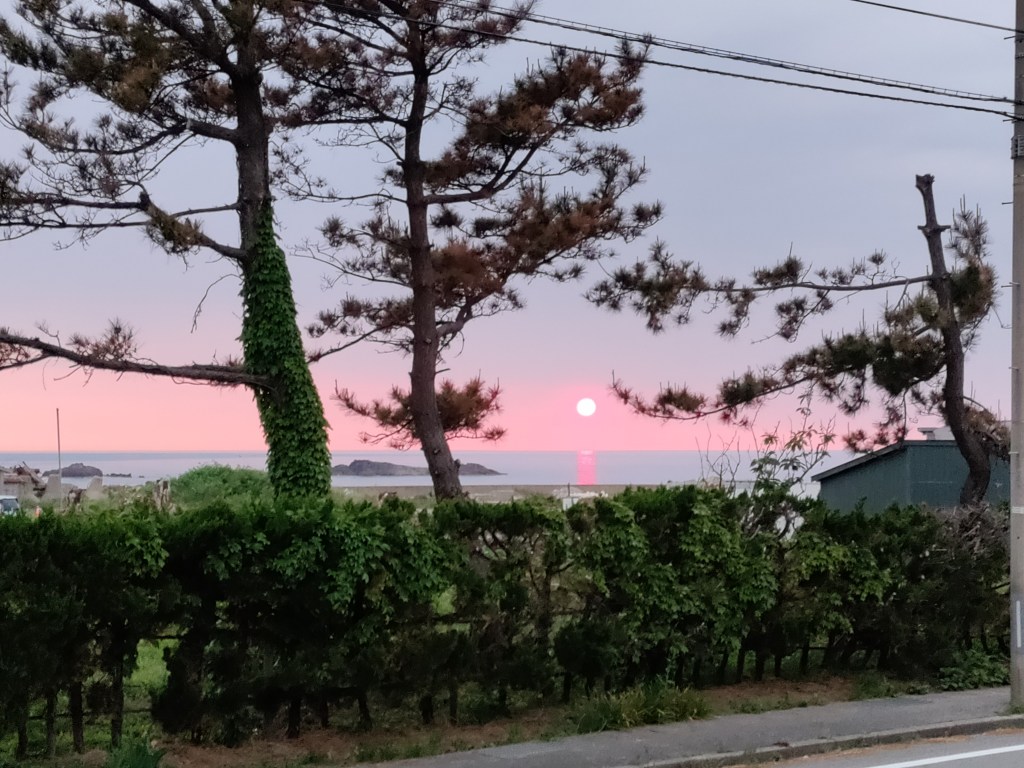
After the Cherry Blossoms finished and turned green, the first week of May is what is called Golden Week. This isn’t really a traditional holiday season in Japan, but is one of the most common times to travel in Japan. Since the 1940’s, Japan has designated 3 holidays in a row the first week of May. In addition, the former Emperor Hirohito’s Birthday of April 29th was also a holiday during his reign, and was formally made a public holiday after his death. As a result, the first week of May has a string of holidays, and has become a common time to travel and enjoy the time off. I think it is somewhat similar to the Memorial Day weekend in America. There’s even a famous yearly race, like the American Indianapolis 500. Common activities include grilling and camping. Many people also take the time to visit family. The highlight of my Golden Week though was being invited to a barbecue by some of my local friends. We went to the parking lot of an abandoned hotel overlooking the ocean here in Aikawa and had a nice afternoon grilling a wide variety of meat and vegetables. There was chicken, beef, pork, bell pepper, mushrooms, cheese, and more. It was all very delicious but I was most excited to try fugu for the first time. Fugu is somewhat infamous in the US as the toxic pufferfish. I was warned by the others at the barbecue that this could very well be the last thing I ate. This was merely being dramatic. This fugu was bought at a grocery store, and was already rigorously screened for toxins. You really only need to be worried when eating fresh fugu at a restaurant, especially fresh fugu sushi. Here, it needs to be prepared by an expert chef who can rid the fish of all its toxic sections. That said, the fugu was very delicious. I now understand why people risk their lives to eat it. It is a white fish and the buttery taste and very flaky texture reminded me a lot of lobster. I highly recommend it if you ever have the chance to try it. Just… be careful.
I apologize for my lack of recent posts here. I will start posting again with more frequency. The mild spring is quickly becoming the humid summer. The pink April Cherries gave way to the purple wisterias of May. The warm weather has brought a bit of tourism to this island. Already I see the hotel outside my house filling up with people from the mainland. This will continue through the warm months. Next weekend will be the famous “Yoi no Mai” of Aikawa. This dance festival has been happening here for the roughly the last 500 years. I will be there of course, and I am excited to document it and share it with you all.



 Sam in Japan
Sam,
Good to see your posts again! Sounds like the Spring and Summer will bring a lot of new experiences. Looking forward to hearing from you again!
LikeLike
Hi buddy, good to read ur post after a while, it was again really well written as far as my knowledge of English as u know it is my second language 😆 but I do enjoy and like I said before feels I am right there. so just keep up the good work.
LikeLike